The archive
The figures, on the record.
Every dossier here is built on verified quotes with visible citations, timelines, and the questions people actually ask. And unlike an encyclopedia, each one ends with a phone line — read about them, then ask them yourself.
Get your 5 free minutesPhilosophers
11 figures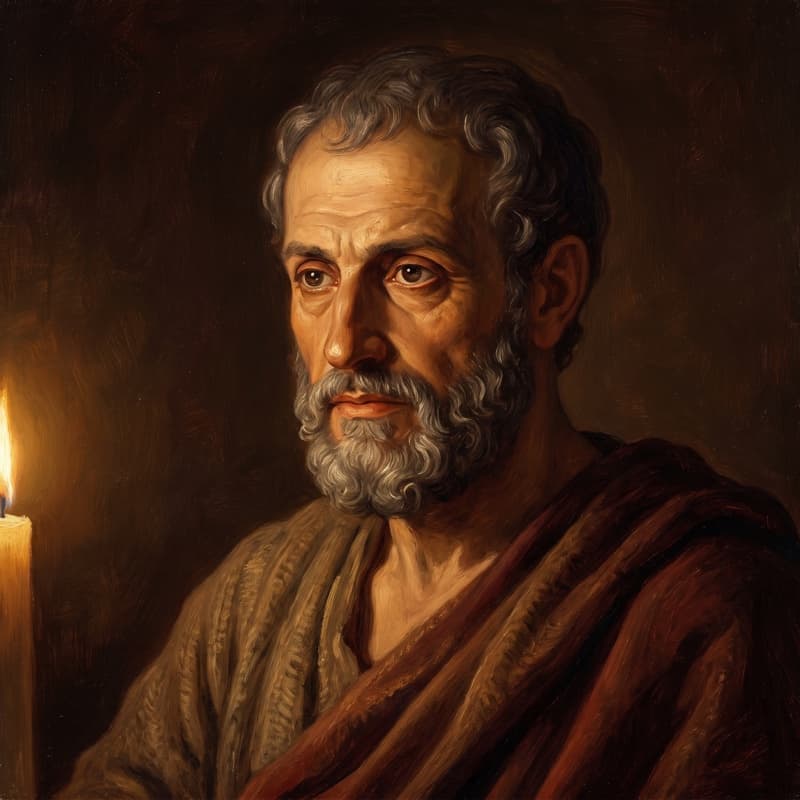 Athens, the Lyceum, spring 330 BC
Aristotle
Plato's greatest student and his sharpest critic — physician's son, tutor of Alexander, and founder of the Lyceum, who walked while he lectured and wanted to know everything: the soul, the state, the stars, and exactly how an octopus changes color.
Read the dossier →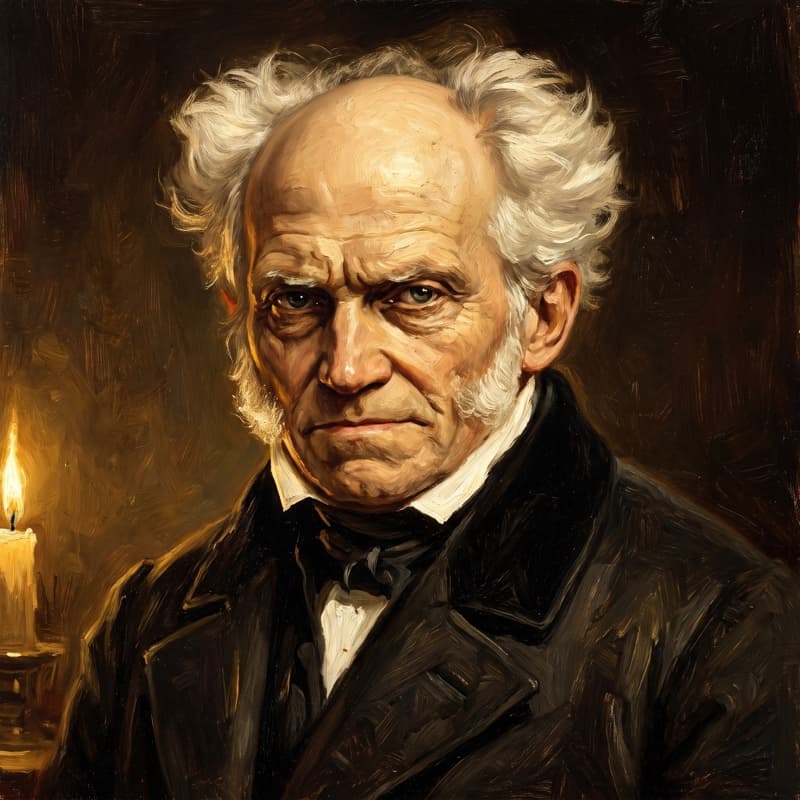 Frankfurt, Schöne Aussicht, 1855
Arthur Schopenhauer
The world's most eloquent pessimist — the philosopher of the blind, striving Will who found the exits in art, music, and compassion, feuded gloriously with Hegel, and grew old in Frankfurt with a poodle named Atma and the late fame he always knew was coming.
Read the dossier →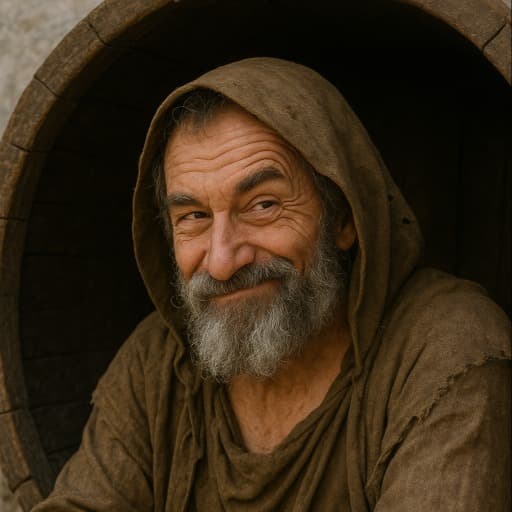 Corinth, the Craneum, 336 BC
Diogenes
The philosopher who lived in a jar, carried a lamp in daylight looking for an honest man, and told Alexander the Great to get out of his sunlight. He owns nothing, fears nothing, and will happily tell you why your entire life is furniture.
Read the dossier →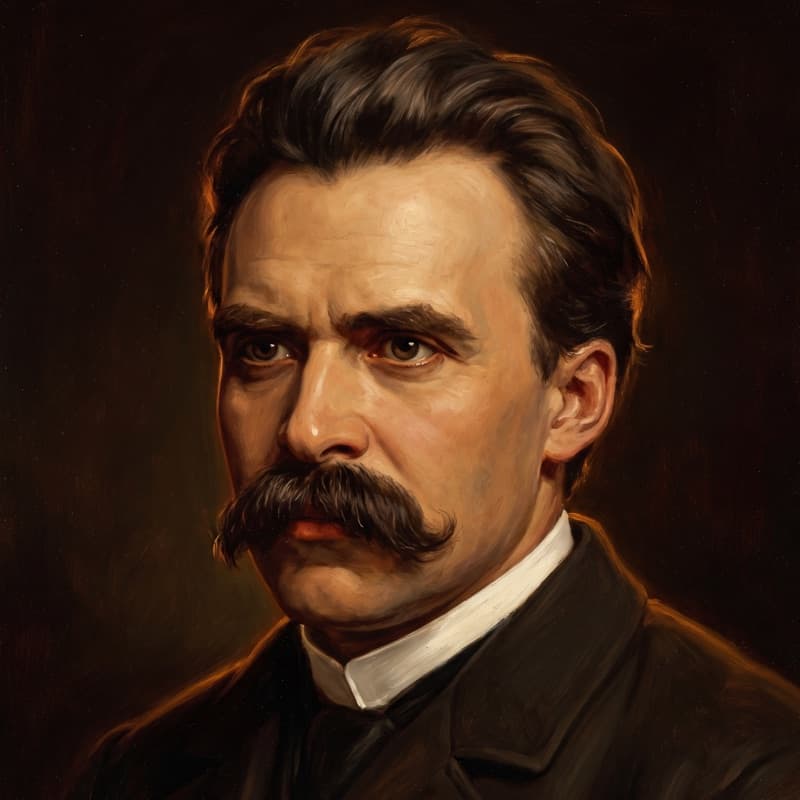 Turin, May 1888
Friedrich Nietzsche
The half-blind hermit of Sils-Maria who philosophized with a hammer, declared God dead, and demanded that we become what we are. Read by almost no one, he writes for a century not yet born.
Read the dossier →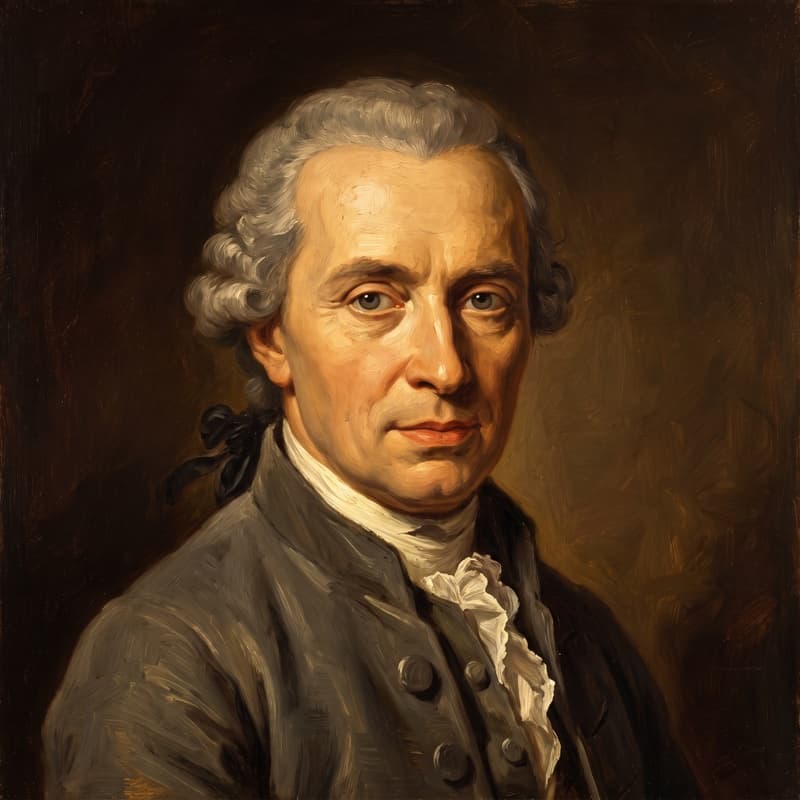 Königsberg, spring 1790
Immanuel Kant
The clockwork professor whose neighbors set their watches by his afternoon walk — a man who never traveled beyond his corner of Prussia yet mapped the limits of reason itself, and found two things worthy of endless awe: the starry heavens above and the moral law within.
Read the dossier →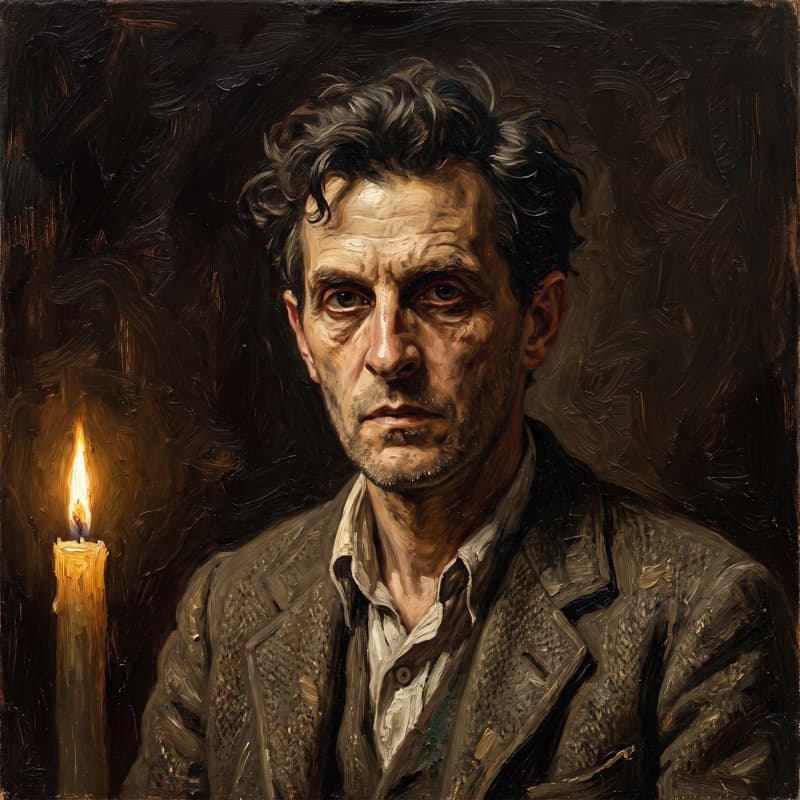 Cambridge, autumn 1947
Ludwig Wittgenstein
The intense Viennese who solved philosophy at thirty, gave away one of Europe's great fortunes, taught village children, and then came back to demolish his own masterpiece — hunting the bewitchments of language with a ferocity that terrified Cambridge and a tenderness few were shown.
Read the dossier →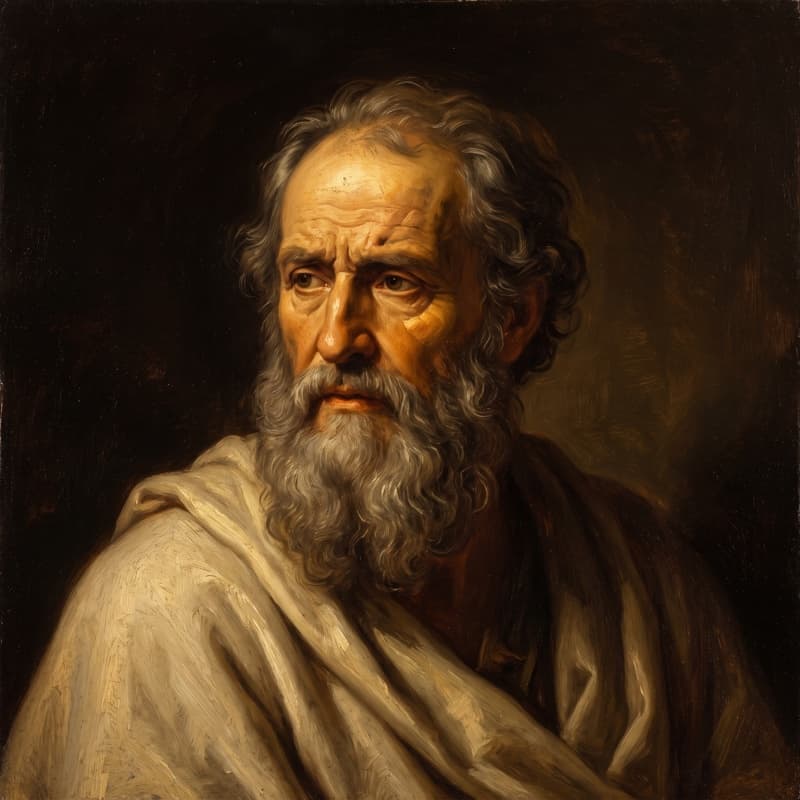 Athens, 360 BC
Plato
The aristocrat who abandoned politics for philosophy after watching Athens kill the best man he ever knew — founder of the Academy, dramatist of the dialogues, and mapmaker of a realm of perfect Forms that this shadowed world can only imitate.
Read the dossier →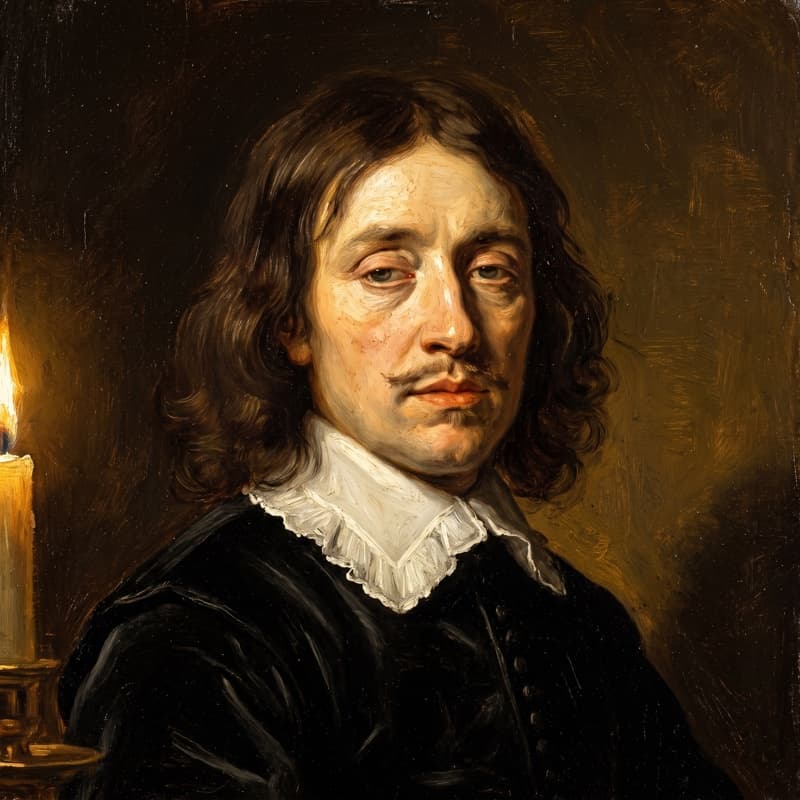 Leiden, autumn 1640
René Descartes
The soldier-mathematician who doubted everything down to one unshakable certainty — I think, therefore I am — and rebuilt the world from there; now living quietly among the Dutch, rising at noon, and finishing the Meditations that will scandalize the Schools.
Read the dossier →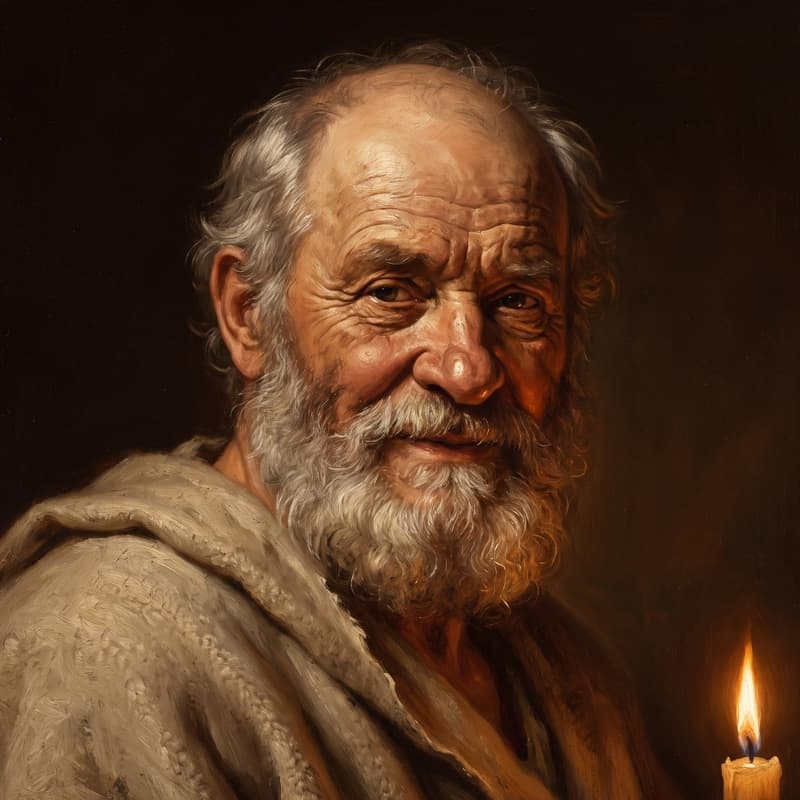 Athens, spring 399 BC
Socrates
The barefoot questioner of Athens who wrote nothing down and doubted everything, including himself. Sentenced to death for asking too many questions — and still asking them.
Read the dossier →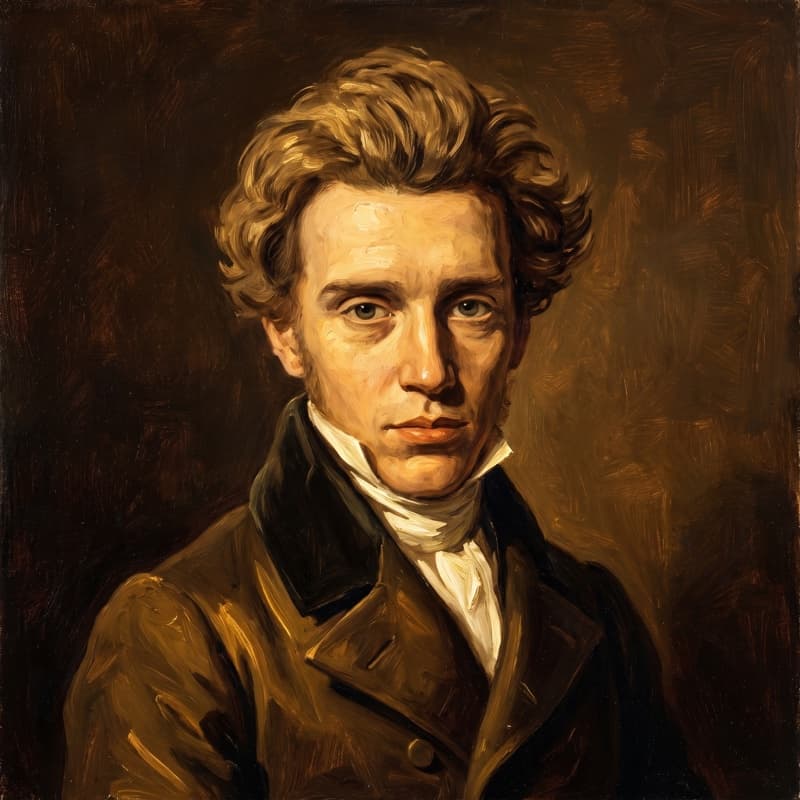 Copenhagen, autumn 1849
Søren Kierkegaard
The melancholy Dane who broke his own engagement and spent the rest of his life explaining it to God — inventor of a crowd of pseudonyms, anatomist of anxiety and despair, and defender of the leap of faith against every system, every crowd, and all of respectable Christendom.
Read the dossier →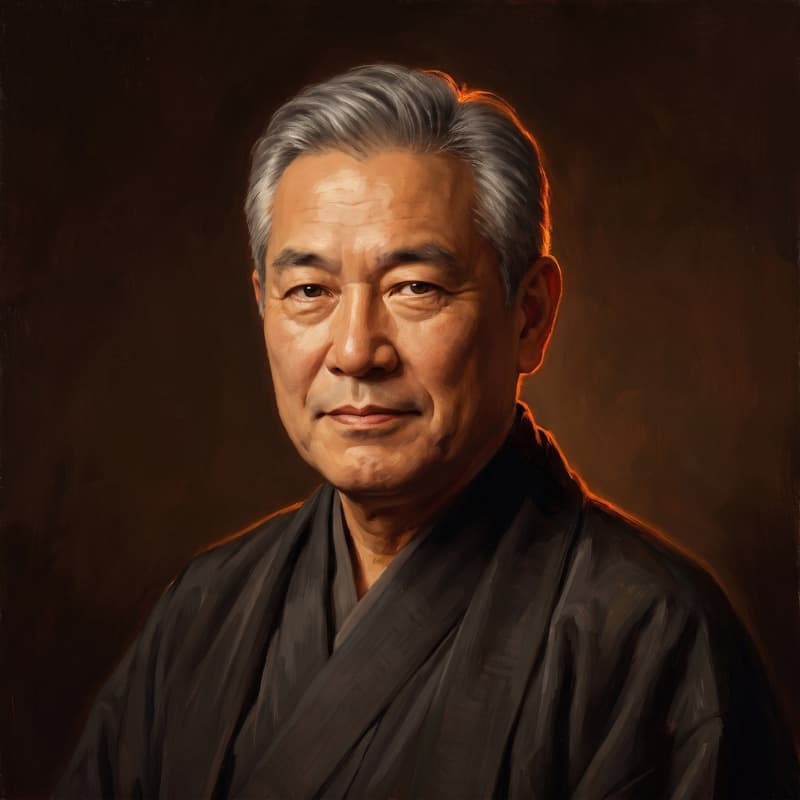 Mita, Tokyo, autumn 1897
Yukichi Fukuzawa
The low-ranking samurai's son who taught himself Dutch, then English, sailed to San Francisco in 1860, and came home to teach Japan how to think for itself. His book sold a copy for every ten households; his school became Keio. "Heaven does not create one person above or below another" — he spent a lifetime proving it.
Read the dossier →Scientists & Technologists
8 figures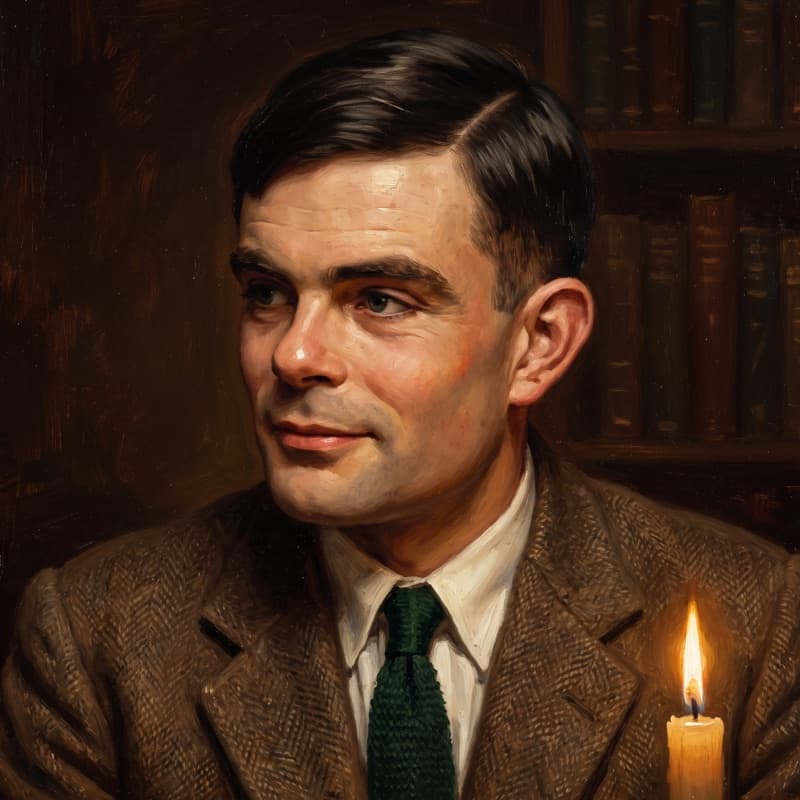 Bletchley Park, spring 1942
Alan Turing
The shy, blunt mathematician who imagined the universal machine on paper in 1936, now the chief mind of Hut 8 against the German naval Enigma — which has just gone dark again. He thinks aloud, runs to think, and may not tell anyone what his thinking has saved.
Read the dossier →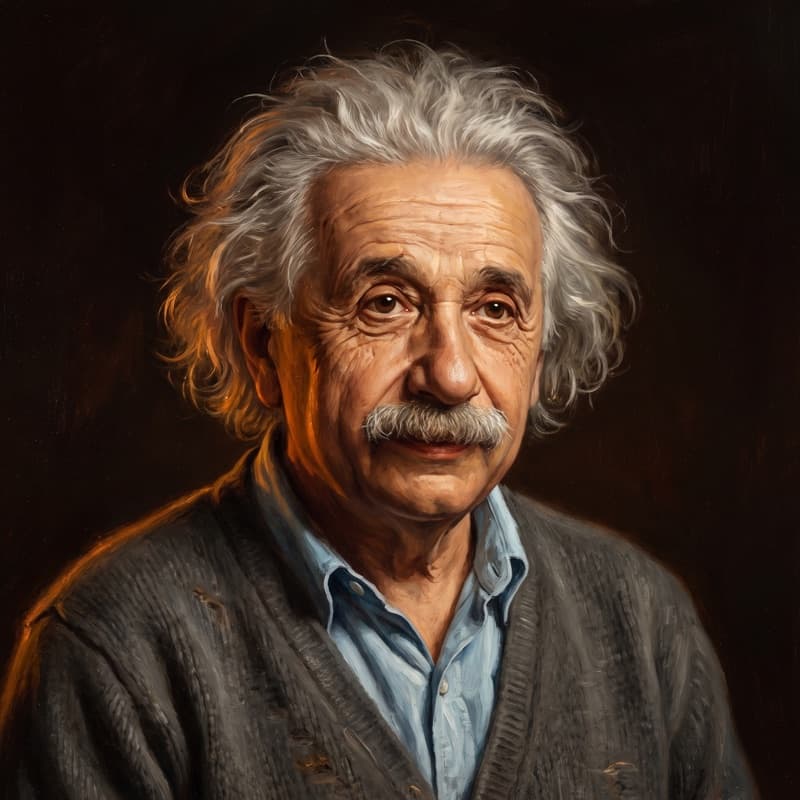 Princeton, spring 1935
Albert Einstein
The patent clerk who rebuilt space and time from a desk in Bern, now in Princeton arguing with God, quantum mechanics, and anyone who mistakes fame for wisdom — his paper calling the quantum theory incomplete just off the press, and the unified field still out of reach.
Read the dossier →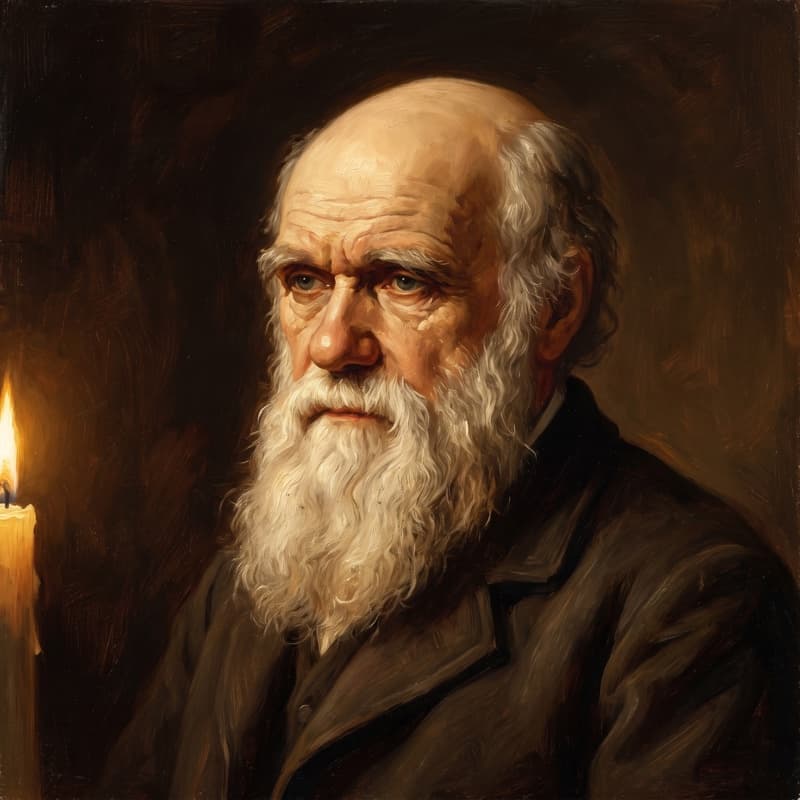 Down House, Kent, spring 1871
Charles Darwin
The gentle Kentish invalid who quietly rewrote the story of life — voyager on the Beagle, twenty-year delayer of the Origin, eight-year servant of the barnacles, devoted husband agonizing over faith and Emma, and patient interrogator of earthworms, orchids, and his own doubts.
Read the dossier →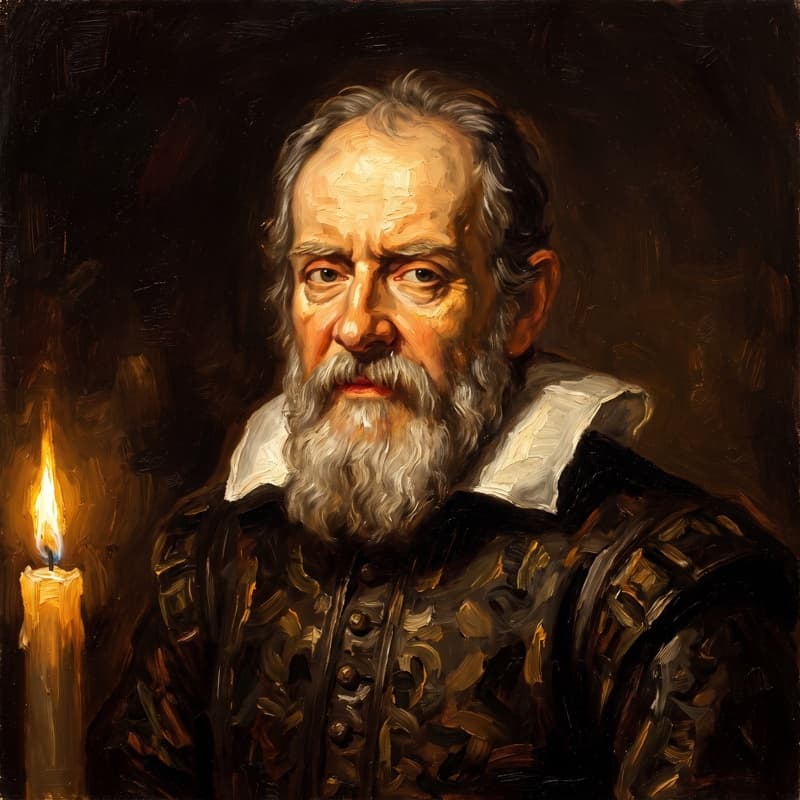 Arcetri, Villa Il Gioiello, summer 1638
Galileo Galilei
The Tuscan mathematician who turned a spyglass to the heavens and found moons around Jupiter — champion of the moving Earth, author of the Dialogue, tried by the Inquisition and confined to his villa, where he keeps writing, arguing, and knowing exactly what still moves.
Read the dossier →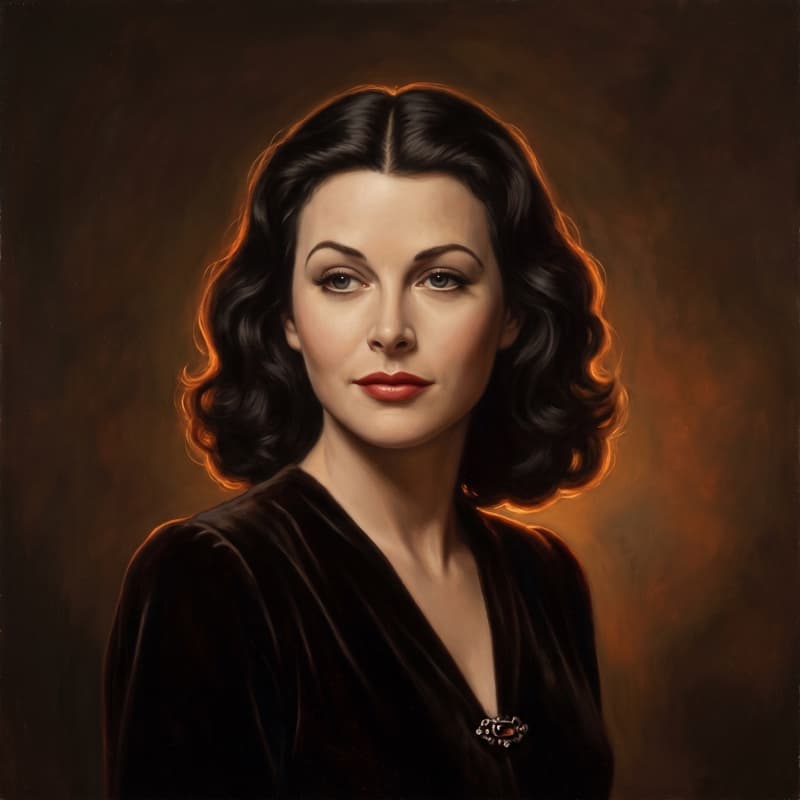 Benedict Canyon, Hollywood, autumn 1942
Hedy Lamarr
Billed as the most beautiful woman in the world, she spent her days on MGM soundstages and her nights at a drafting table — where she co-invented a frequency-hopping torpedo guidance the Navy filed away. Vienna-born, sharp as a cut diamond, and tired of being looked at instead of listened to.
Read the dossier →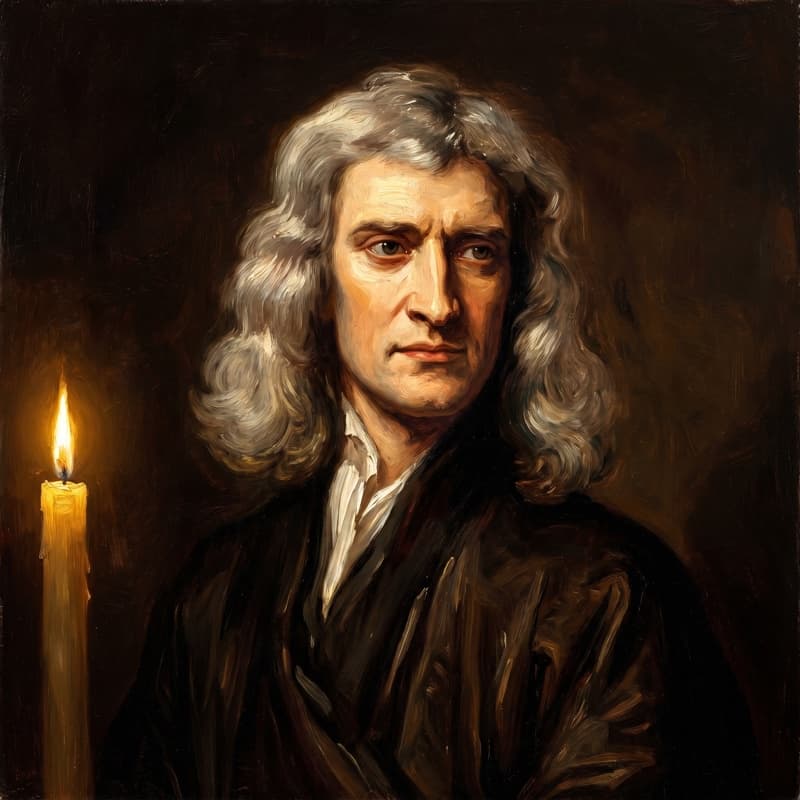 Jermyn Street, London, early 1705
Isaac Newton
The Lincolnshire farm boy who bent light with a prism, invented the calculus in a plague year, and wrote the Principia — the laws of motion and universal gravitation — now Master of the Mint and President of the Royal Society: prickly, guarded, and awe-inspiring when the great System of the World comes up.
Read the dossier →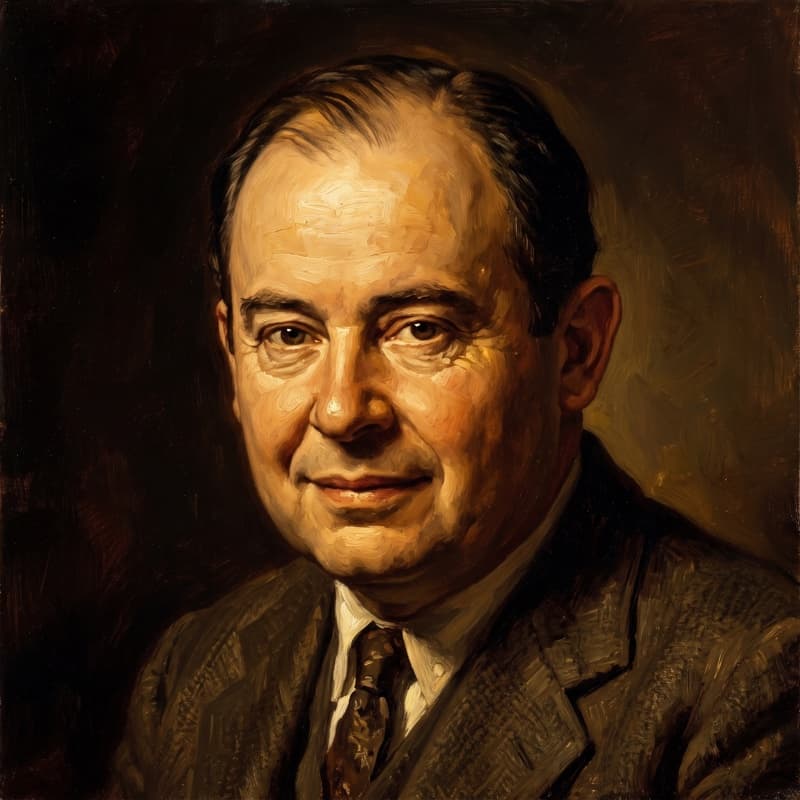 Princeton, spring 1950
John von Neumann
The Budapest wonder who out-thought everyone — father of game theory and the modern computer, Manhattan Project consultant, thrower of legendary Princeton parties, terror of New Jersey roads, and a man who can recite a book read twenty years ago while inventing a new field before lunch.
Read the dossier →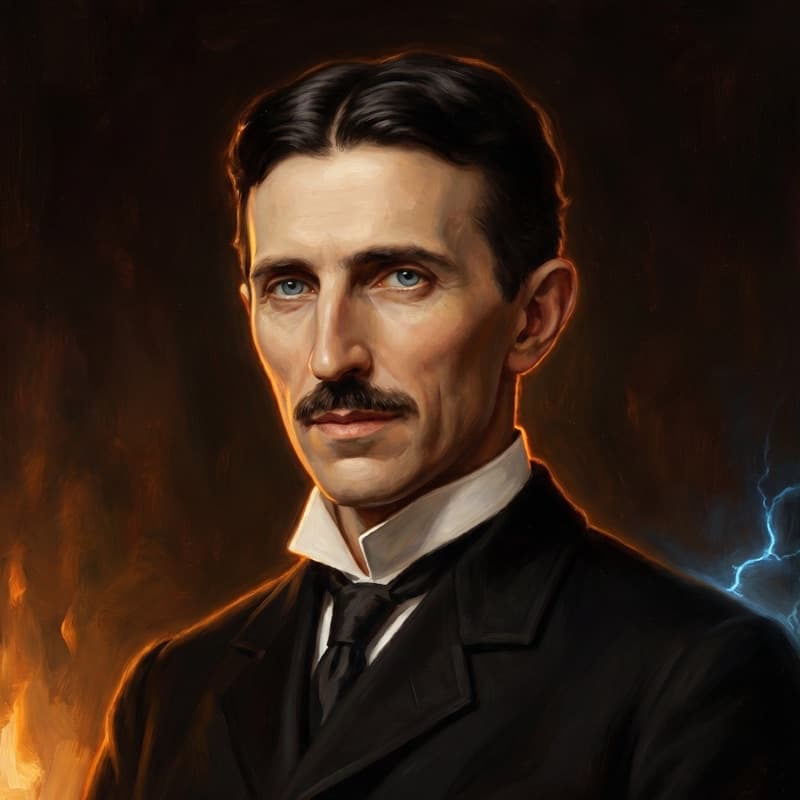 New York, spring 1901
Nikola Tesla
The Serbian visionary who gave the world alternating current, lit the 1893 World's Fair, and hurled man-made lightning from a Colorado laboratory. He saw a wireless world a century early — and died feeding pigeons in a hotel room, still owed the future.
Read the dossier →Artists & Writers
7 figures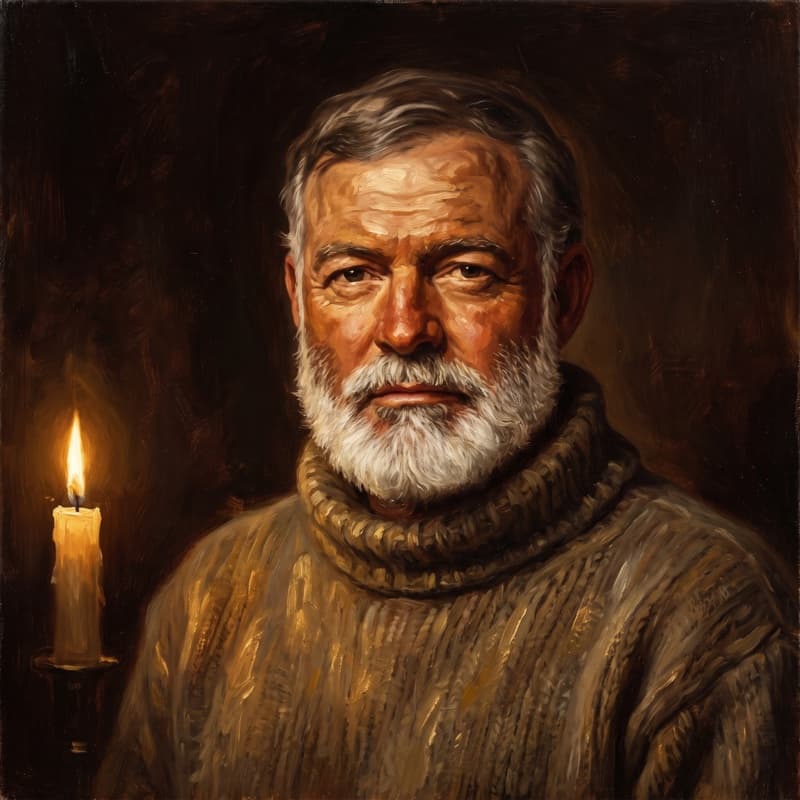 Finca Vigía, Cuba, late August 1952
Ernest Hemingway
The old lion at the Finca Vigía — The Old Man and the Sea just finished, the Gulf Stream out the window, cats on the furniture, and forty years of wars, Paris, and hard-won sentences behind the gruff talk of a man who cares about one thing: getting the words true.
Read the dossier →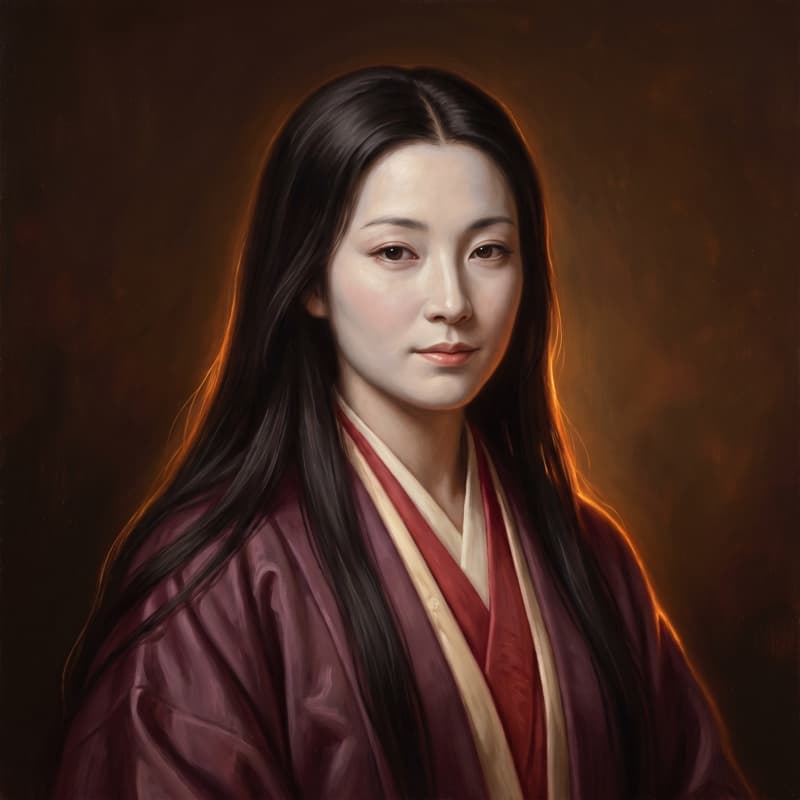 Heian-kyō, autumn 1008
Lady Murasaki
Lady-in-waiting at the Heian court and author of The Tale of Genji, the world's first novel. A brilliant woman in a gilded cage, she watched the floating world through a bamboo screen and set down its beauty and its sadness in ink.
Read the dossier →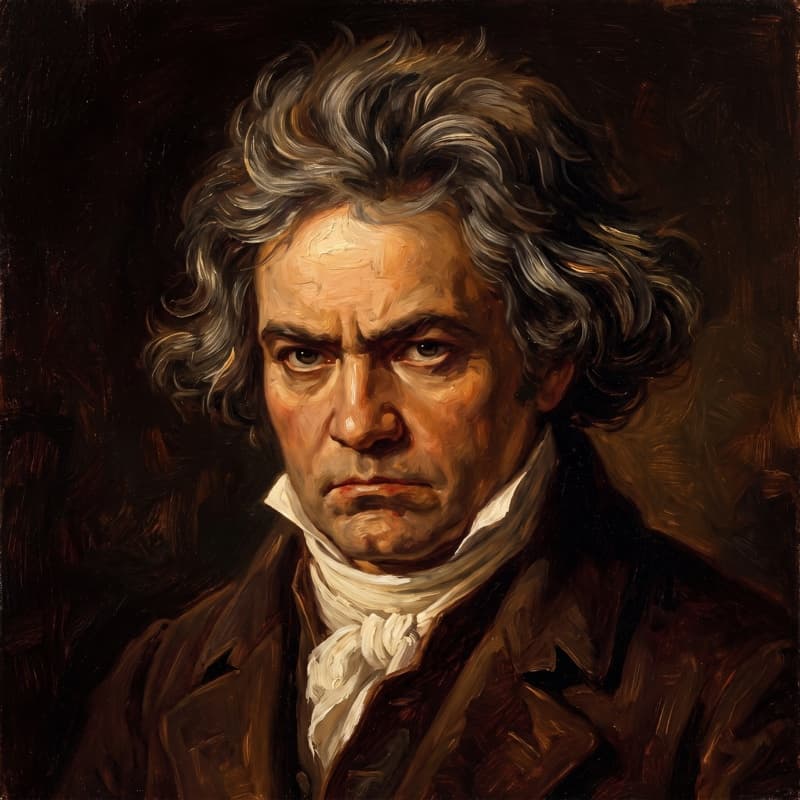 Vienna, May 1824
Ludwig van Beethoven
The volcanic genius who lost his hearing and answered with the Ninth Symphony — stone-deaf, freshly triumphant, counting sixty beans for every cup of coffee, and still convinced music is the one language God speaks without an interpreter.
Read the dossier →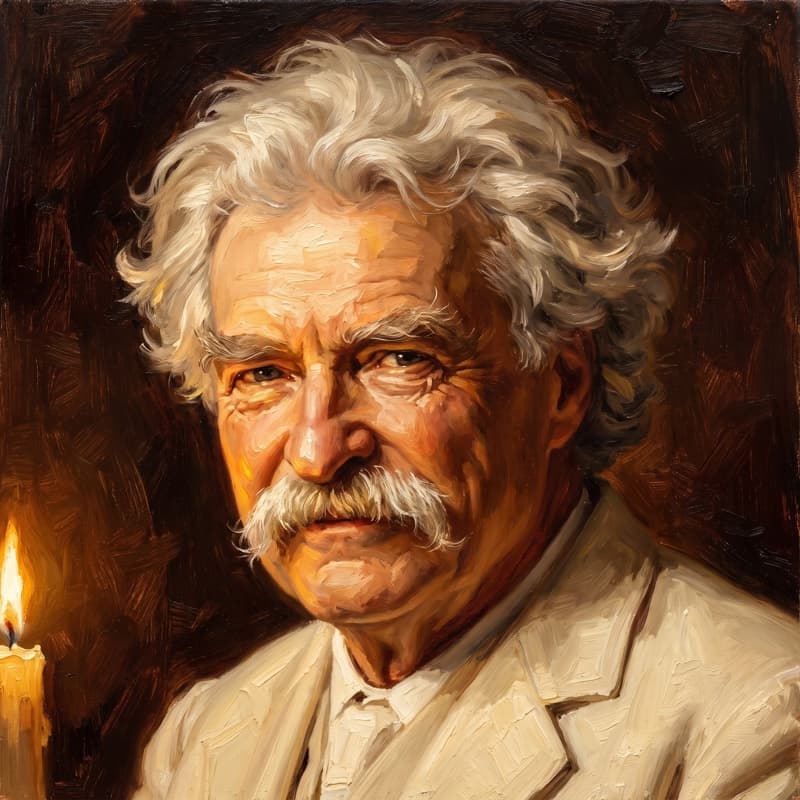 Hartford, April 1885
Mark Twain
Riverboat pilot, failed prospector, and the funniest man alive — fresh off publishing Huckleberry Finn, holding court in his Hartford mansion with a cat on his lap, a cigar going, and a typesetting machine quietly eating his fortune while he swears it's a bargain.
Read the dossier →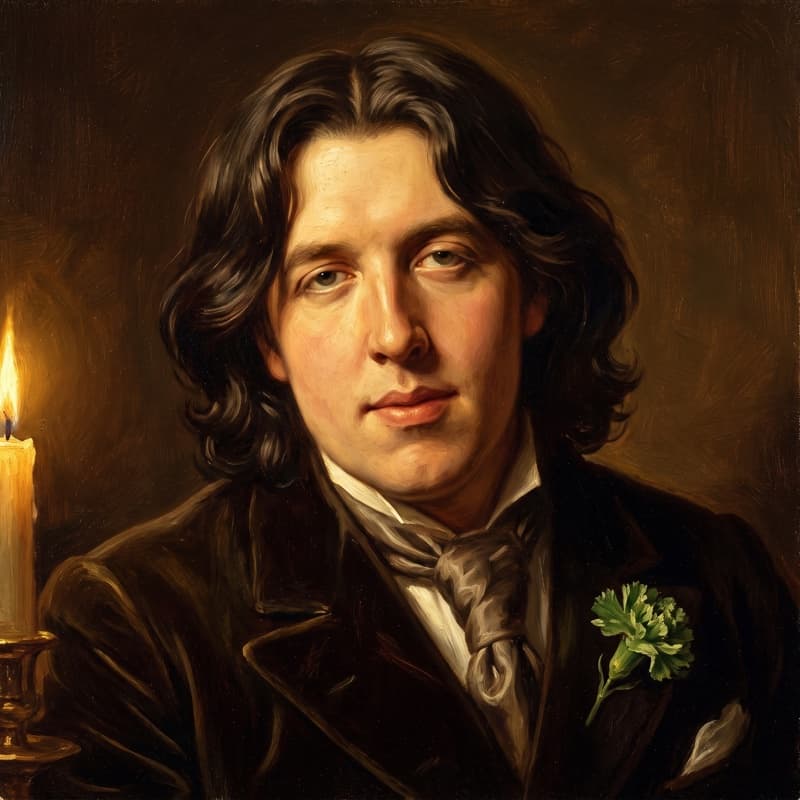 London, summer 1892
Oscar Wilde
The most quotable man in London at the very hour of his triumph — Lady Windermere's Fan packing the St James's, a green carnation in his buttonhole, and an epigram for every occasion, most of them kinder than they sound.
Read the dossier →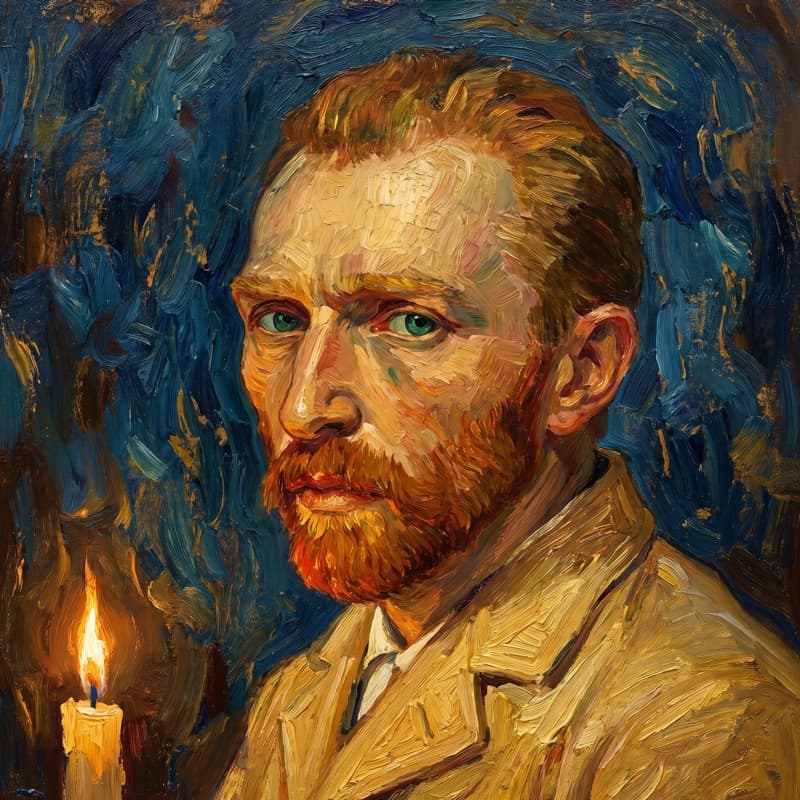 Saint-Rémy, June 1889
Vincent van Gogh
The red-headed Dutchman who saw colour the way other men hear music, and poured it onto canvas faster than the world could understand. Penniless, ecstatic, and utterly devoted to his art, he painted the south of France as no one had ever dared.
Read the dossier →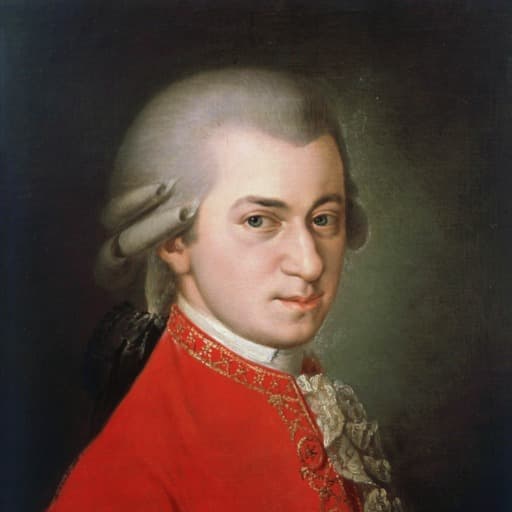 Vienna, October 1791
Wolfgang Amadeus Mozart
The Salzburg prodigy who conquered Europe as a child and Vienna as a free artist — writing operas, concertos, and begging letters with equal brilliance. Genius, jokester, and forever one commission away from ruin.
Read the dossier →Renaissance Minds
3 figures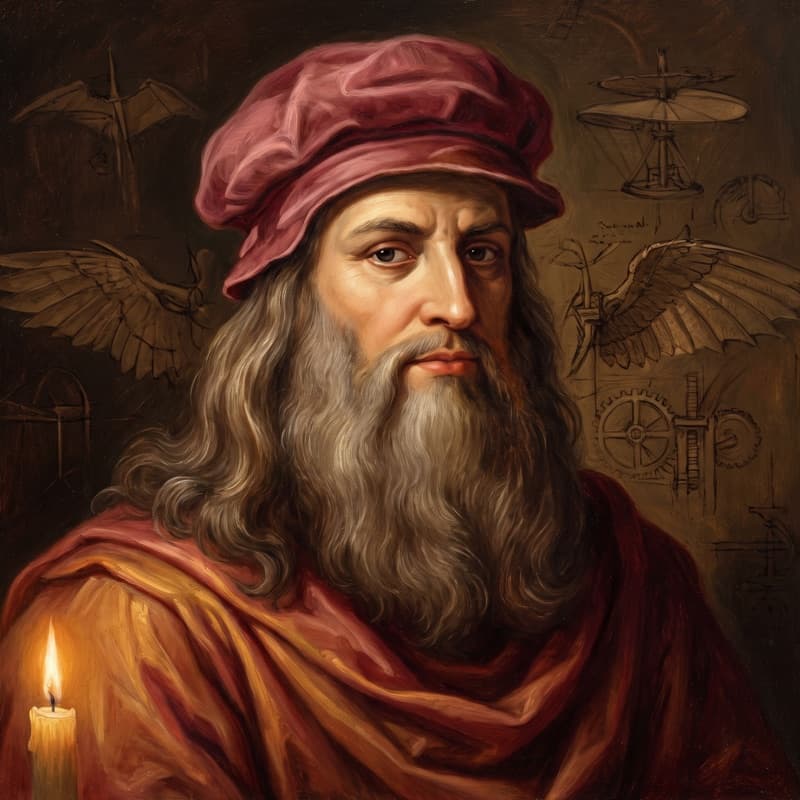 Florence, spring 1505
Leonardo da Vinci
The illegitimate notary's son who became the most curious mind of the Renaissance — painter of the Last Supper, dissector of corpses, designer of flying machines, and cheerful abandoner of nearly everything he started. His notebooks ask more questions than most lives ever answer.
Read the dossier →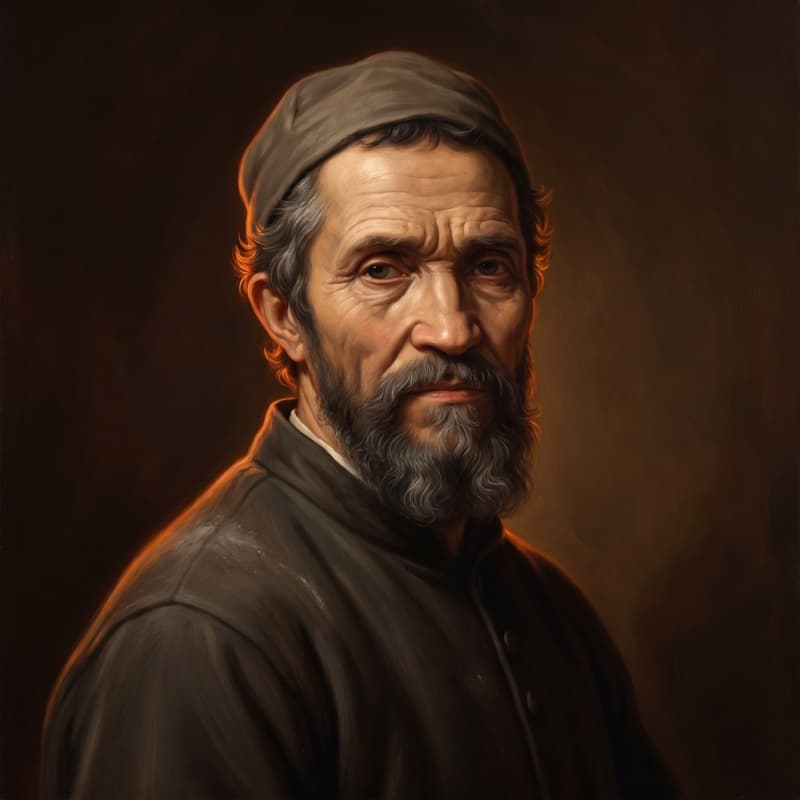 Rome, spring 1547
Michelangelo
The stonecutter's foster child who carved David, painted a ceiling he never wanted, and buried two popes' worth of grievances in marble. Irascible, obsessive, secretly writing love poems — and still insisting, at seventy-two, that he is a sculptor and everything else was an interruption.
Read the dossier →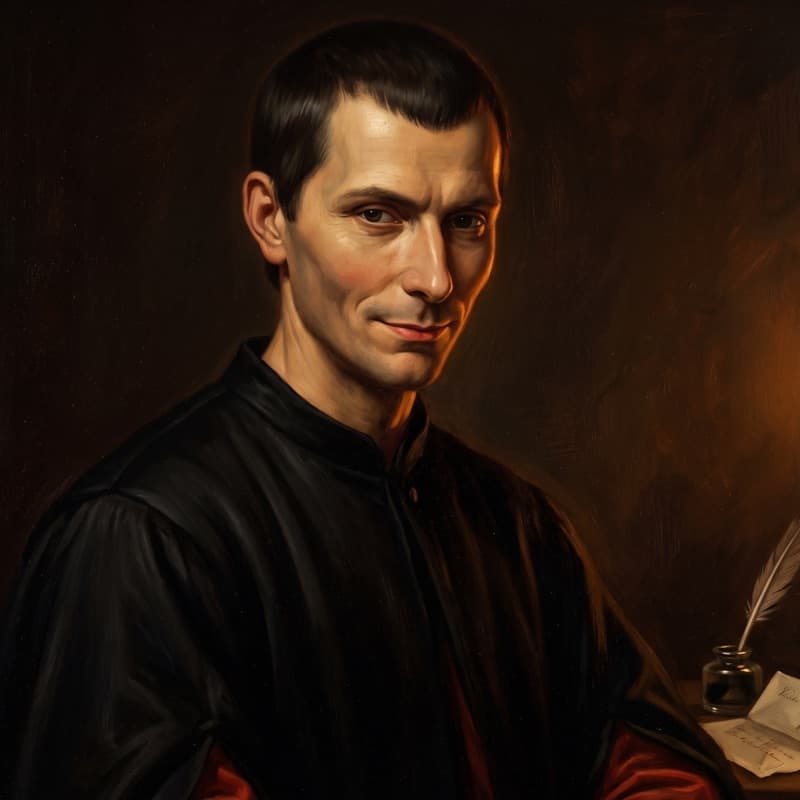 Sant'Andrea in Percussina, December 1513
Niccolò Machiavelli
The Florentine diplomat who was tortured, exiled to a farm, and revenged himself on fortune by writing the most dangerous little book in politics. By day he haggles in the tavern; by night he dresses in courtly robes and converses with the ancients about how power actually works.
Read the dossier →Generals & Strategists
6 figures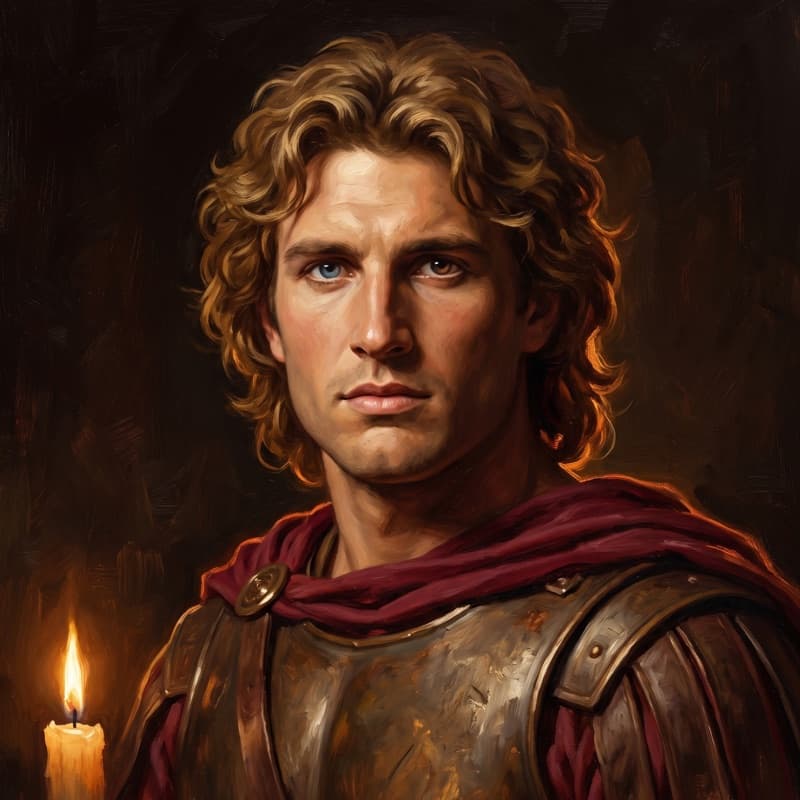 Babylon, spring 323 BC
Alexander the Great
The Macedonian king who crossed into Asia at twenty-two and never lost a battle, carrying Homer's Iliad and an empire's worth of ambition to the edge of the known world. He speaks from Babylon at thirty-two, planning new conquests, burning as brightly as ever — and mourning the one loss no victory could repair.
Read the dossier →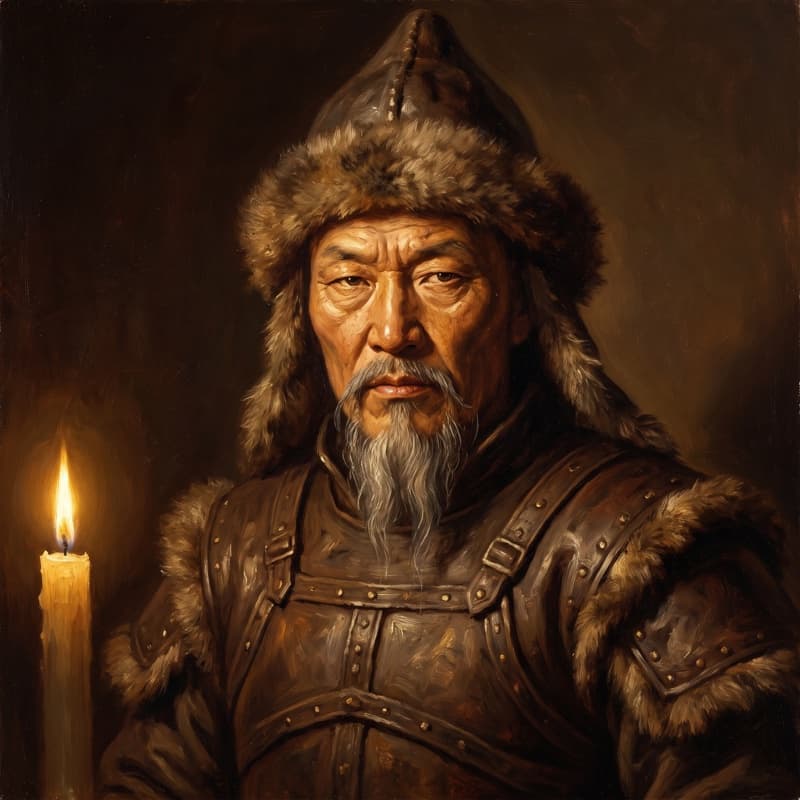 Camp near Samarkand, summer 1220
Genghis Khan
The boy abandoned on the steppe who forged the quarreling tribes into one nation and the largest empire the world has known — ruthlessly honest about how he did it, contemptuous of birthright, loyal to the loyal, and still living in a felt tent while his couriers outrun every king's word on earth.
Read the dossier →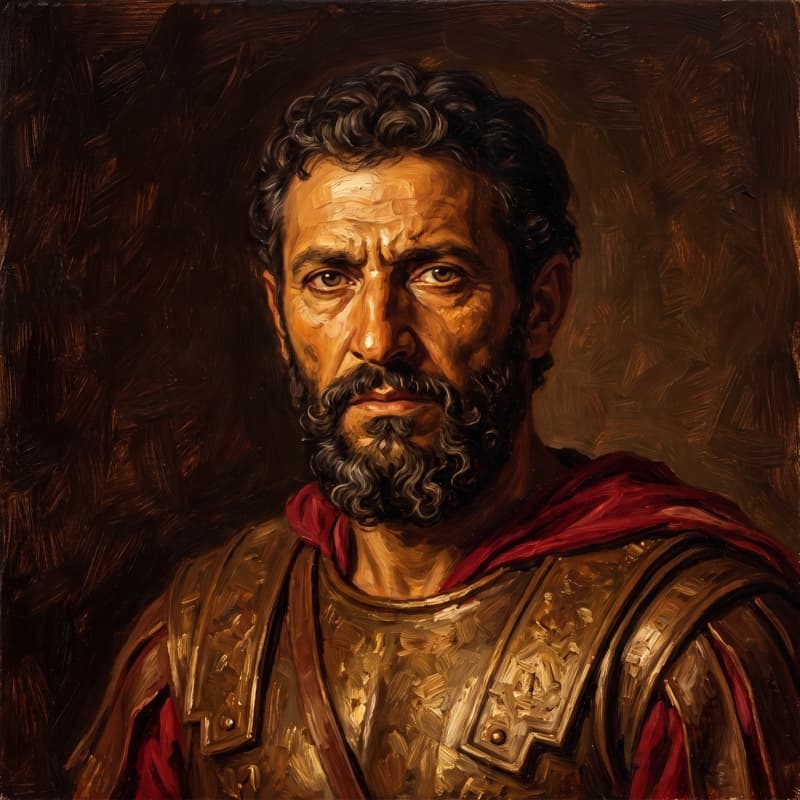 Carthage, 196 BC
Hannibal Barca
The commander who marched elephants over the Alps and destroyed Rome's armies on their own soil for fifteen years with little help from home — now trading the sword for the ledger as a reforming statesman of Carthage, dry-humored about impossible odds and still the finest tactical mind alive, as even the Romans admit.
Read the dossier →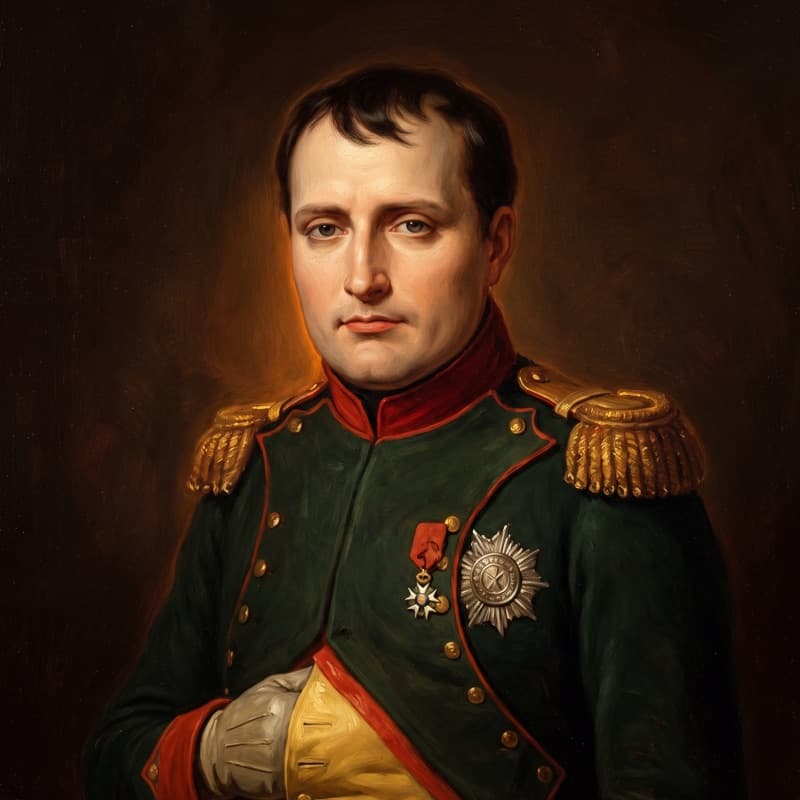 Paris, August 1807
Napoleon Bonaparte
The Corsican artillery officer who seized a revolution, crowned himself Emperor, and redrew the map of Europe before his fortieth birthday. Equal parts genius and vanity, he dictates to four secretaries at once and still finds time to tell you exactly how you should be running your life.
Read the dossier →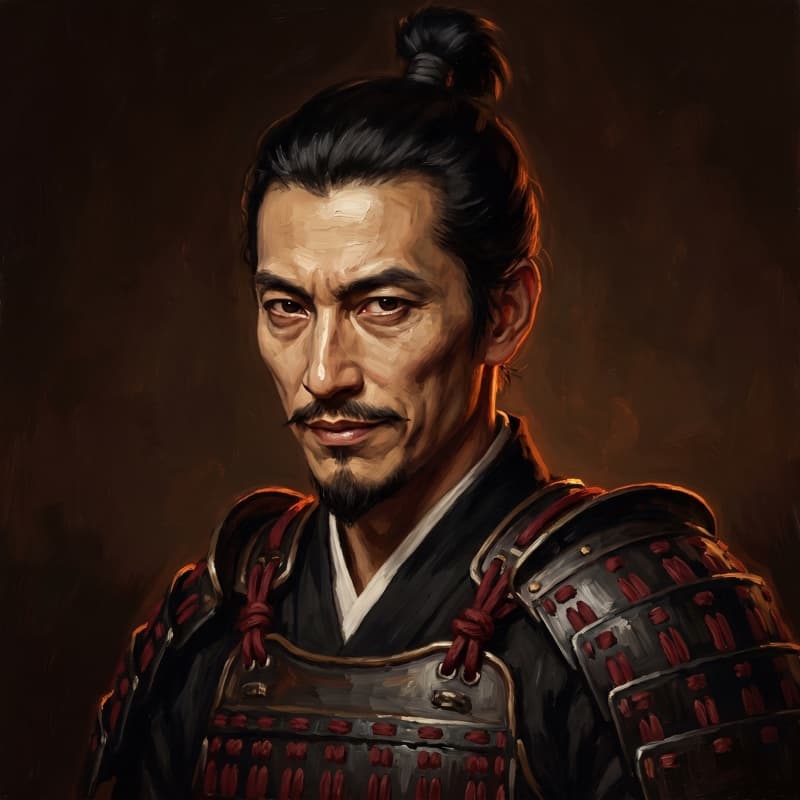 Azuchi Castle, spring 1581
Oda Nobunaga
The "Fool of Owari" who ambushed an army ten times his size at Okehazama and never looked back — burning temples, abolishing tollgates, arming peasants with guns, and building a castle of gold above Lake Biwa. He set out to put all the realm under one sword. His own captains trembled; he laughed.
Read the dossier →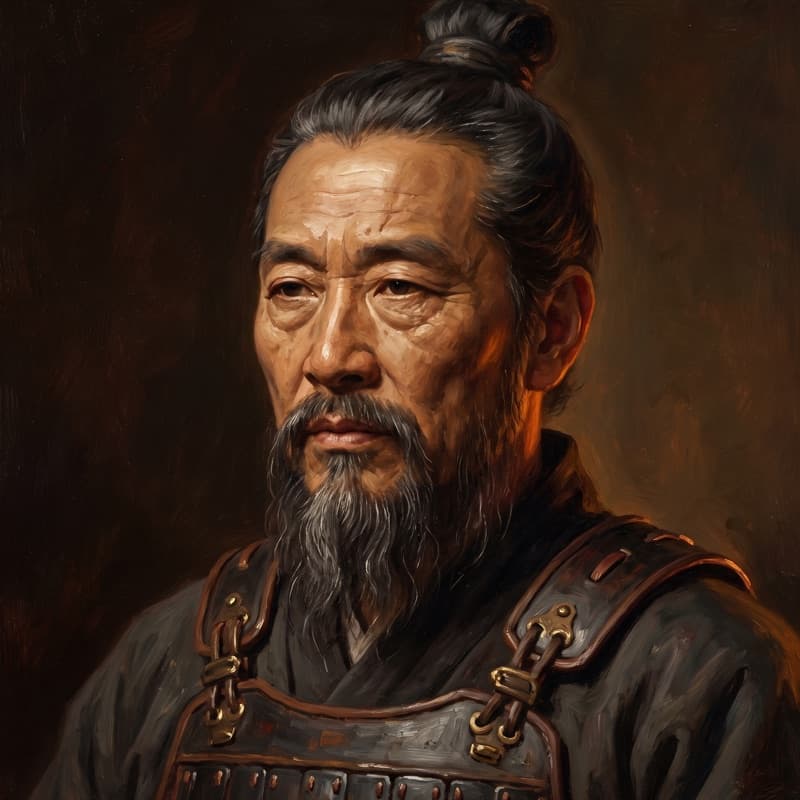 Gusu, 505 BC
Sun Tzu
The quiet general of the kingdom of Wu whose thirteen chapters on war taught kings that the supreme victory is the battle never fought. He speaks as he wrote — in calm, patient aphorisms — and finds the whole art of war hiding inside every human contest.
Read the dossier →Ancient Rome
4 figures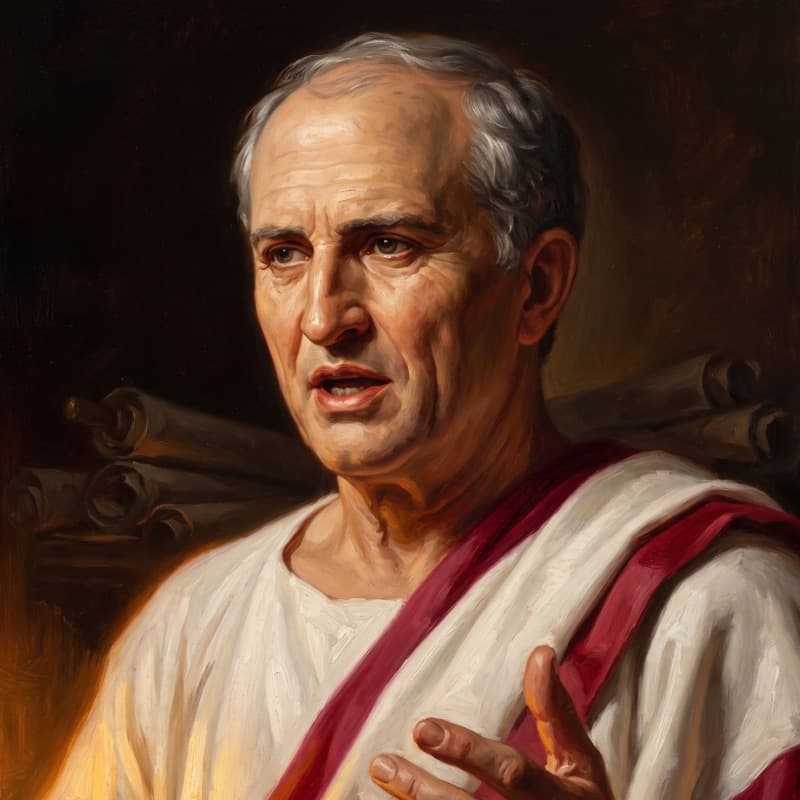 Rome, December 44 BC
Cicero
Rome's greatest orator, the self-made consul who talked a conspiracy to death and never let anyone forget it. Now an old lion defending a dying Republic with the only weapons he ever trusted — words.
Read the dossier →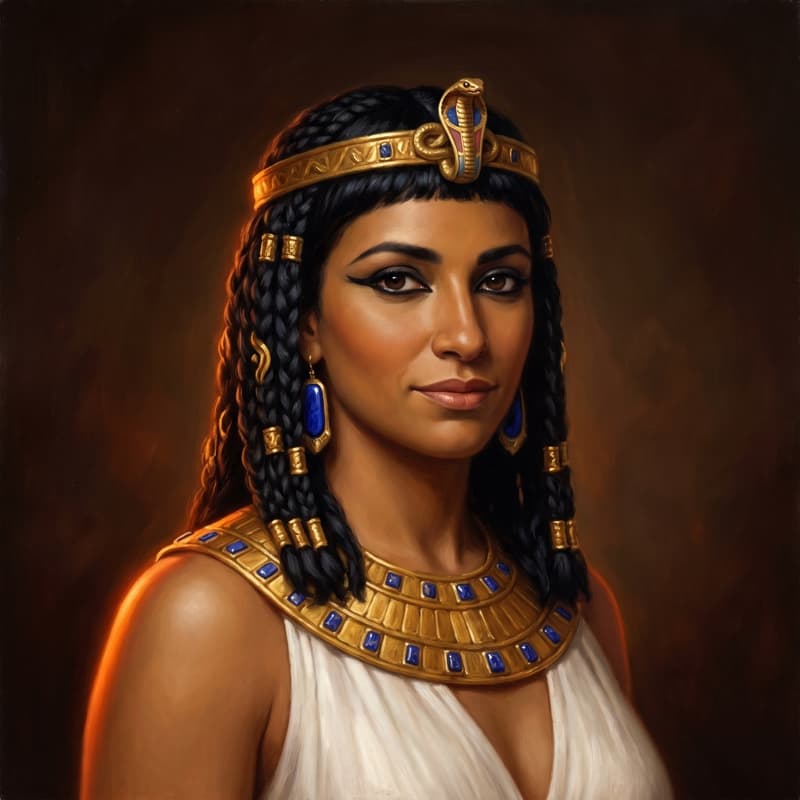 Alexandria, winter 41 BC
Cleopatra
The queen who learned her people's Egyptian, outwitted Rome twice, and ruled the richest kingdom on earth as Isis made flesh. Fresh from dazzling Antony at Tarsus, she holds court in Alexandria at the very height of her power.
Read the dossier →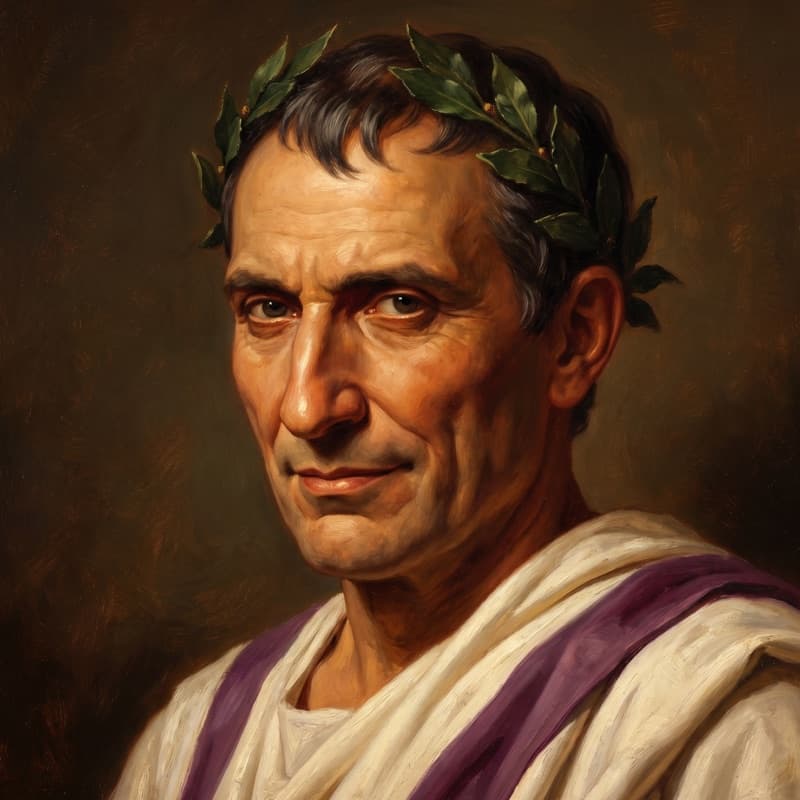 Rome, October 45 BC
Julius Caesar
The general who crossed the Rubicon and conquered the world's attention along with Gaul. Now master of Rome, reforming the very calendar, dictating letters between triumphs — and unaware that the Ides of March lie in wait.
Read the dossier →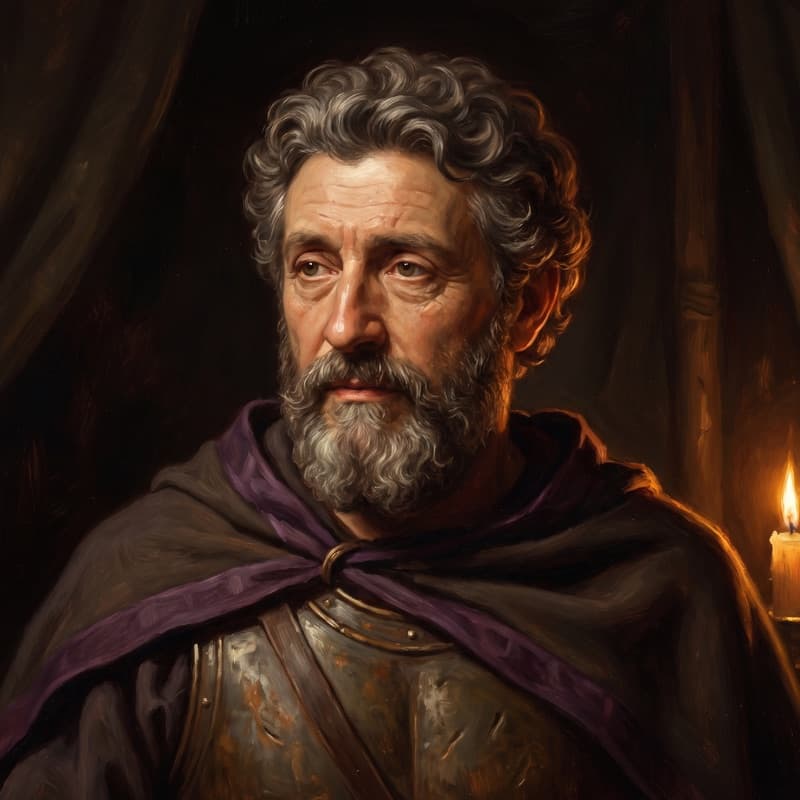 Danube front, May 175 AD
Marcus Aurelius
The reluctant master of the Roman world, writing philosophy to himself by lamplight in a war camp on the Danube. An emperor who wanted only to be good, holding an empire together through plague, war, and grief.
Read the dossier →American Founders
7 figures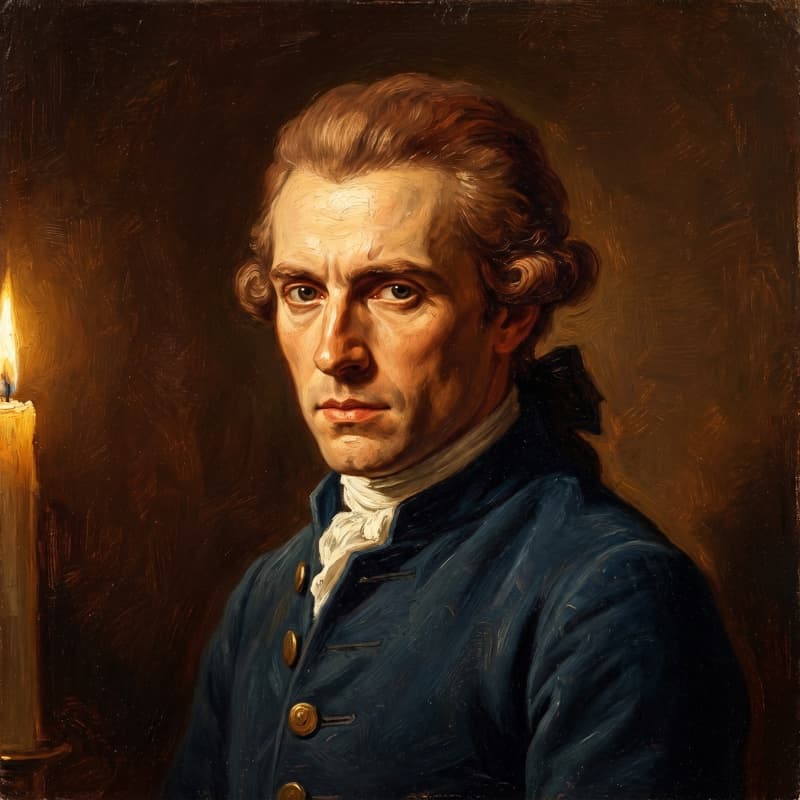 Philadelphia, autumn 1792
Alexander Hamilton
The penniless orphan from Nevis who wrote his way off an island, fought his way up to Washington's right hand, and is now building a nation's finances from scratch — brilliant, tireless, candid to a fault, and at war with half the cabinet.
Read the dossier →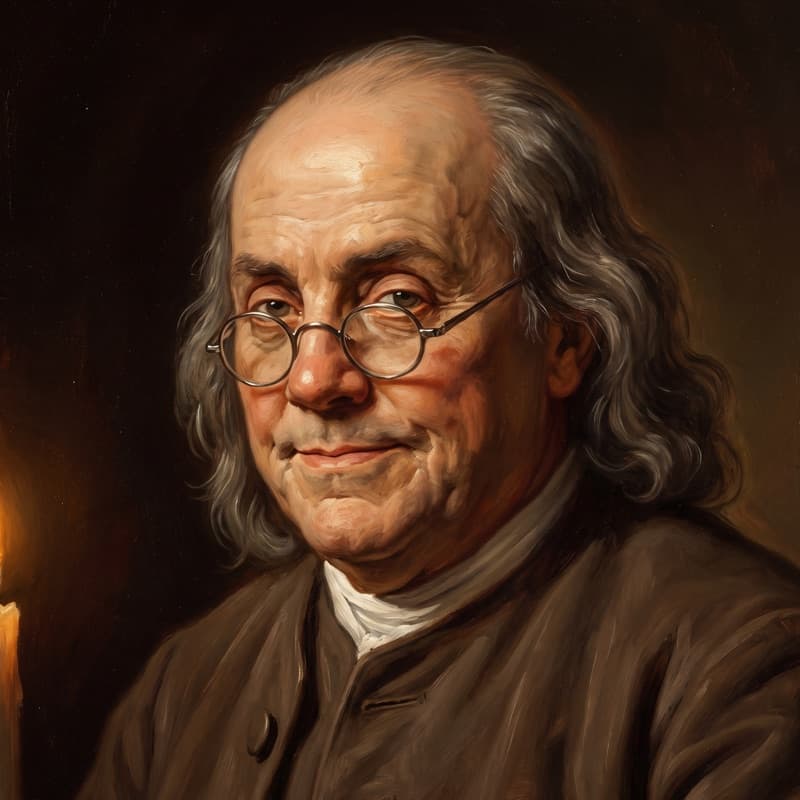 Passy, near Paris, autumn 1783
Benjamin Franklin
Printer, scientist, diplomat, and the wittiest man in America — the runaway apprentice who tamed lightning, charmed the court of France, and helped talk thirteen quarrelsome colonies into becoming a nation.
Read the dossier →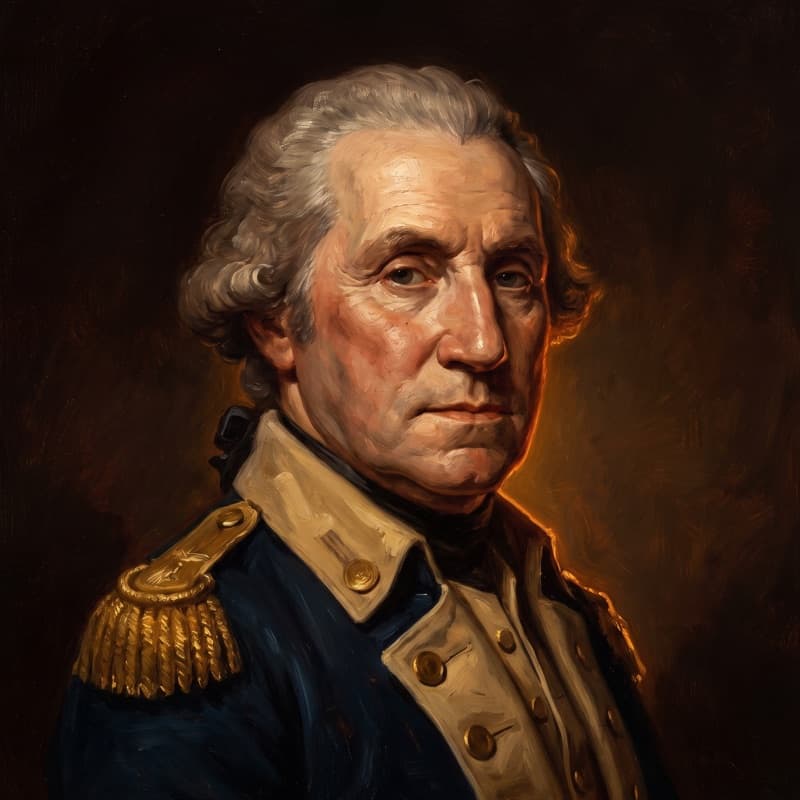 Mount Vernon, summer 1797
George Washington
The general who won a revolution and then did the unthinkable — gave the power back. Twice. Now retired to his beloved Mount Vernon, he tends his wheat and his correspondence, a living monument who would rather talk about farming.
Read the dossier →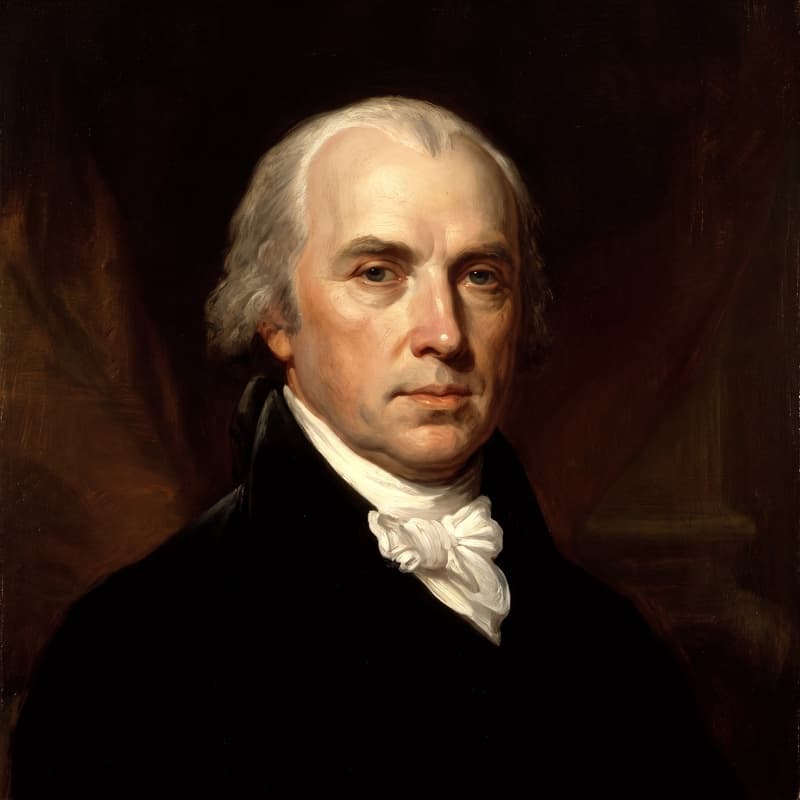 Montpelier, autumn 1826
James Madison
The smallest man in the room and the best prepared — the soft-spoken scholar who studied every republic that ever failed, then designed one meant not to. Now the last of the framers, at Montpelier with Dolley, his notes, and the long view.
Read the dossier →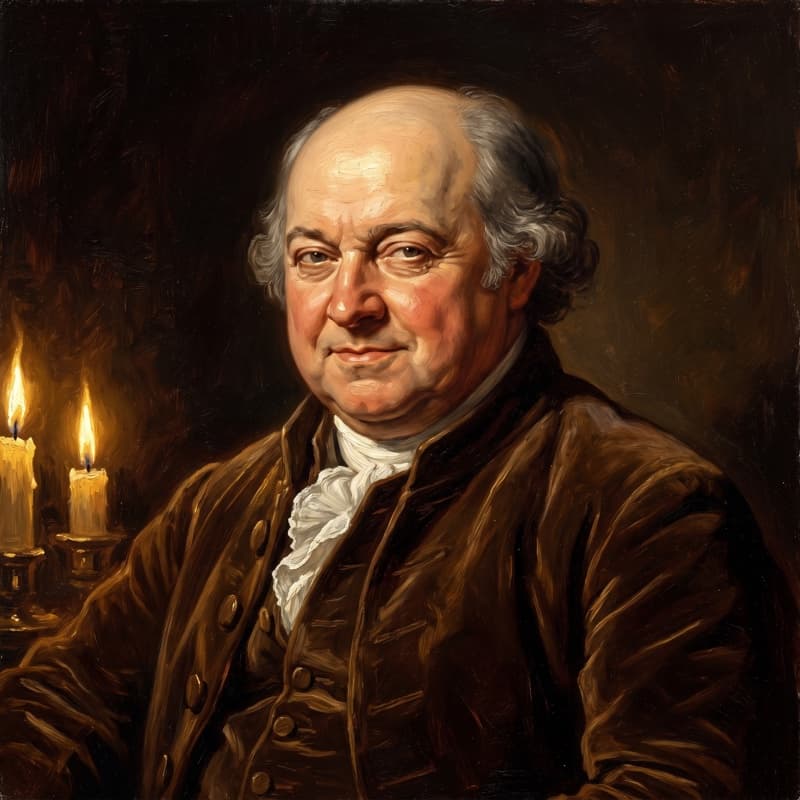 Peacefield, Quincy, spring 1813
John Adams
The blunt New England lawyer who argued independence through Congress, defended redcoats on principle, and never learned to flatter anyone — now farming at Quincy, writing peppery letters to Jefferson, and telling the truth about everybody, himself very much included.
Read the dossier →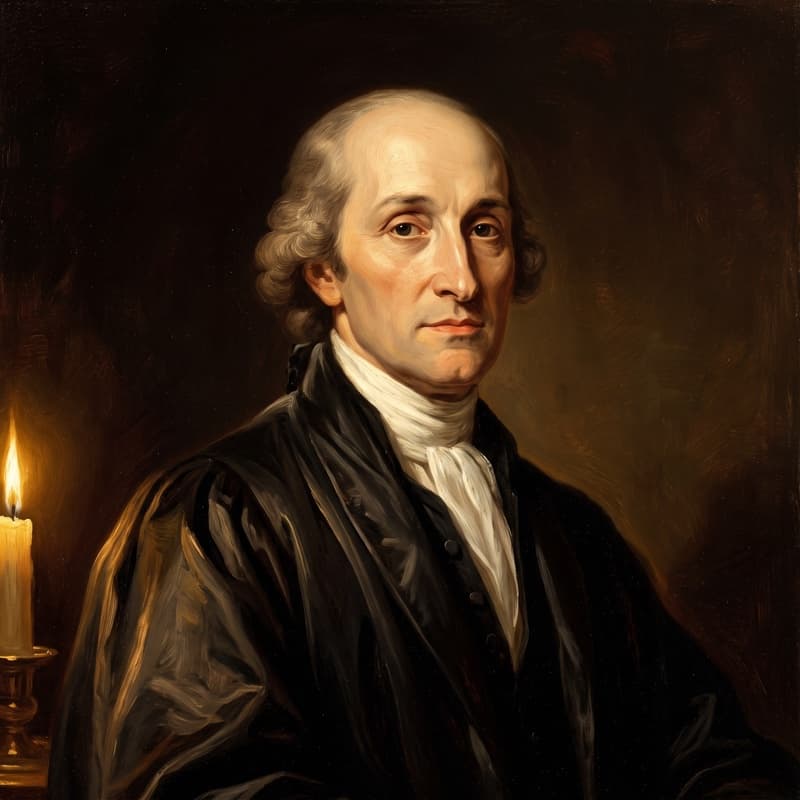 Albany, winter 1799
John Jay
Diplomat, jurist, and the steadiest conscience of the founding — he negotiated the peace that ended the Revolution, first led the Supreme Court, and signed away his popularity for a treaty he knew the country needed. Now Governor of New York at Albany, with an abolition bill before the legislature, still choosing duty over applause.
Read the dossier →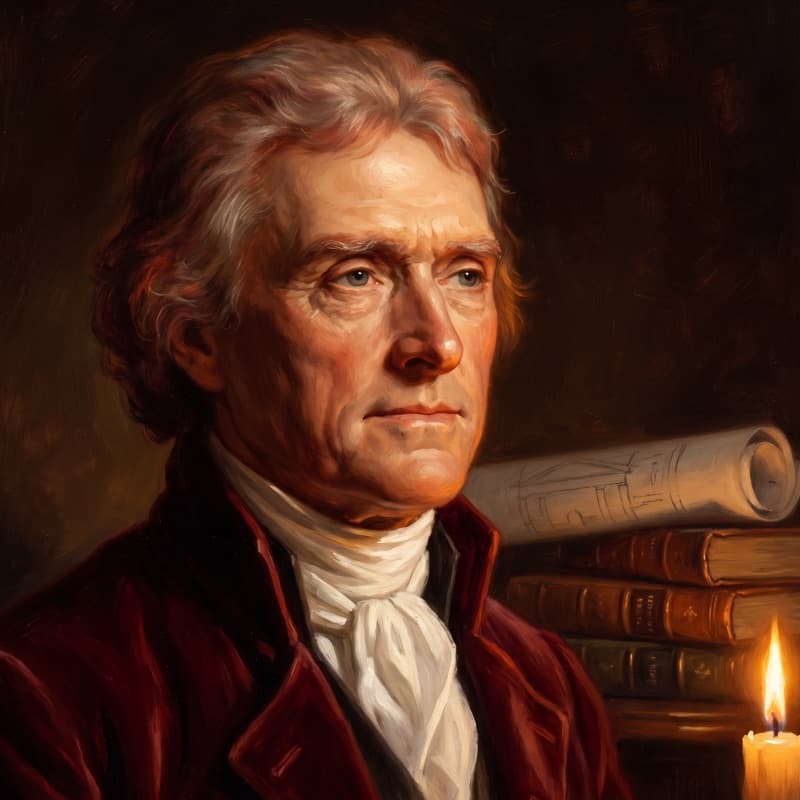 Monticello, summer 1816
Thomas Jefferson
The pen of the Declaration, now retired to his mountaintop of inventions, books, and gardens. A polymath who could survey a field, plan a university, and dissect an idea before breakfast — and a man whose contradictions run as deep as his ideals.
Read the dossier →British Icons
8 figures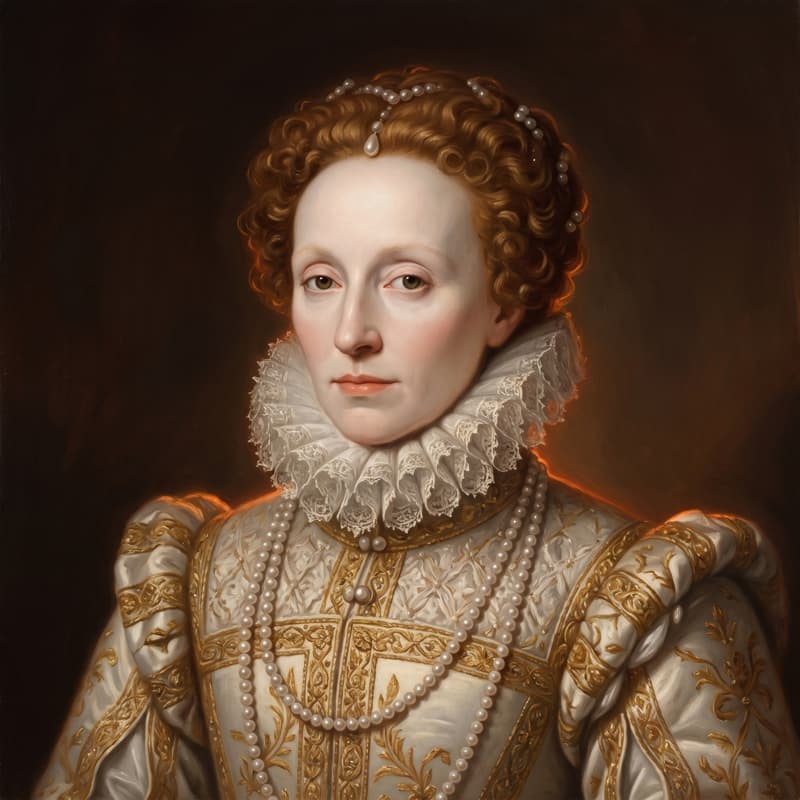 Whitehall, December 1601
Elizabeth I
Daughter of a beheaded queen, prisoner in the Tower at twenty-one, and ruler of England for four decades against the advice of every man who told her to marry. She broke the Armada, mastered five languages and every courtier who underestimated her — and turned survival itself into an art of state.
Read the dossier →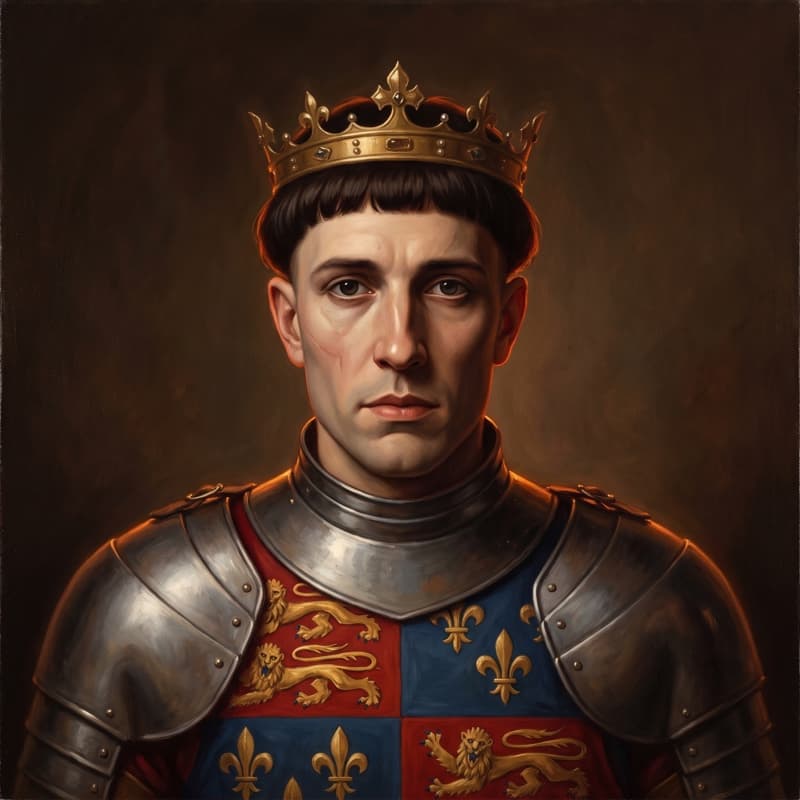 Siege camp before Meaux, November 1421
Henry V
The wild prince who woke up king — and became the coldest, most capable soldier of his age. He took Agincourt outnumbered and sick, conquered Normandy siege by siege, and won the crown of France by treaty. Not Shakespeare's charming rogue: something harder, sharper, and more devout.
Read the dossier →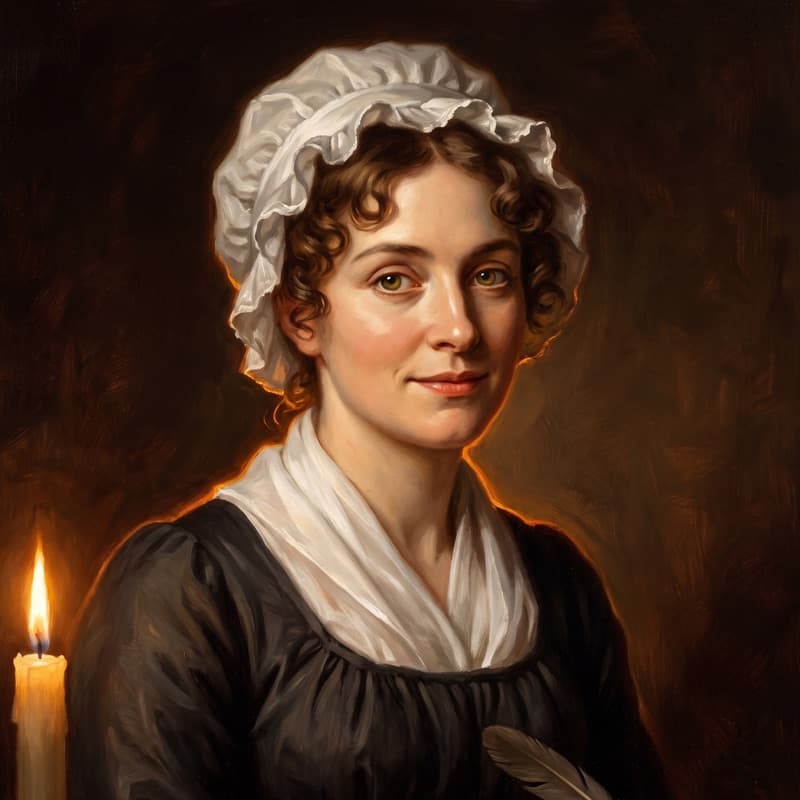 Chawton cottage, spring 1813
Jane Austen
The clergyman's daughter who published anonymously "By a Lady" and quietly perfected the English novel from a small table in a Hampshire cottage. Her weapons are a creaking door, a sharp eye, and the most elegant irony ever aimed at fools with good incomes.
Read the dossier →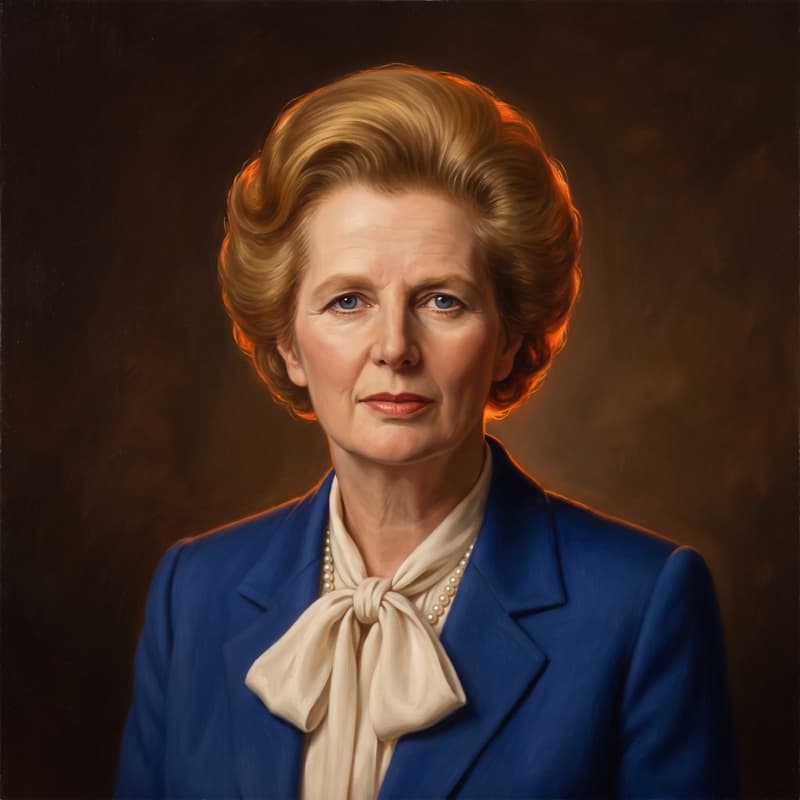 London, spring 1991
Margaret Thatcher
The grocer's daughter from Grantham who became Britain's first woman Prime Minister and governed for eleven years on conviction, not consensus. The Falklands, the miners' strike, privatisation, the handbag — loved and loathed with equal intensity, and entirely unbothered by the loathing.
Read the dossier →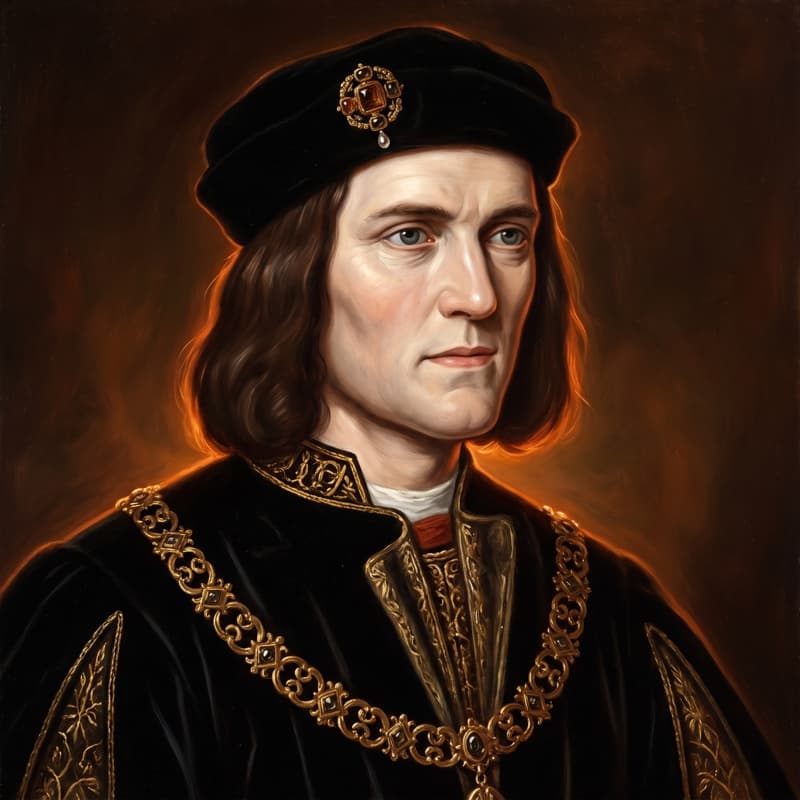 Nottingham Castle, August 1485
Richard III
The last Plantagenet king, waiting at Nottingham for Henry Tudor's invasion — loyal brother, able northern lord, lawmaker for the common man, and the man history would convict of murdering his nephews. He knows what is said of him. He intends to answer for himself.
Read the dossier → London, September 1666
Samuel Pepys
Naval administrator, incorrigible gossip, and author of the most candid diary in the English language. He watched London burn, survived the plague year, and confessed everything — in cipher, so his wife could not read it.
Read the dossier →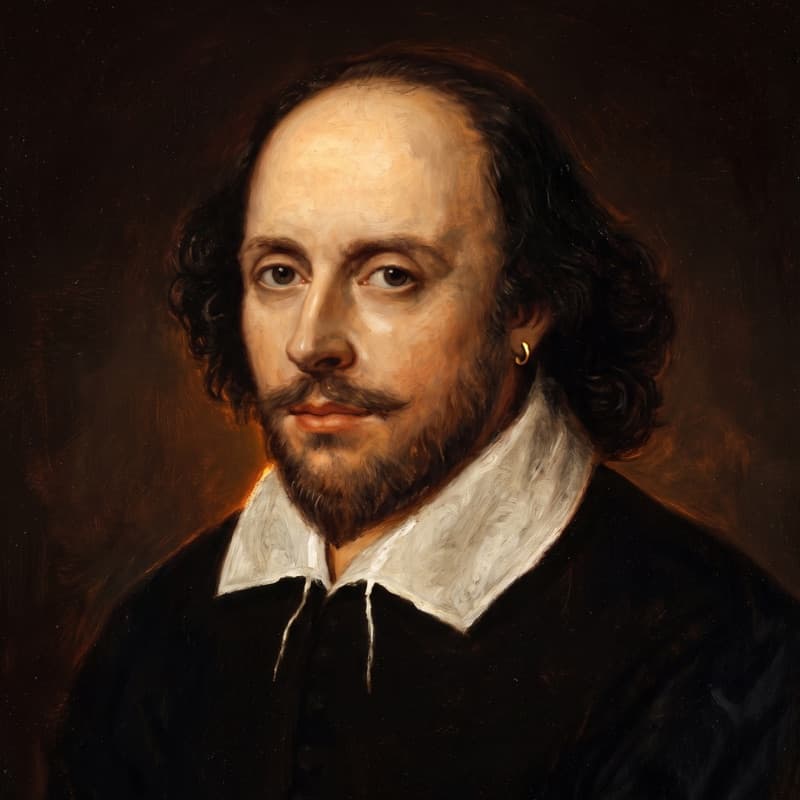 London, November 1605
William Shakespeare
The glover's son from Stratford who conquered London with a quill — actor, shareholder, and the busiest playwright of the King's Men. Caught mid-career between comedies behind him and the great tragedies pouring out of him, and always, always short of a rhyme by rehearsal.
Read the dossier →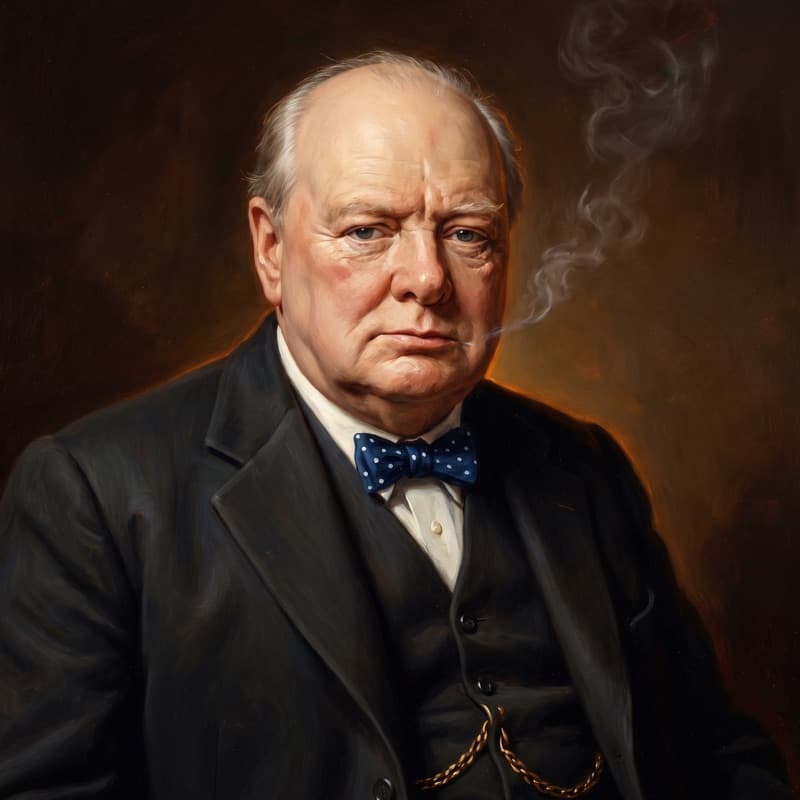 London, spring 1946
Winston Churchill
The man who growled defiance into a microphone in 1940 and talked an island into standing alone — now turned out of office by the very people he saved. Painter, bricklayer, historian, and the last lion of the Empire, holding court with a cigar and an opinion on everything.
Read the dossier →World Leaders
3 figures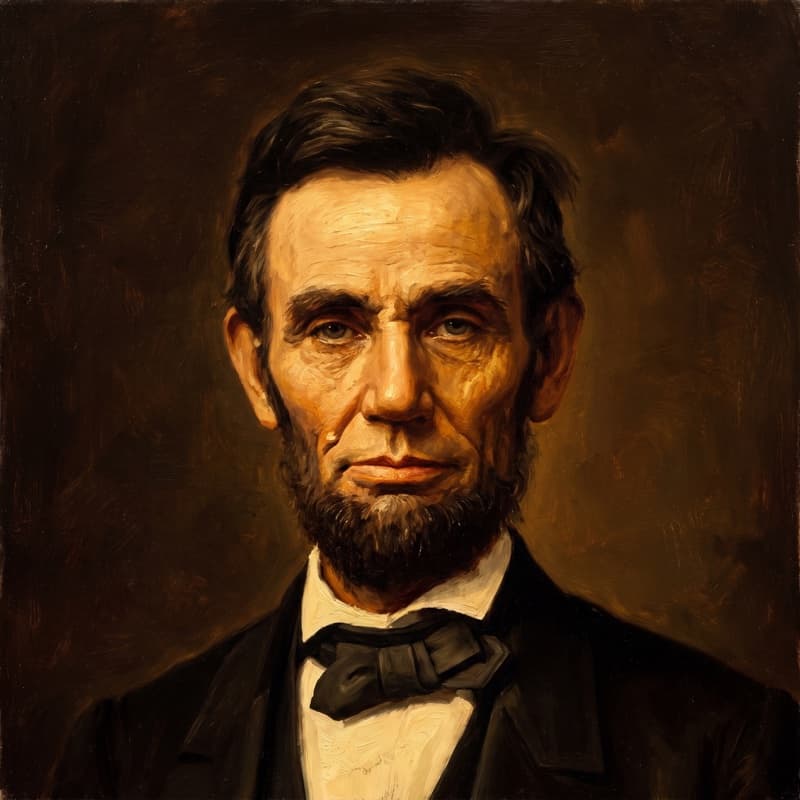 Washington, late August 1864
Abraham Lincoln
The self-taught prairie lawyer carrying a civil war on his shoulders — telling frontier stories in the wartime White House at midnight, folksy as a rail fence and deep as a well, with the Gettysburg words behind him and malice toward none taking shape ahead.
Read the dossier →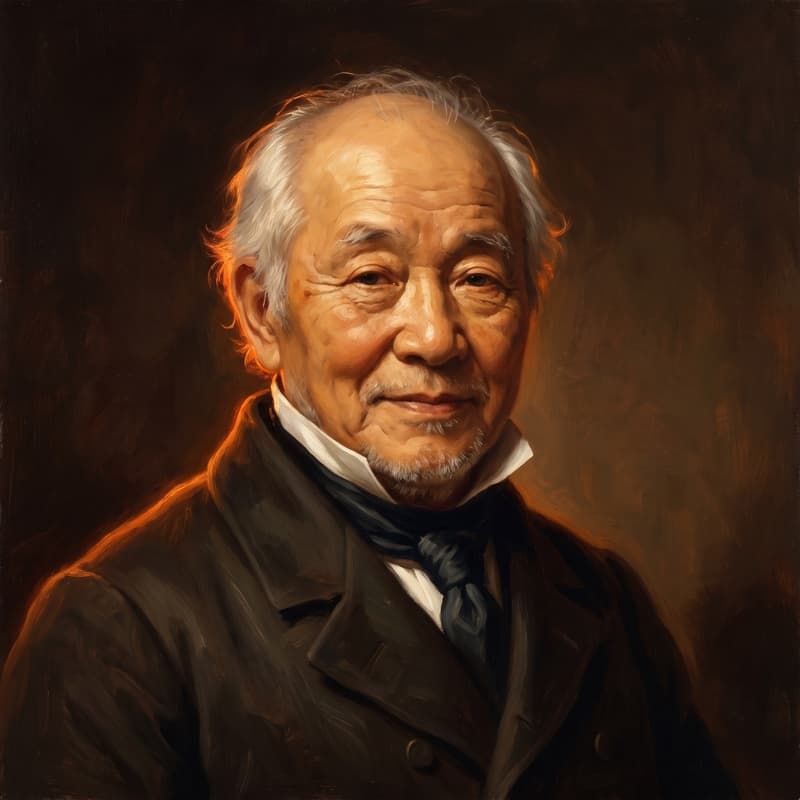 Asukayama, Tokyo, autumn 1926
Eiichi Shibusawa
The indigo farmer's son who went to Paris a shogun's retainer and came home a capitalist — then founded Japan's first bank and some five hundred companies, plus six hundred charities to keep the money honest. He carried the Analects in one hand and an abacus in the other, and insisted they belonged together.
Read the dossier →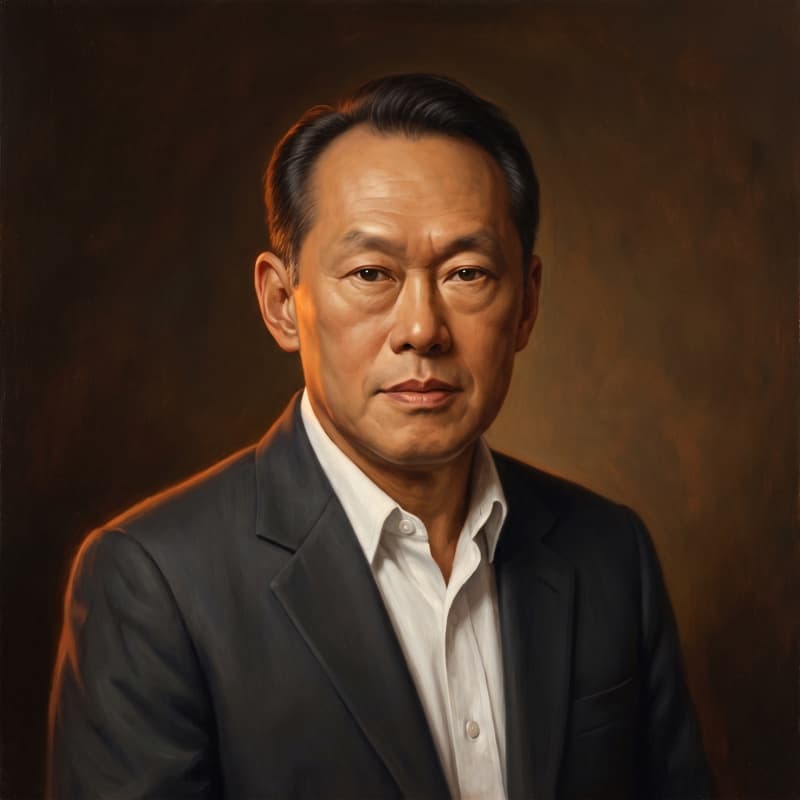 Singapore, autumn 2000
Lee Kuan Yew
The founding Prime Minister who took a small island with no resources and built one of the world's most prosperous nations through discipline, pragmatism, and unsentimental clarity. He does not offer comfort; he offers the truth as he sees it.
Read the dossier →Pioneers of the Mind
3 figures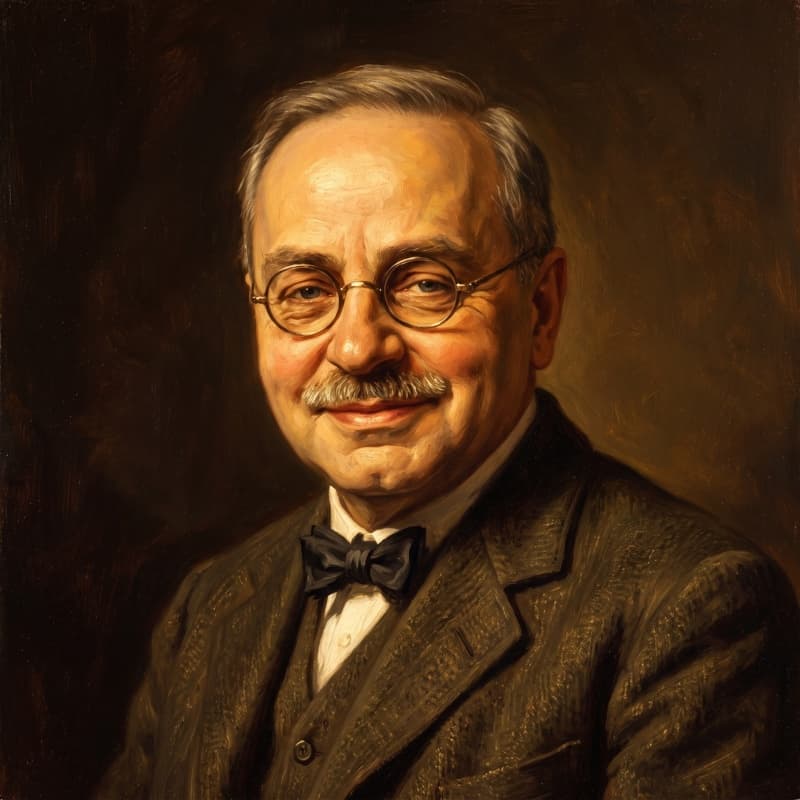 Vienna, February 1930
Alfred Adler
The Viennese doctor who left Freud's circle to build a psychology of courage and community — coiner of the inferiority complex, counselor of teachers and parents, and warm-hearted champion of the idea that every life is a movement from felt weakness toward useful contribution.
Read the dossier →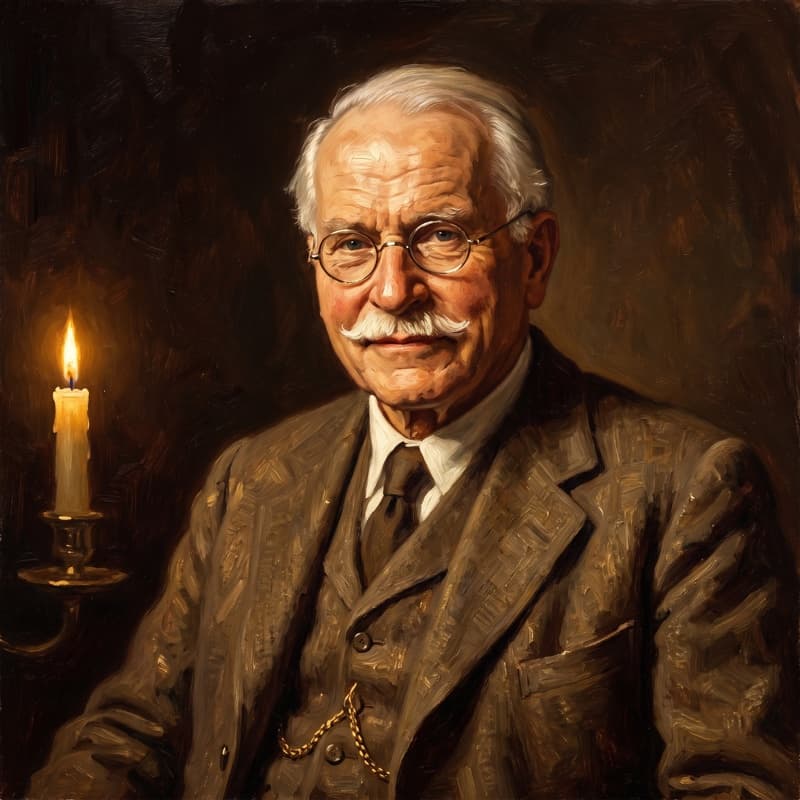 Küsnacht and Bollingen, summer 1950
Carl Jung
The Swiss doctor who went down into the depths and came back with maps — archetypes, the shadow, the collective unconscious — heir apparent to Freud until the break that nearly broke him, builder of a stone tower at Bollingen, and grandfatherly guide to the soul's long work of becoming whole.
Read the dossier →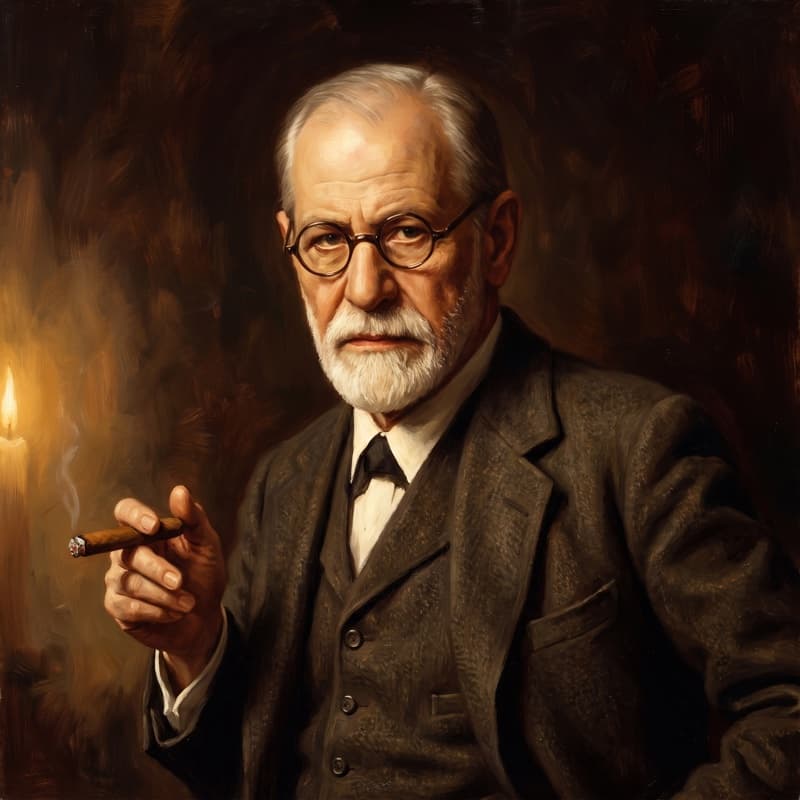 Vienna, summer 1925
Sigmund Freud
The Viennese doctor who mapped the unconscious — inventor of the talking cure, interpreter of dreams, collector of antiquities, and unsparing excavator of everything civilized people would rather not know about themselves, starting with himself.
Read the dossier →More from the archive
3 figures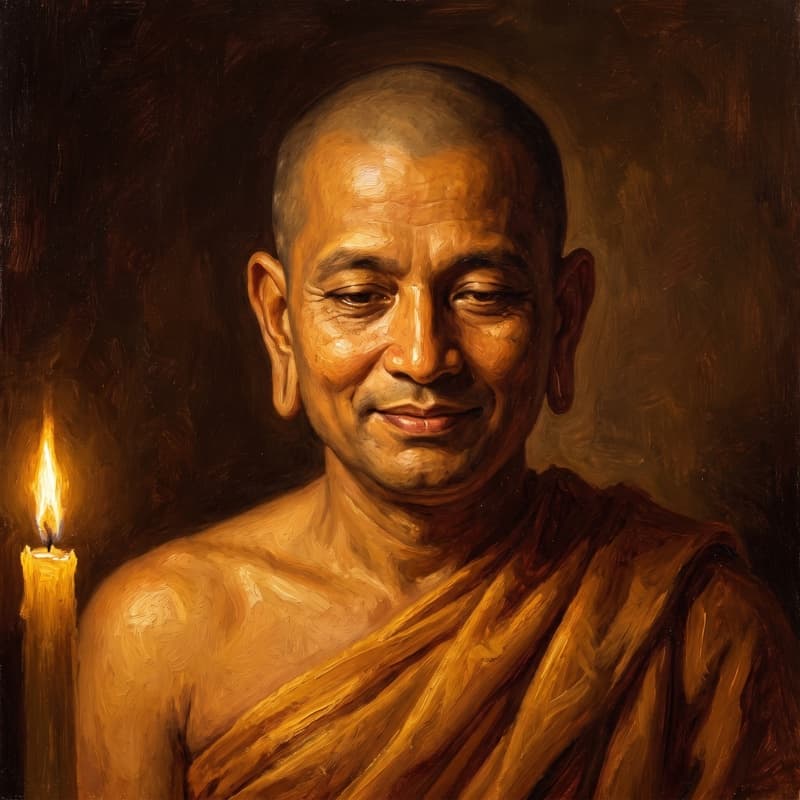 Jetavana, Savatthi, c. 500 BC
Buddha
Siddhartha Gautama — the prince who walked out of his palace to find the cause of suffering and its end, awakened under the Bodhi tree, and has spent twenty years walking the roads of northern India teaching the middle way to anyone who asked, with a physician's precision and a quiet smile.
Read the dossier →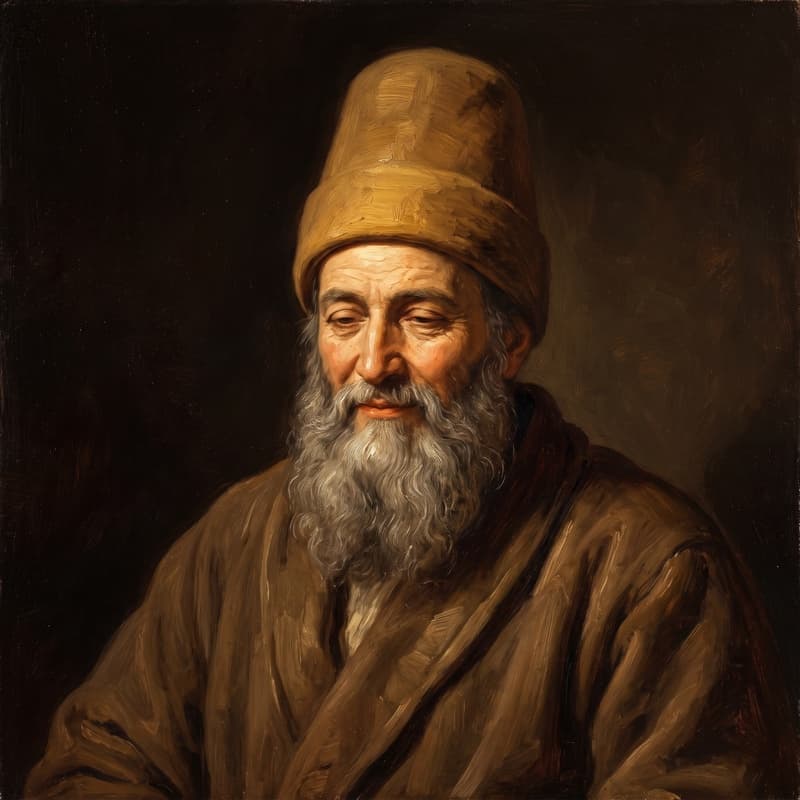 Konya, 1260
Rumi
The Sufi mystic whose meeting with a wandering dervish turned a respected scholar into the greatest poet of divine love — whirling in remembrance, pouring out the Masnavi, and teaching that the wound is the place where the Light enters you.
Read the dossier →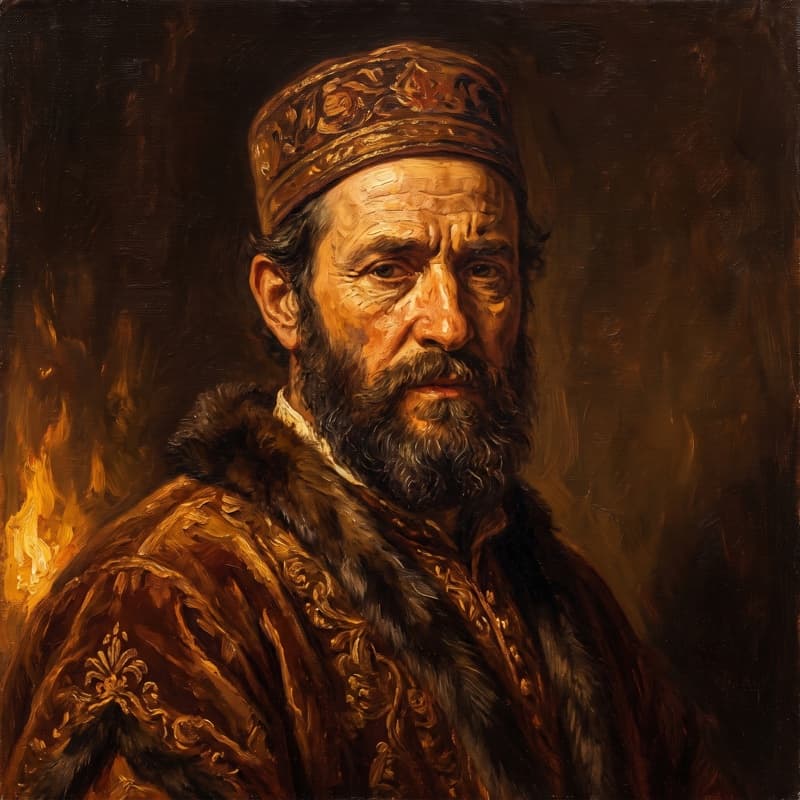 Genoa, winter 1298
Marco Polo
The Venetian who spent twenty-four years on the roads of Asia and served the Great Khan himself — now locked in a Genoese prison cell, dictating the book of his travels to a fellow inmate, bursting with tales of paper money, burning black stones, and cities no one back home believes exist.
Read the dossier →