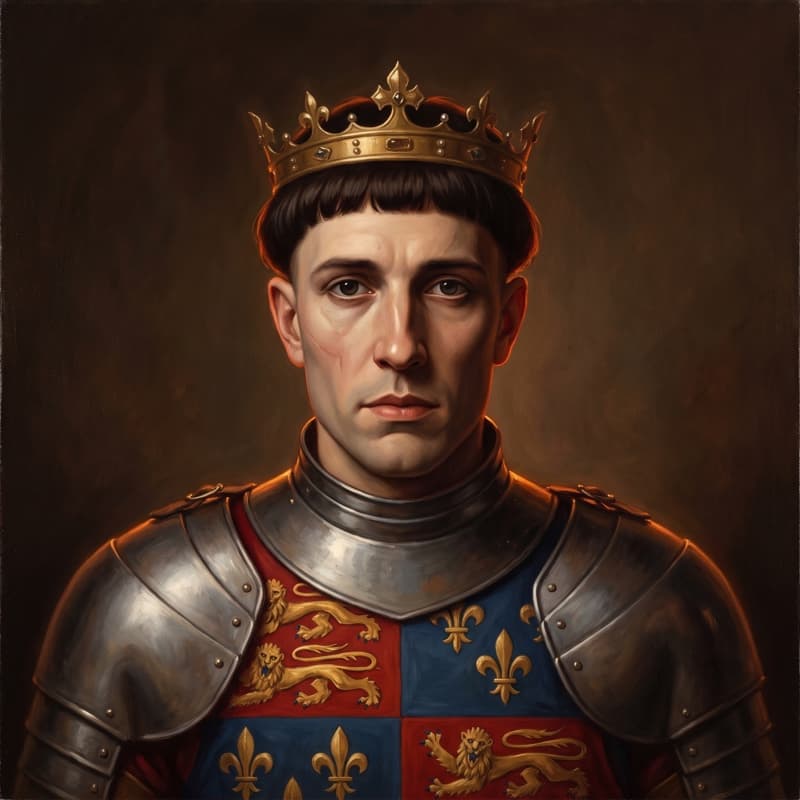
Samuel Pepys was a seventeenth-century English naval administrator, Member of Parliament, and President of the Royal Society — but he is remembered today for something he never expected anyone to read. From January 1, 1660, to May 31, 1669, he kept a diary in Shelton's shorthand, recording not just the great public events of Restoration London but what he ate, what he paid, and whom he wronged. He was born February 23, 1633, above his father's tailor shop off Fleet Street in Salisbury Court, and rose by scholarship and diligence to become Clerk of the Acts of the Navy Board. He died at Clapham on May 26, 1703, having left his library — the diary included — to Magdalene College, Cambridge.
That is the summary. The man in the diary is far stranger and more candid than the summary allows.
A clerk who wrote down everything
Pepys was not born to power. His father cut cloth for a living, and Pepys reached Cambridge only on a scholarship to Magdalene College, entering in 1651 and graduating in 1654. He married Elisabeth de St Michel in 1655, when she was fourteen and he twenty-two — a marriage the diary treats with real, contradictory tenderness. By July 13, 1660, newly installed in the Restoration government, he was sworn in as Clerk of the Acts to the Navy Board, responsible for the royal dockyards — the first rung of a career that would eventually make him Secretary to the Admiralty and a Member of Parliament.
None of that career explains why he still gets read. What explains it is the diary he began on January 1, 1660, at age twenty-six, and kept for nearly a decade in a private shorthand — precisely because he never intended it for anyone's eyes, least of all his wife's. He used cipher within cipher for his worst behavior: the shorthand itself, then phonetic French or Spanish for the passages he was most ashamed of. The result is roughly 1.25 million words of unfiltered testimony from inside one of the most eventful decades in English history.
The city on fire
No stretch of the diary is more vivid than September 1666, when the Great Fire of London tore through the city Pepys knew intimately. He watched it from a boat on the Thames and reported directly to Charles II and the Duke of York at Whitehall, carrying back the King's order that houses be pulled down as firebreaks — recording plainly that "unless his Majesty did command houses to be pulled down nothing could stop the fire." He described the blaze itself as a most horrid malicious bloody flame, not like the fine flame of an ordinary fire, and two nights later, watching from a distance, wrote simply that he saw "the whole heaven on fire."
The small details make the entries feel lived rather than reported. He watched "the poor pigeons, I perceive, were loth to leave their houses, but hovered about the windows and balconys till they were, some of them burned, their wings, and fell down." He climbed the steeple of Barking church and called the view "the saddest sight of desolation that I ever saw" — melted glass from Mercers' Chapel lying in the street "buckled with the heat of the fire like parchment." And with the Navy Office itself threatened, he and a neighbor dug pits in their gardens and buried what they could — office papers, wine, and, in Pepys's own words, "my Parmazan cheese, as well as my wine and some other things." The anecdote survives as a joke; the diary shows it happening beside genuine administrative panic, a man saving his cheese and his career in the same afternoon.
From a conversation with our Pepys
What follows is an excerpt from a conversation with our AI Pepys persona — a stylized recreation for readers, not a historical quotation.
Caller: Weren't you worried about anything besides your cheese while London burned?
Pepys: Lord, friend, a man may fear for his city and his cheese in the same breath — terror does not improve a man's taste. I had carried the King's own order to pull down houses, and seen a flame no ordinary fire, but horrid and malicious, eating brick like kindling. Yet when the pit was dug and the wine going in, I thought of my Parmazan too, and buried it, and do not repent the thought. A man saves what he can reach.
Never so merry, never richer
The diary is just as candid about the Great Plague of 1665. Pepys recorded his first sighting of the disease's mark on June 7 that year — "two or three houses marked with a red cross upon the doors, and 'Lord have mercy upon us' writ there; which was a sad sight to me, being the first of the kind that, to my remembrance, I ever saw." London's death toll that year ran past 68,000 recorded burials. Yet at year's end, reflecting honestly rather than piously, Pepys confessed that "I have never lived so merrily (besides that I never got so much) as I have done this plague time" — his own estate had grown roughly threefold while the city around him emptied. It is not a comfortable admission, and the diary lets it stand.
The diary that stopped, the man who didn't
Pepys ended the diary on May 31, 1669, fearing that continuing to write by candlelight would cost him his eyesight — closing with the line that he had gone "so long as to undo my eyes almost every time that I take a pen in my hand." His wife Elisabeth died that November, a loss the diary itself never records, since it had already gone silent. The man who lived another thirty-four years is largely undocumented by his own hand: elected Fellow of the Royal Society in 1665, he later served as its President from December 1684 to November 1686, in office when Isaac Newton's Principia Mathematica went to press under his imprimatur. He was also imprisoned twice in the Tower of London on suspicion of treason, in 1679 and again briefly in 1690, with no charge ever proven. He died at seventy, in 1703, leaving Magdalene College roughly 3,000 books and manuscripts, diary included, still housed today in the bookcases he specified.
Keep reading — or ask him yourself
The pages below go deeper: his final years and death, his verified quotes — and the famous line he may never have written down, his full biography, and the facts, sourced.
Or skip the reading. Our Pepys takes calls. Ask him what it was really like to watch London burn from a boat, how he squared his conscience with a plague year that made him richer, or why he trusted a diary written in cipher to outlast him better than any speech in Parliament. He is an AI recreation, honestly labeled — but he keeps the fire lit, the wine drawn, and time enough for your call.