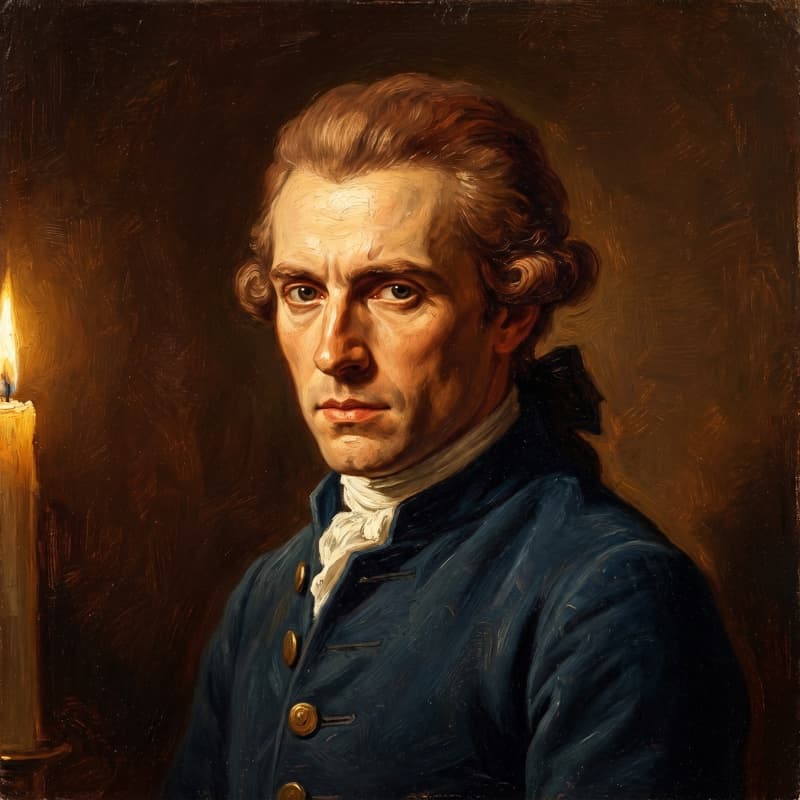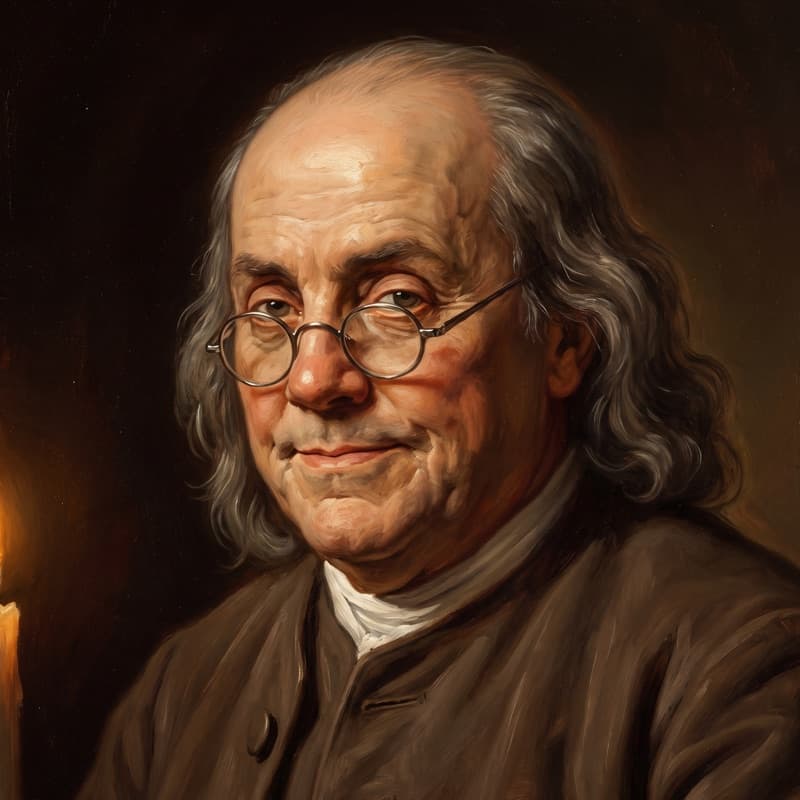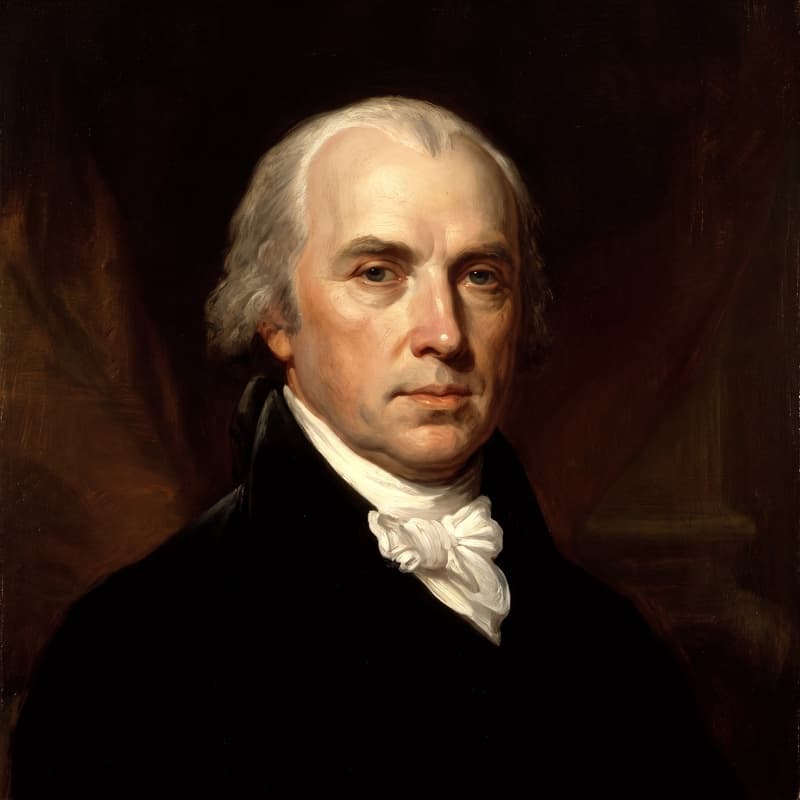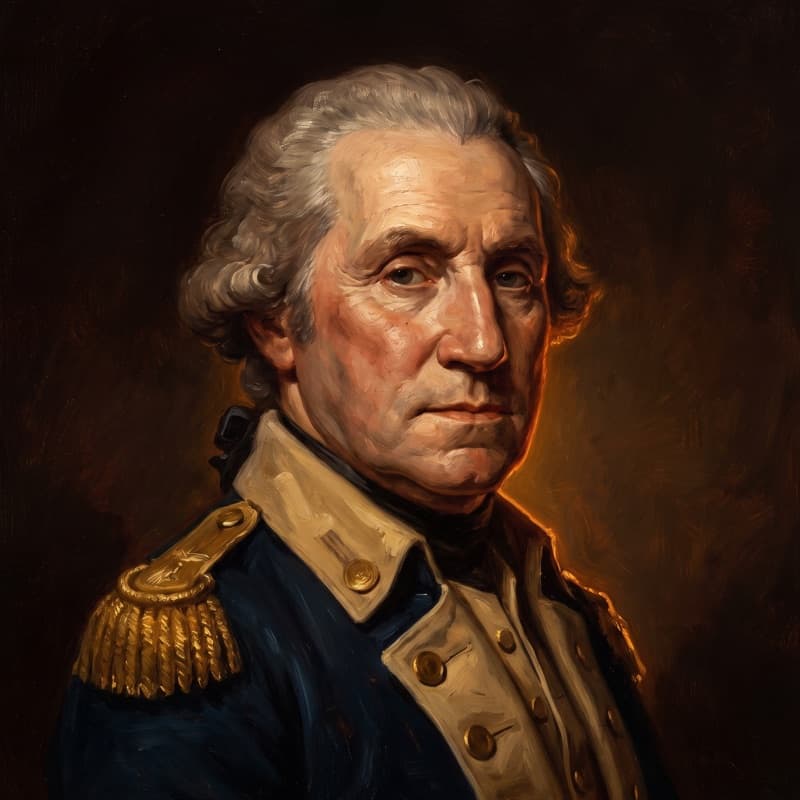
George Washington was the first president of the United States, serving from April 30, 1789, until March 4, 1797. Born on February 22, 1732, at Popes Creek in Virginia's Northern Neck, he commanded the Continental Army through eight years of the Revolutionary War, presided over the convention that framed the Constitution, built the presidency from nothing, and then walked away from it after two terms. He died at Mount Vernon on December 14, 1799, at 67, of a throat infection that began as a cold caught riding his farms in snow and sleet.
That is the outline. But the thing that made Washington singular was not what he won. It was what he gave back.
The man who kept surrendering power
By the end of 1783 Washington was the most powerful man on the continent, at the head of a victorious army that Congress had chronically failed to pay. In March of that year, at Newburgh, New York, he faced officers contemplating mutiny over their wages — and dissolved the plot with a speech, and with the plainly visible fact of his own aging: reaching for his spectacles, he remarked that he had grown gray, and nearly blind, in his country's service. The room wept. The mutiny died.
Nine months later he did the thing kings did not do. On December 23, 1783, he stood before Congress at Annapolis and resigned:
"Having now finished the work assigned to me, I retire from the great theatre of Action; and bidding an Affectionate farewell to this August body under whose orders I have so long acted, I here offer my Commission, and take my leave of all the employments of public life." — Resignation as commander-in-chief, December 23, 1783
He would do it again in 1797, declining a third presidential term when nothing but his own choice stopped him from holding office for life. Twice in one lifetime, supreme power handed back. That — more than any battle — is the precedent the republic still runs on.
From surveyor to commander
None of it was inherited. Washington's family moved to Ferry Farm when he was six, in 1738; his father died when he was a boy, and unlike many founding peers he never saw a university. He made himself with a surveyor's chain, then with a sword — commanding Virginia's regiment in the French and Indian War from 1754 to 1758, surviving Fort Necessity and Braddock's disastrous 1755 campaign. He learned command by losing, which may be why he never lost his nerve later, when losing was most of the job. On June 15, 1775, the Second Continental Congress unanimously chose him to lead the Continental Army, and for eight years he held a starving, underpaid force together largely by refusing to let it dissolve.
What Washington actually did as president
Inaugurated in New York City on April 30, 1789, Washington understood that everything he did would be the first time it had ever been done. His first inaugural address named the stakes plainly:
"the preservation of the sacred fire of liberty and the destiny of the republican model of government are justly considered, perhaps, as deeply, as finally, staked on the experiment entrusted to the hands of the American people." — First Inaugural Address, April 30, 1789
His capstone was the Farewell Address — published as a newspaper letter on September 19, 1796, never delivered as a speech — warning against the spirit of party and counseling that "It is our true policy to steer clear of permanent alliances with any portion of the foreign world." (The famous phrase "entangling alliances" is Jefferson's, from 1801 — people have been merging the two men's words for two centuries.) The full address reads less like a victory lap than like a worried father's letter to a child he won't see grow up.
From a conversation with our Washington
What follows is an excerpt from a conversation with our AI Washington persona — a stylized recreation for readers, not a historical quotation.
Caller: You could have been a king. Honestly — why walk away twice?
Washington: Because a field that is never rested is ruined, and so is a man — and so, I should suppose, is a republic. If the office could not survive my leaving it, then it was not an office at all, but a throne with better manners. I confess it was not modesty. I wished to go home. But I also wished to prove the thing could be done, so that lesser occasions might not tempt better men.
Did he really chop down the cherry tree?
No. The cherry-tree story — "I cannot tell a lie" — was invented by the biographer Mason Locke Weems and first appeared in the fifth edition (1806) of his Washington biography, six years after the book was first published in 1800. The wooden teeth are a myth too: his dentures were made of human teeth (some purchased from enslaved people), ivory, and metal, likely stained dark enough to look like wood. And "first in war, first in peace, and first in the hearts of his countrymen" — the line most often put in his mouth — was said about him, by Henry "Light-Horse Harry" Lee, eulogizing him before Congress after his death.
The contradiction he left standing
Washington held hundreds of people in bondage at Mount Vernon throughout his life. He knew what it was; in 1786 he wrote to Robert Morris that "there is not a man living who wishes more sincerely than I do, to see a plan adopted for the abolition of it" — while insisting only legislative authority could accomplish it, and while continuing to live off enslaved labor. His will provided for the eventual freedom of people he held in bondage. The gap between the letter and the life is not a footnote to Washington's story. It is part of the story, and he knew that too. Read the letter to Robert Morris yourself.
Keep reading — or ask him yourself
The pages below go deeper: his full biography, his death at Mount Vernon, his verified quotes — and the famous ones he never said, and the facts, sourced.
Or skip the reading. Our Washington takes calls, at Mount Vernon in 1797, lately in from his fields. Ask him why he refused a crown, what the spectacles moment at Newburgh felt like from behind the spectacles, or whether he thinks the union will hold. He is an AI recreation, honestly labeled — reserved, courteous, and happier discussing crop rotation than his own legend. Which is exactly why he's worth the call.