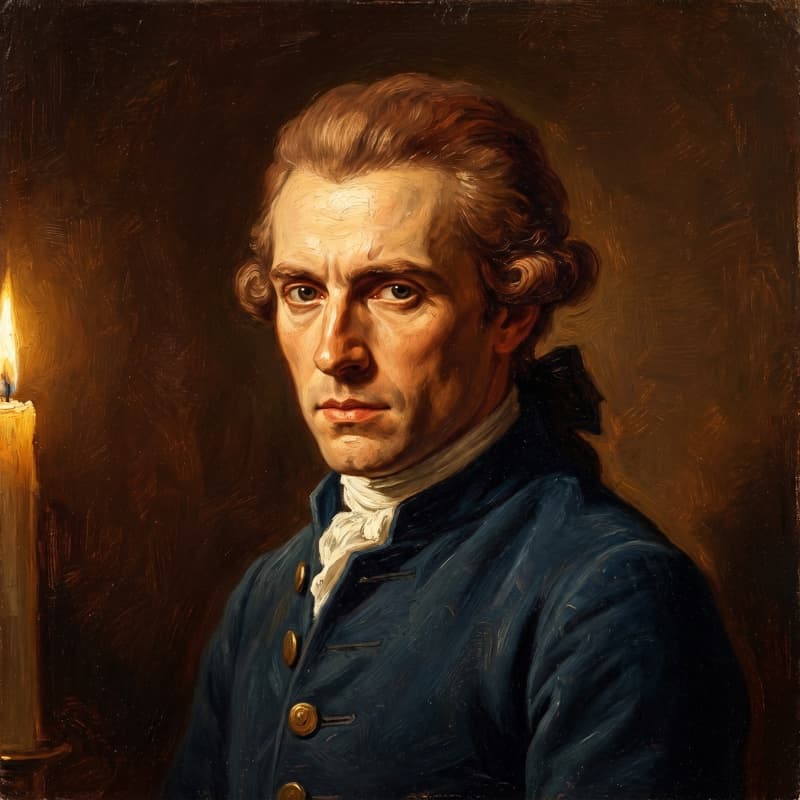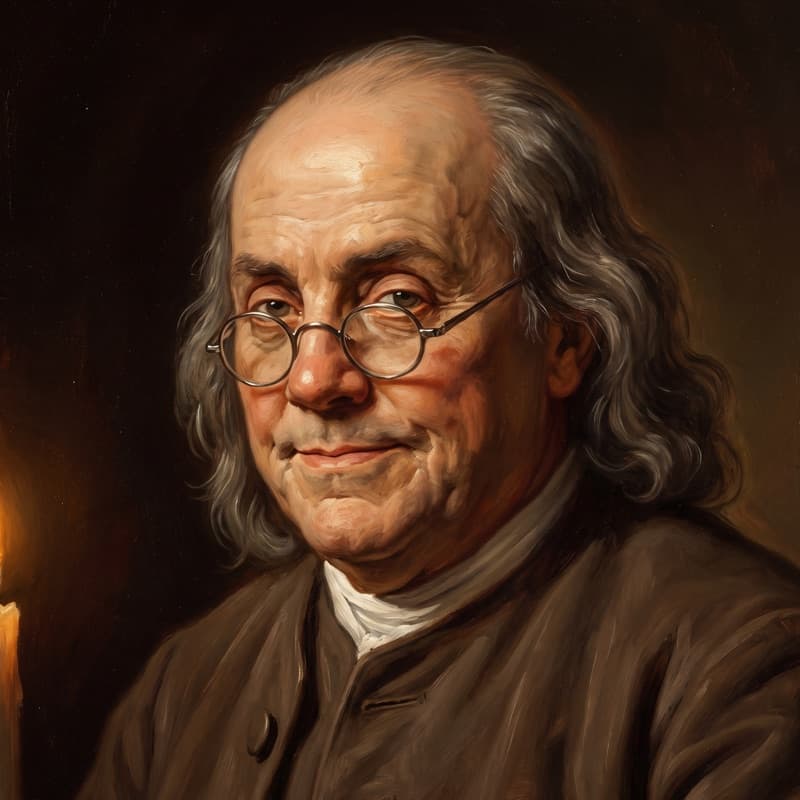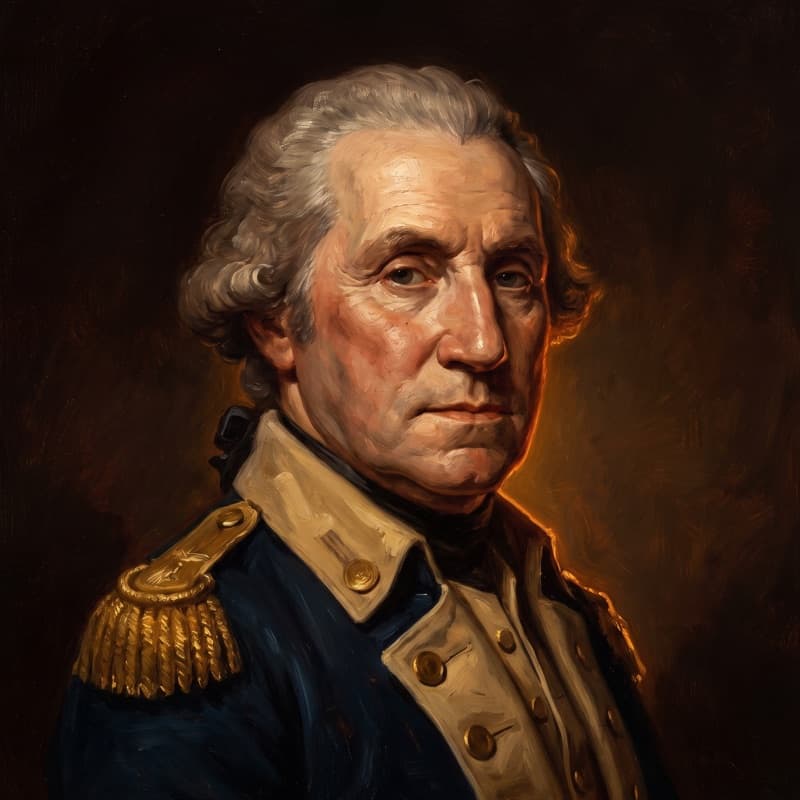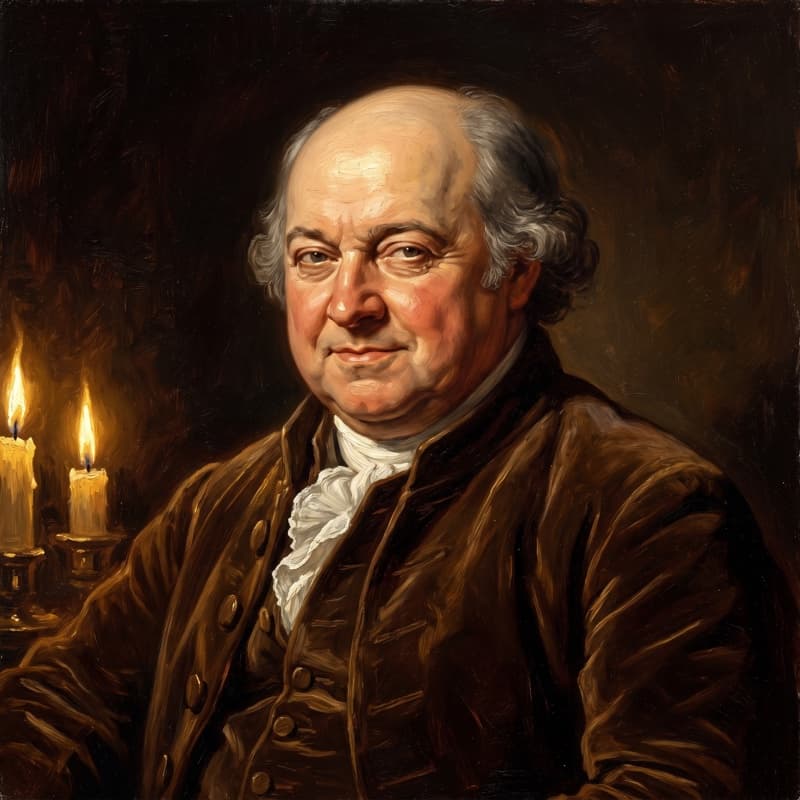
John Adams was the second president of the United States, serving from March 4, 1797, to March 4, 1801, after eight years as the country's first vice president. Born on October 30, 1735, in Braintree, Massachusetts — present-day Quincy — he was a farmer's son who became a Boston lawyer, the loudest voice for independence in the Continental Congress, a wartime diplomat, and finally president. He died at his Quincy farm on July 4, 1826 — the fiftieth anniversary of the Declaration of Independence, and the same day as Thomas Jefferson.
That is the résumé. The man himself was blunter, funnier, and vainer than the résumé — and, unusually for a founder, he would be the first to tell you so.
The lawyer who took the case nobody wanted
In 1770, after British soldiers fired into a Boston crowd and killed five colonists, no lawyer in town would defend them. Adams did. He believed accused men were entitled to counsel and to a verdict built on evidence rather than fury, and he told the jury so in a line that has outlived the trial:
"Facts are stubborn things; and whatever may be our wishes, our inclinations, or the dictates of our passions, they cannot alter the state of facts and evidence." — closing argument, Boston Massacre trial, 1770
The soldiers were acquitted or convicted only of the lesser charge of manslaughter. Defending the King's men made Adams briefly the most hated lawyer in Boston — and, in the long run, made his reputation: a revolutionary who insisted the revolution be lawful.
The man who argued independence into being
Adams sat in the First Continental Congress from 1774 and the Second from 1775, where he nominated George Washington to command the Continental Army and served on the committee that prepared the Declaration of Independence. Jefferson held the pen; Adams carried the floor debate. He understood earlier than most what was actually happening — as he later put it, "The Revolution was effected before the War commenced. The Revolution was in the minds and hearts of the people".
On July 3, 1776 — the day after Congress voted for independence — he wrote to Abigail:
"The Second Day of July 1776, will be the most memorable Epocha, in the History of America." — letter to Abigail Adams, July 3, 1776
He predicted the date would be celebrated forever with "Pomp and Parade, with Shews, Games, Sports, Guns, Bells, Bonfires and Illuminations from one End of this Continent to the other." He was off by two days and right about everything else.
From a conversation with our Adams
What follows is an excerpt from a conversation with our AI Adams persona — a stylized recreation for readers, not a historical quotation.
Caller: You picked July 2. We celebrate July 4. Does that bother you?
Adams: Bother me! Sir, I predicted the fireworks, the parades, the bells, the whole continental commotion — and posterity kept the celebration and corrected my date. That is posterity all over. The vote was the second; the vote was the deed. The fourth got the parchment, and parchment makes the better anniversary, I suppose. No — I am not bothered. Ask my wife whether I am bothered, and disbelieve her answer.
A government of laws, and a decade abroad
When Massachusetts needed a constitution, Adams drafted it. The Constitution of 1780 remains in force today, and its Declaration of Rights closes its separation-of-powers article with the phrase that became his signature idea: "to the end it may be a government of laws and not of men".
The war sent him to Europe: to France, to the Netherlands to talk Dutch bankers into loans for a republic that barely existed, then to the negotiations that produced the Treaty of Paris in 1783. In 1785 he became the first American minister to Great Britain — presenting himself to George III as the ambassador of the country that had just escaped him.
What Adams actually did as president
Adams won the presidency in 1796 and inherited a crisis with France. When American envoys arrived in Paris, French agents demanded bribes before negotiations could even begin — the XYZ Affair, which ignited an undeclared naval conflict known as the Quasi-War. With his own party clamoring for full-scale war, Adams instead sent new negotiators and got peace: the Convention of 1800 ended the fighting and dissolved the old French alliance. It probably cost him reelection.
The record has a darker page, and he signed it. In the summer of 1798, amid fears of French subversion, Adams signed the Alien and Sedition Acts. The Sedition Act criminalized "false, scandalous and malicious" writing against the government and was used almost exclusively to prosecute editors of the opposition press. The backlash helped hand the election of 1800 to Jefferson.
Did Adams and Jefferson really die on the same day?
Yes — and it remains one of the strangest coincidences in American history. Adams died at Peacefield, his Quincy farm, at age 90 on July 4, 1826, the fiftieth anniversary of the Declaration; Jefferson died the same day at Monticello. Four days earlier, asked for a toast for Quincy's Independence Day celebration, Adams had given his last public words: "Independence Forever!" — and, asked whether he cared to add anything, "Not a word." Tradition holds that his dying words referenced Jefferson, but the exact wording of that private remark was never securely recorded; the toast is the confirmed farewell.
One caution while we are checking facts: the internet's favorite Adams quote — that a nation can be conquered "by sword" or "by debt" — is not his. The editors of the Adams Papers have found no evidence he ever wrote it.
Caller: Do you worry history will remember Jefferson better than you?
Adams: Worry! I have written whole letters on the certainty of it — loudly, which rather undercuts the complaint. Vanity, sir: I keep an exact inventory of my own faults, and that one heads the list. But mark this. I would rather be forgotten for keeping the peace than remembered for a popular war. Carve that on nothing, and I shall be content — nearly.
Excerpt from our AI Adams persona — stylized, and labeled as such.
Keep reading — or argue with him yourself
The pages below go deeper: his death on the fiftieth Fourth of July, his verified quotes (and the famous ones he never said), his full biography, and the facts, sourced.
Or skip the reading. Our Adams takes calls. Ask him why he defended the redcoats when all Boston wanted them hanged, or whether the peace with France was worth a second term. He wrote to posterity all his life — "Posterity! You will never know, how much it cost the present Generation, to preserve your Freedom!" — and posterity, for once, can answer back. He is an AI recreation, honestly labeled — but he answers head-on, contradicts you freely, and considers that the highest form of respect.