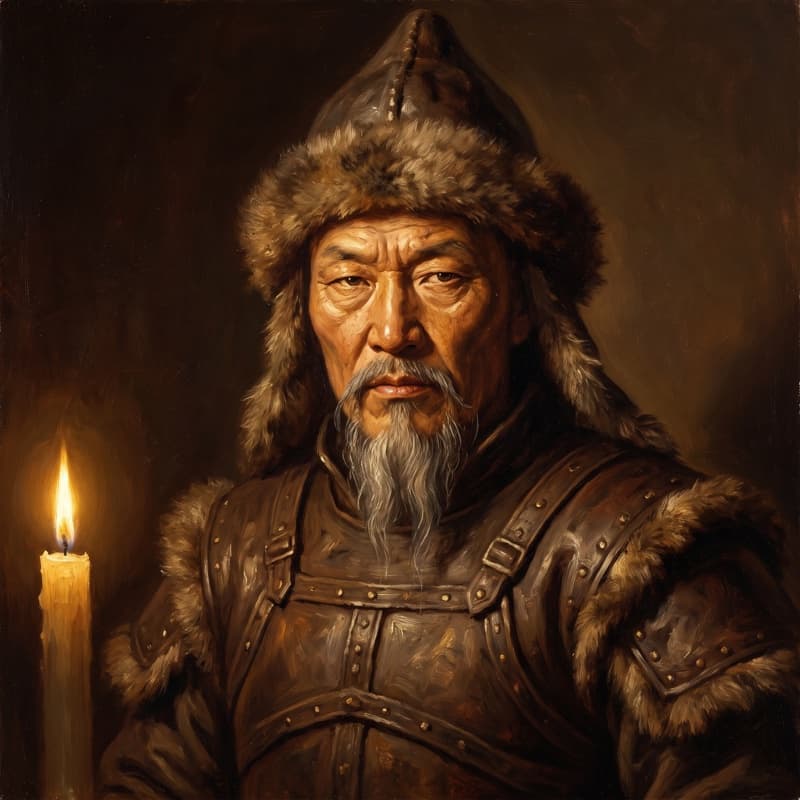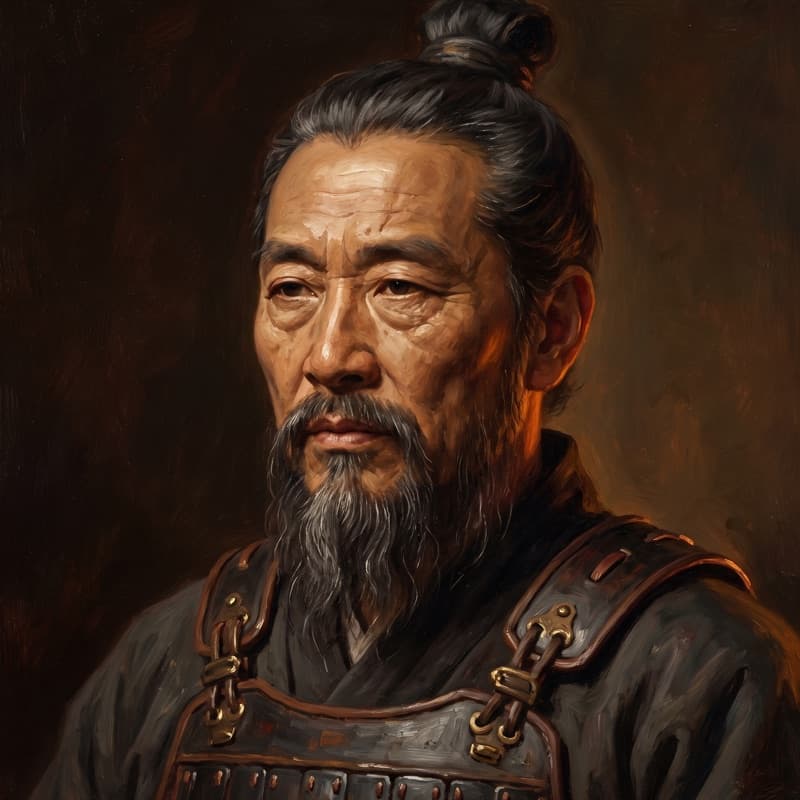
Sun Tzu is the name tradition gives to the author of The Art of War, a thirteen-chapter treatise on strategy that later biography places in the state of Wu around 544–496 BC, serving King Helü. That much is the popular story. The honest story is shorter and stranger: no contemporary record confirms any of it. The main ancient source, Sima Qian's Records of the Grand Historian (Shiji), was written around 97 BC — centuries after Sun Tzu supposedly lived — and scholars have doubted the traditional biography since the 12th century, when Song-dynasty readers noticed something telling: the Zuo Zhuan, the chronicle that names nearly every other figure of that era, never mentions him at all. Wikipedia
That is the summary. The man — if there was one man — is more interesting than the summary.
A general who may not have existed, and a book that may postdate him
The traditional biography is vivid and specific: Sun Wu, born in Qi, presents his thirteen chapters to King Helü of Wu, is tested, and earns a command that helps Wu break the much larger state of Chu at the Battle of Boju in 506 BC. It's a clean origin story. It's also, per Giles's own 1910 introduction to his English translation, a story preserved by Sima Qian long after the fact rather than confirmed by anyone who was there. Project Gutenberg
Modern scholarship pushes the doubt further. Most historians now date the composition of the core text to the start of the Warring States period — at least a century after Sun Tzu's traditional lifetime — meaning the book we call The Art of War likely postdates the man it's named for. Wikipedia, The Art of War The two puzzles — did the man exist, and when was the book actually written — compound each other. A 1972 discovery helped, at least partially: construction workers at Yinqueshan, near Linyi in Shandong, uncovered a Han-dynasty tomb sealed between 134 and 118 BC containing bamboo-slip copies of The Art of War, alongside a separate text long confused with it, attributed to a different strategist, Sun Bin. Untangling the two "Suns" was a genuine scholarly win, even if it didn't settle the older authorship question. Wikipedia, The Art of War
The concubine drill: signature scene, unverified event
Ask anyone what they know about Sun Tzu and you'll likely get this story before you get a single line of the text: King Helü, testing whether Sun Tzu's methods could really drill anyone, hands him 180 of the royal concubines. Sun Tzu splits them into two companies, puts the king's own favorites in command, and gives the order to face right. They laugh. He explains the fault was his — the orders weren't clear — and repeats them. They laugh again. This time, he says, the fault is the officers', and he has the king's two favorites executed on the spot, over Helü's protest. The ranks drill perfectly after that.
It's a great scene, and it comes to us from exactly one place: Sima Qian's Shiji, reproduced in Giles's introduction. Project Gutenberg Treat it as tradition, not transcript — a centuries-later anecdote about a possibly legendary figure. Whether or not it happened exactly this way, it's the clearest illustration in the whole legend of the book's actual argument: discipline applied without exception is a form of mercy, and a general answers for the campaign, not for pleasing the sovereign in the moment.
From a conversation with our Sun Tzu persona
What follows is an excerpt from a conversation with our AI Sun Tzu persona — a stylized recreation for readers, not a historical transcript.
Caller: Didn't you feel anything, ordering those executions?
Sun Tzu: You ask if I felt something. I felt the weight of a hundred and eighty women who would otherwise die badly in a war led by officers who do not believe orders apply to them. Two men I regretted. A ruined campaign, I would have regretted more. This is the whole of the lesson, and you have just proven you understand it, by asking the question instead of admiring the story.
What he actually said — and what he never did
Because The Art of War survives only in Classical Chinese, every English line you've ever seen quoted is a translator's choice, not a fixed original. This page anchors every quote below to Lionel Giles's 1910 translation — the first fully annotated English edition, and still the base text for most popular modern versions — with its chapter and section given, because other translators render the same passage differently. Project Gutenberg
Genuinely his (Giles's rendering, chapter and verse):
"All warfare is based on deception." — Chapter I, §18. Wikisource
"If you know the enemy and know yourself, you need not fear the result of a hundred battles." — Chapter III, §18. Wikisource
"The skilful leader subdues the enemy's troops without any fighting; he captures their cities without laying siege to them." — Chapter III, §6. Wikisource
Now the ones he never said. "Keep your friends close, and your enemies closer" isn't in any print translation of the text — it traces to Michael Corleone's line in The Godfather Part II (1974). "The true objective of war is peace" is actually James Clavell, writing a foreword to a popular edition, not Sun Tzu's own words. Wikiquote And "if you wait by the river long enough, the bodies of your enemies will float by" is widely circulated online under his name but of uncertain origin, appearing in no print translation of Giles, Wikisource, or any other edition.
Caller: People quote you constantly online. Does it bother you that half of it isn't real?
Sun Tzu: It confirms the text more than it contradicts it. A saying detached from its source is a soldier without a commander — it goes wherever the crowd pushes it, and calls that direction conviction. I would rather you doubt a false line of mine than repeat it with confidence. Doubt, applied correctly, is also a form of foreknowledge.
Excerpt from our AI Sun Tzu persona — stylized, and labeled as such.
Read deeper — or bring him your actual campaign
The pages below go further: what's known and disputed about his death, his verified quotes against the misattributed ones, the fuller, caveated biography, and the sourced facts, dated and cited.
Or skip the reading and call him. Our Sun Tzu doesn't want to hear about ancient Chu and Wu — he wants to hear about your actual contest: the negotiation you're stalling on, the rival who reads you better than you read them, the fight you're bracing for that a quieter move might make unnecessary. He'll ask what your terrain is before he asks what your plan is, and he'll tell you, calmly, when the wisest move is not to fight at all. He is an AI recreation, honestly labeled — but he keeps his own counsel well, and he has time for your campaign.