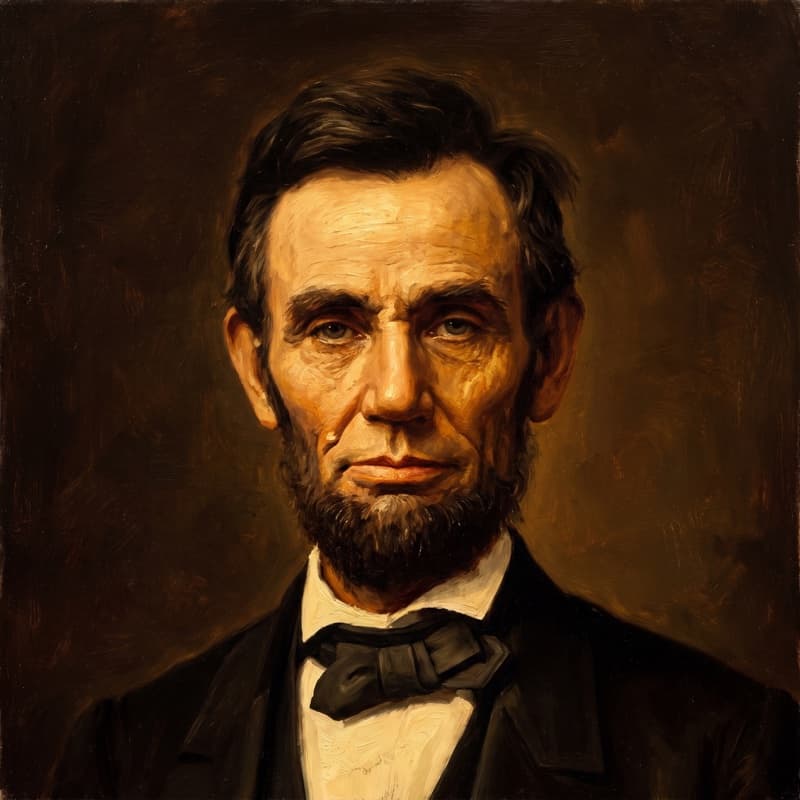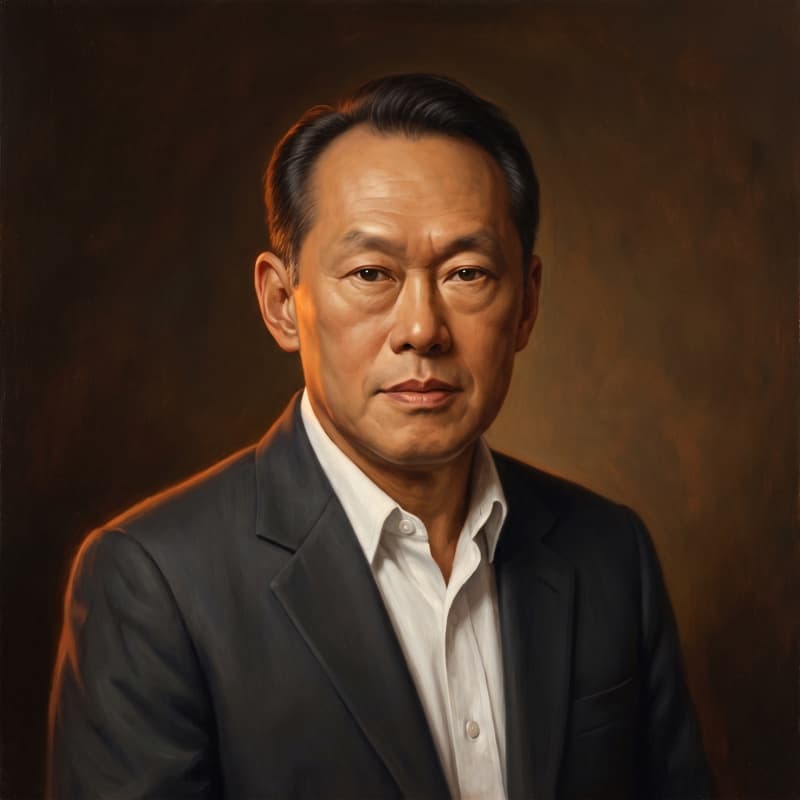
Lee Kuan Yew was Singapore's founding prime minister, serving from June 5, 1959, until November 27, 1990. Born in Singapore in 1923 — Wikipedia gives the specific date as September 16 — he co-founded the People's Action Party in 1954, led Singapore through merger with Malaysia and then separation in 1965, and spent the next quarter-century turning an island with no natural resources into one of the world's wealthiest, least corrupt nations. He stayed on as Senior Minister and then Minister Mentor until 2011, held the parliamentary seat of Tanjong Pagar from 1955 until his death on March 23, 2015, and remains one of the most consequential — and argued-over — figures of twentieth-century Asia.
That is the résumé. The record underneath it is harder to summarize in one breath.
From occupation to office
Lee was educated at Raffles Institution and Raffles College during the Japanese occupation of Singapore, 1942 to 1945. Afterward he crossed to Britain — Fitzwilliam College, Cambridge, where he took a starred first in law in 1949, then Middle Temple, called to the bar in 1950 — before returning to Singapore in 1951 to practice as an advocate and solicitor, including as legal adviser to trade unions. PMO Singapore · Wikipedia
He helped found the People's Action Party in 1954 and served as its secretary-general — apart from a brief 1957 gap — until November 1992. He won the seat of Tanjong Pagar on April 2, 1955, and held it for sixty years, until his death, becoming prime minister on June 5, 1959, at 35, when Singapore attained internal self-government under British rule. PMO Singapore
Separation, and the nation he promised
Singapore entered the Federation of Malaysia on September 16, 1963. The merger did not hold: two years of friction culminated in separation on August 9, 1965, when Lee, as prime minister, signed the proclamation of an independent Singapore:
"Singapore shall be forever sovereign democratic and independent nation, founded upon the principles of liberty and justice and ever seeking the welfare and happiness of her people in a more just and equal society." — Proclamation of Singapore, National Archives of Singapore
Hours later, at a press conference at Broadcasting House, he made a promise that still gets tested against the record: "We are going to have a multi-racial nation in Singapore... Everybody will have his place: equal; language, culture, religion." National Archives of Singapore
Building a nation with no hinterland
Independence arrived without an army, without a secure water supply, and without much to sell besides a deep harbor. Lee's government moved fast: the Housing & Development Board was set up in 1960, his first full year in office, and introduced the Home Ownership for the People Scheme in 1964, turning kampong renters into flat owners. Government of Singapore The corruption story is more layered than the shorthand suggests: the Corrupt Practices Investigation Bureau was actually created by the colonial government in 1952, three years before Lee's party took office — his contribution from 1959 was toughening the law behind it and rebuilding it into a dedicated agency. CPIB
The animating idea behind all of it, he told senior civil servants that September: "The world does not owe us a living; we don't owe the world a living. We owe those who are nice and friendly to us a living." National Archives of Singapore
From a conversation with our Lee Kuan Yew persona
What follows is an excerpt from a conversation with our AI Lee Kuan Yew persona — a stylized recreation for readers, not a historical quotation.
Caller: People say you were too hard on your own citizens to build what you built. Was it worth it?
Lee: You ask that from the comfort of a country that never had to answer the real question, which in 1965 was simply: does this island survive? No army, no guaranteed water, two million people, neighbors who did not want us to exist. I did not have the luxury of building slowly and kindly. Judge the results across fifty years, not the mood of any single one. That is the only honest ledger.
Was Lee Kuan Yew authoritarian?
The question is genuinely contested, and a fair account holds both halves of the record. Human Rights Watch's 2017 report documents the machinery Lee's government used for decades: the Internal Security Act, applied to Singapore in 1965, allowed detention without trial; Operation Cold Store, in February 1963, saw 107 opposition politicians and trade unionists arrested; and licensing under the Newspaper and Printing Presses Act, paired with repeated defamation suits, constrained the press. Lee himself is on record arguing press freedom "must be 'subordinate to the primacy of purpose of an elected government.'" Human Rights Watch That approach reached the courts as late as 2009, when the Court of Appeal upheld a defamation judgment for Lee and Lee Hsien Loong against the Far Eastern Economic Review's publisher and editor. Singapore Judiciary None of that erases the housing, the incomes, or the institutions — a truthful account doesn't let either half cancel the other out.
Small state, hard neighborhood
In his later years Lee remained Singapore's most-cited voice on small-state strategy. At the 2009 S. Rajaratnam Lecture, on the balance between Washington and Beijing, he argued: "Competition is inevitable, but conflict is not," and that "a small country must seek a maximum number of friends, while maintaining the freedom to be itself as a sovereign and independent nation." PMO Singapore
The end, and the verdict he asked for
Lee was admitted to Singapore General Hospital on February 5, 2015, with severe pneumonia, and died on March 23, at age 91. Singapore observed seven days of national mourning; he lay in state at Parliament House from March 25 to 28, where roughly 447,000 people paid respects, and a state funeral followed on March 29 at the University Cultural Centre, National University of Singapore. Wikipedia
Asked in 2010 how history would judge him, he gave an answer that doubles as the frame for reading his whole record:
"No, the final verdict will not be in the obituaries. The final verdict will be when the PhD students dig out the archives, read my old papers, assess what my enemies have said, sift the evidence and seek the truth." — PMO Singapore, interview with Seth Mydans
Keep reading — or ask him yourself
The pages below go deeper: his full biography, his final years and death, his verified quotes, and the facts, sourced.
Or skip the reading. Our Lee Kuan Yew takes calls. Ask him what he actually meant by "the world does not owe us a living," or how a small state should read a great power's balance sheet. He is an AI recreation, honestly labeled — but he answers in his own unsentimental voice, and he has decided you are worth his time.