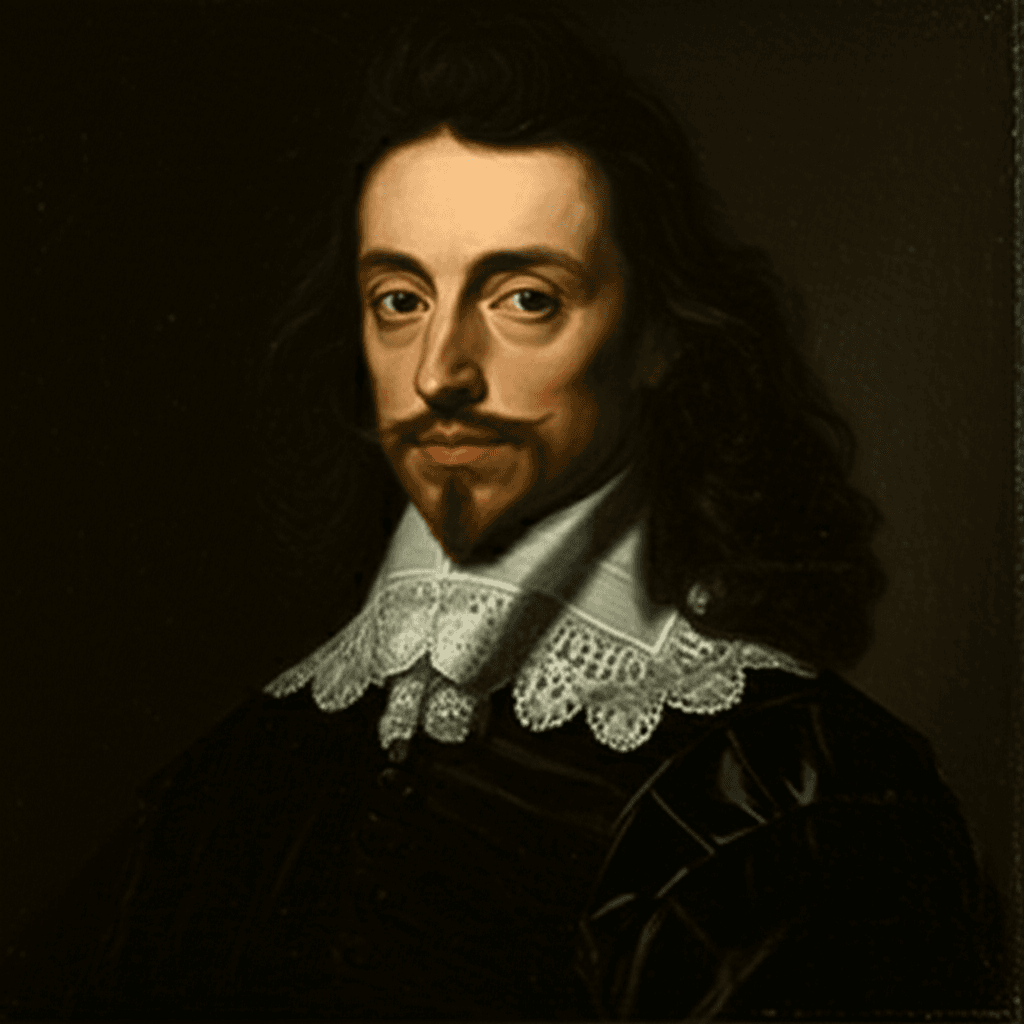
Samuel Pepys was born on February 23, 1633 (New Style), above his father's tailor shop in Salisbury Court, off Fleet Street, London, and died at Clapham on May 26, 1703, aged seventy. Between those two points sits a career contemporaries would have called a solid, respectable rise — clerk to naval administrator to Member of Parliament to President of the Royal Society. None of them knew that Pepys was also, in private, keeping the most detailed personal record of Restoration England ever written, in a shorthand he never meant anyone else to read.
From a tailor's shop to Cambridge
John Pepys cut cloth for a living; his son was educated at Huntingdon Grammar School and St Paul's School before winning a scholarship to Magdalene College, Cambridge, in 1651, graduating in 1654. Nothing about that path was assured — a tailor's son reached the Restoration establishment through study and patronage, not birth.
Marriage, and a diary meant for no one
In 1655, at twenty-two, Pepys married Elisabeth de St Michel, then fourteen — a religious ceremony in October followed by a civil one in December. They had no children who survived infancy. The marriage the diary records is not a tidy one: real affection sits beside jealousy, money quarrels, and Pepys's own infidelities, set down with a candor he extended to almost nothing else he wrote. On January 1, 1660, at twenty-six, he began the diary itself, in Thomas Shelton's shorthand, kept for nearly a decade — roughly 1.25 million words, unguarded because Pepys wrote them for an audience of one.
Present at the Restoration
That same year put him at the center of the biggest political event of his lifetime. In May 1660, Pepys sailed aboard the fleet's flagship — renamed the Charles, formerly the Naseby — as part of the convoy that brought Charles II home from exile, and heard the King himself recount his escape after the Battle of Worcester nine years before. Weeks later, on July 13, 1660, Pepys was sworn in as Clerk of the Acts to the Navy Board, responsible for the royal dockyards — the post that made his later career possible.
From a conversation with our Pepys
What follows is an excerpt from a conversation with our AI Pepys persona — a stylized recreation for readers, not a historical quotation.
Caller: You actually heard the King describe his own escape, face to face. What was that like?
Pepys: Stranger than any play, friend. Here was His Majesty, restored to his own ship, telling it plain — the running, the hiding in an oak tree, the miles walked in another man's boots — and I sat near enough to hear every word, a clerk's son with no business being so close to a king's history. I wrote it down that night as best my memory held it. A man does not get such an evening twice.
From clerk to statesman, and back to private life
The clerkship became a career. Pepys was elected a Fellow of the Royal Society in 1665, and in 1673 became Secretary to the Admiralty and entered Parliament — work Magdalene College credits with helping professionalize naval administration. He served as the Royal Society's President from December 1, 1684, to November 30, 1686, in office when Isaac Newton's Principia Mathematica went to press under his imprimatur. None of it made him untouchable: he was imprisoned in the Tower of London twice, in 1679 and again briefly in 1690, on suspicion of treason never proven.
The diary itself had ended before any of that late-career trouble, on May 31, 1669, when Pepys stopped writing rather than risk his eyesight further. His wife Elisabeth died that November, a loss the diary never recorded, since it had already gone silent. He lived another thirty-four largely undiaried years, dying in 1703 and leaving Magdalene College his library of roughly 3,000 books and manuscripts — the diary among them — still shelved today in the bookcases he specified.
Keep reading, or ask him yourself
More on this figure: the Pepys hub · his final years and death · his verified quotes · the facts, sourced.