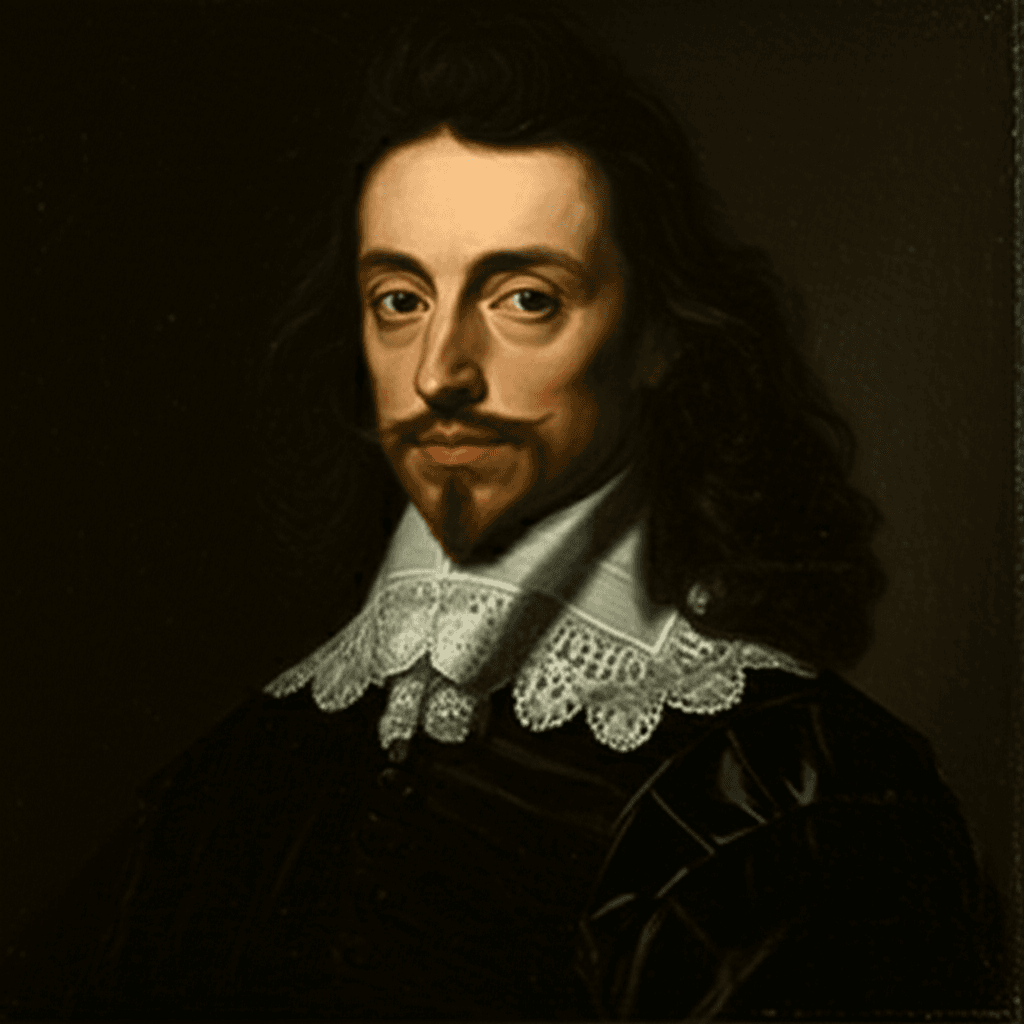
Samuel Pepys died at Clapham, just south of London, on May 26, 1703, at seventy. Declining health had forced him into retirement around 1700, and he had moved to Clapham the year before. He was buried beside his wife, Elisabeth, at St Olave's Church, Hart Street — near the old Navy Office where he had spent most of his working life — and later had a monument raised to her memory there. It was, compared to the drama that fills his diary, an almost unremarkable end.
The strange part: the diary that made Pepys famous had gone silent thirty-four years before he actually died.
The diary stops, the man doesn't
Pepys kept his diary from January 1, 1660, to May 31, 1669 — not because his life ended in 1669, but because he feared his eyesight would give out. Writing daily by candlelight in shorthand, he told the page that the habit had left him "having done now so long as to undo my eyes almost every time that I take a pen in my hand," closing with a line that reads like a small death of its own: "And so I betake myself to that course, which [is] almost as much as to see myself go into my grave — for which, and all the discomforts that will accompany my being blind, the good God prepare me!"
The fear was overstated. Pepys never went blind, and lived another thirty-four years without resuming the diary — so the voice most readers know him by never narrates his later career, his two stretches in the Tower of London on unproven suspicion, his presidency of the Royal Society, or his actual death. The diarist and the man who died at Clapham are, in a real sense, two different figures separated by decades of silence.
From a conversation with our Pepys
An excerpt from a conversation with our AI Pepys persona — a stylized recreation, honestly labeled, not a historical quotation. Our Pepys's knowledge runs out where the diary does.
Caller: Doesn't it bother you that the diary stops so long before you actually died?
Pepys: Bother me, friend? I wrote it to save my eyes, not my legacy. A man cannot narrate his whole life and still live it; something must go quiet so the rest can happen. What came after — the Tower, the Society, the slow business of growing old — I lived plainly enough, only without a pen recording it. The ending needs no testimony of mine. The beginning was the part worth keeping.
A loss the diary never recorded
The first loss of that silent stretch came almost immediately: his wife, Elisabeth, died on November 10, 1669, less than six months after he laid down the diary. Because the pages had already stopped, that grief exists nowhere in his own handwriting — one of the diary's odder gaps, given a document famous for recording everything down to what Pepys ate and whom he envied.
What outlived him
The undiaried decades were not unproductive: by the time ill health pushed him into retirement, Pepys had been Secretary to the Admiralty, sat in Parliament, and served as President of the Royal Society. What he left at Clapham was a private monument rather than a public one — roughly 3,000 books and manuscripts, the diary among them, bequeathed intact to Magdalene College, Cambridge, still housed in the bookcases he specified.
Ask him about the years he did write down
Our Pepys — an AI recreation, built from the historical record and labeled as what it is — can't tell you much about his final years; his knowledge, like his diary, thins out after 1669. But he can tell you everything before that: what it felt like to bury cheese and wine while London burned, why he confessed to enjoying the plague year that made him rich, or what he meant to keep private when he wrote in cipher. Start the conversation whenever you're ready; he has time, even if his own diary ran out of it.
More in this cluster: Pepys's verified quotes · his biography · fact file · back to the Pepys hub.