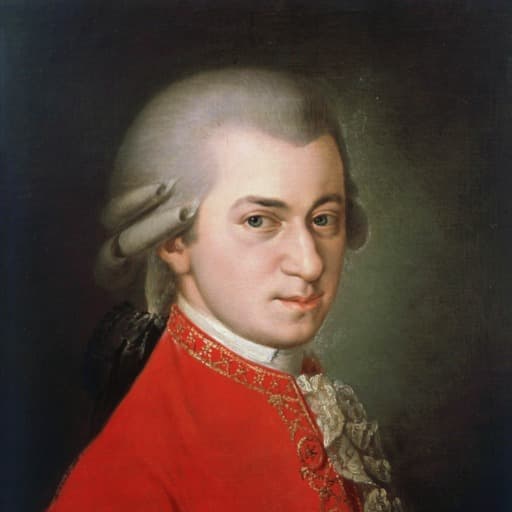
Mozart's most reliably documented quotes come from his letters, not from the internet's favorite "genius flows effortlessly" passage — which he never wrote. Writing to his father in 1777, he is blunt about his own talent: "Salzburg, which is no place for me, I feel sure." Writing to his sister in 1782, he credits a specific person — his new wife, Constanze — with the fugue he was composing that week. This page separates what Mozart actually put on paper from what later biographers, forgers, and quote sites have put in his mouth.
Leaving Salzburg: the job-hunting letters
In September and October 1777, Mozart traveled through Munich and Mannheim job-hunting, away from his post under Archbishop Colloredo. Writing to his father, Leopold, he made his contempt for Salzburg plain, then backed the claim with a direct challenge to the Elector of Bavaria's court:
"Salzburg, which is no place for me, I feel sure."
"He may assemble all the composers in Munich, and also send in quest of some from Italy and France, Germany, and England and Spain, and I will undertake to write against them all."
A month later, from Mannheim, he wrote again about being underestimated on sight:
"They think that because I am small and young that there can be nothing great and old in me. But they shall soon find out."
Constanze and the fugue
Five years later, married and settled in Vienna, Mozart wrote to his sister Nannerl about a specific night of composing — not a generic tribute to romance, but a fugue he could date and name a cause for:
"The cause of this fugue seeing the light of this world is my dear Constanze."
The letter explains why: Baron van Swieten had lent him scores of Handel and Bach, and Constanze, hearing the fugues, asked for one of her own.
Craft, not effortless genius
In Prague in 1787, rehearsing what would become Don Giovanni, Mozart pushed back — in person, to conductor Johann Baptist Kucharz — on the idea that any of this came easily:
"I have spared neither care nor labor to produce something excellent for Prague. Moreover it is a mistake to think that the practice of my art has become easy to me."
It is the single best corrective to the myth below: Mozart, on the record, insisting the work was work.
Two lines worth using carefully
Some of Mozart's most-quoted lines on life and speech are well attested in his letters but not independently confirmed here against a primary edition — treat as paraphrase, not verbatim: writing to his father in April 1787, he reflected that he never went to bed without considering he might not live to see another day, because death, properly understood, is life's true goal; elsewhere he advised staying silent unless you have something worth saying, and speaking so people remember it.
Quotes Mozart never wrote
Nearly every Mozart-quotes page online repeats at least one of these as genuine. None holds up:
- "Neither a lofty degree of intelligence nor imagination... go to the making of genius. Love, love, love, that is the soul of genius." Not Mozart — written by Nikolaus Joseph von Jacquin in Mozart's own friendship album, later misattributed.
- The "letter on musical creation," describing whole compositions appearing instantly in his mind while traveling, is the most-quoted "Mozart on creativity" passage online — and a proven forgery, traced to the writer Johann Friedrich Rochlitz.
- "I pay no attention whatever to anybody's praise or blame. I simply follow my own feelings." No documented letter backs this; it surfaces unsourced in a late twentieth-century compilation.
- Emperor Joseph II's "too many notes," and Mozart's reply "just as many notes as are necessary," traces to Franz Xaver Niemetschek's 1798 biography, not a primary source. Scholars dispute the German's translation and whether the exchange happened at all — a famous, disputed anecdote, never a sourced quote from either man.
If a "Mozart quote" sounds like poster-wisdom about feelings or genius flowing free, be suspicious.
Hear him make the case himself
Our AI Mozart draws on the same letters. Ask him why Salzburg wasn't enough, what Constanze had to do with a Handel fugue, or why he insisted — to a conductor, mid-rehearsal — that none of it came easy.
More in this cluster: Mozart hub · his death · biography · facts.