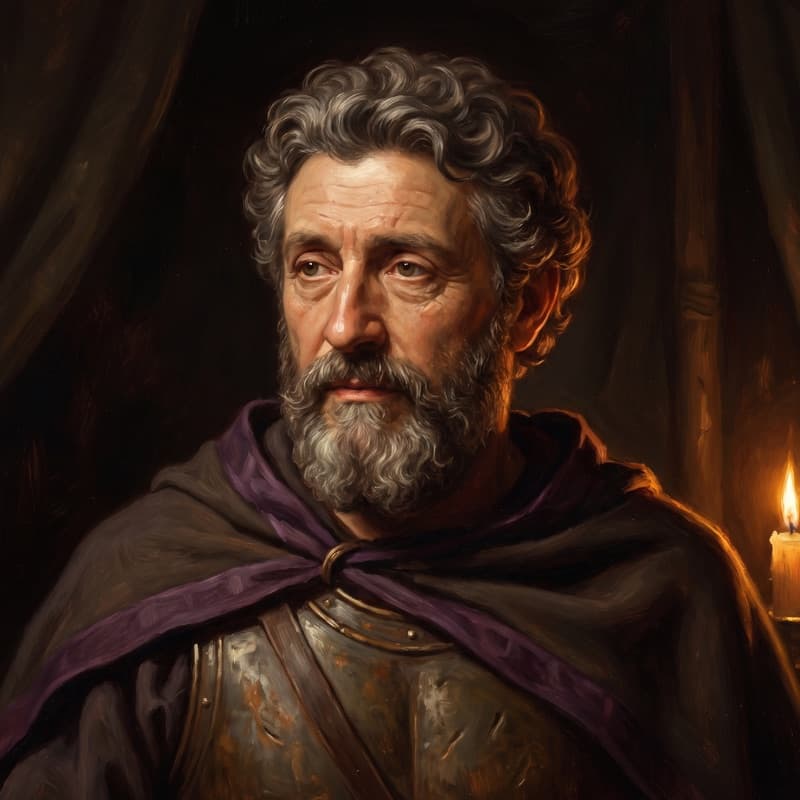
Marcus Aurelius died on March 17, 180 CE, nineteen years into his reign as Roman emperor — and he died on the job, in a war camp, not in retirement in Rome. Ancient sources cannot even agree on which garrison town: some place the death at Vindobona, near modern Vienna, others at Sirmium, further down the Danube in Pannonia Inferior. He was buried afterward in Hadrian's Mausoleum in Rome.
That's the plain record. The honest gaps in it are worth walking through, because most retellings quietly paper over them.
Two cities, one uncertain death
The disagreement between Vindobona and Sirmium isn't a modern dispute invented from nothing — it goes back to the ancient sources themselves, which diverge on the exact spot. A responsible account states both candidates rather than picking one to sound more decisive. If a page tells you flatly that Marcus Aurelius died in Vienna, it has resolved an ambiguity the evidence doesn't actually resolve.
A death mid-campaign, not in retirement
What isn't in dispute is the context: Marcus died while actively campaigning against Germanic tribes on the northern frontier, during the long, grinding wars that consumed much of his reign's final years. He was not a retired philosopher-king dying peacefully among his books. He was an emperor in his late fifties, still in a war camp on the Danube, in the same stretch of campaign life during which much of the Meditations itself was written. The private notebook and the military crisis were not separate chapters of his life; they were happening to the same man at the same time.
The "serene philosopher's death" myth
Marcus's reputation as history's philosopher-emperor invites a tidy legend: the wise Stoic meeting his end with perfect calm, some final aphorism about accepting nature's course. Readers sometimes picture something like a ripe olive falling and praising the branch that bore it — the kind of image our AI Marcus Aurelius persona might reach for in conversation. But that's exactly what it is: an image, not a documented deathbed scene. What the record actually supports is narrower and plainer — a date, a military context, and a genuine dispute over the town. Anyone offering you Marcus's staged last words is writing historical fiction, however well-intentioned.
The succession wasn't a surprise
One thing the sources are confident about: whatever uncertainty surrounds the death itself, the transfer of power was not improvised. Marcus had raised his son Commodus to co-emperor back in 177, three years before his own death, so Commodus was already positioned to succeed him. History would go on to judge that choice harshly — but at the moment of Marcus's death, there was no succession crisis layered on top of the question of where, exactly, he had died.
What Rome kept
Rome moved quickly to commemorate him: his bronze equestrian statue and the column of Marcus Aurelius, both raised in celebration of his military victories, still stand in the city today — physical evidence that has outlasted the argument over Vindobona versus Sirmium by nearly two thousand years.
Ask what the record can't tell you
The exact camp, the last words, the mood on that final night — the ancient sources don't settle these, and neither will we. What we can offer instead is the man's own writing on facing mortality, set down years before that final campaign: "Since it is possible that thou mayest depart from life this very moment, regulate every act and thought accordingly." Our AI Marcus Aurelius persona — an honestly labeled recreation — can talk through what a Stoic actually does with an uncertain ending, without pretending to remember one of his own.
For the fuller life behind that final campaign, see his biography; to check a Marcus quote against the internet's favorite misquotes, see his verified quotes; and for the fast-scan version of everything above, the facts page — or back to the Marcus Aurelius hub.