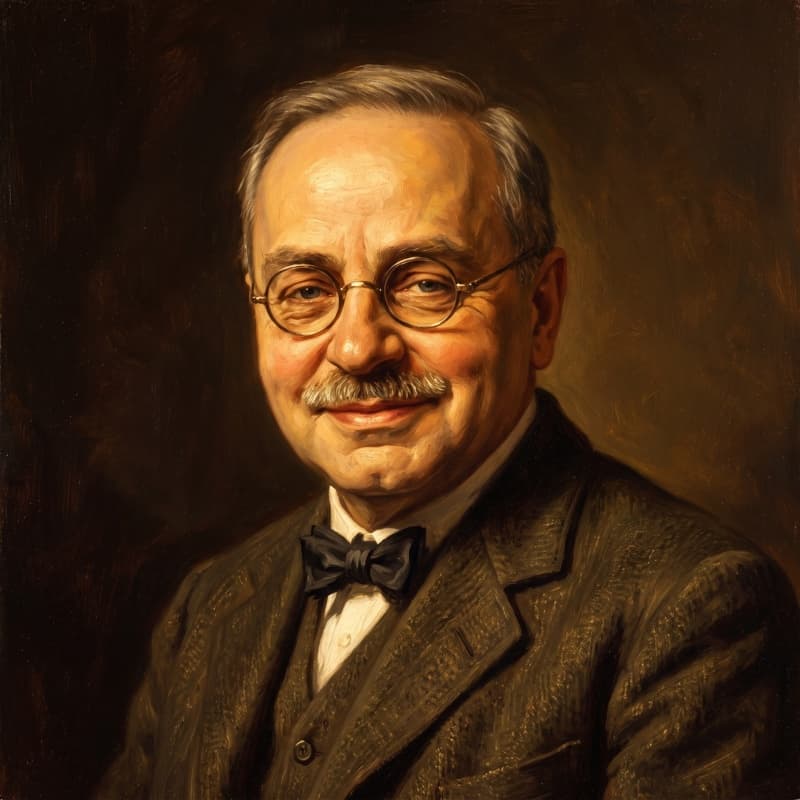
Alfred Adler's most solidly verified quotes come from just two books: "The hardest thing for human beings to do is to know themselves and to change themselves," from Understanding Human Nature (1927), and "Meanings are not determined by situations, but we determine ourselves by the meanings we give to situations," from What Life Should Mean to You (1933). Adler is also one of the internet's most paraphrased psychologists — several widely shared "Adler quotes," including "Follow your heart but take your brain with you," have no primary source behind them at all. This page separates the two.
1927: Knowing yourself is the hard part
In the introduction to Understanding Human Nature, Adler set the terms for everything the book would try to do:
"The hardest thing for human beings to do is to know themselves and to change themselves." — Understanding Human Nature, trans. Walter Beran Wolfe, 1927
He followed it with a warning about the work of helping someone else change:
"The business of transforming a human being is not a simple process. It demands a certain optimism and patience, and above all the exclusion of all personal vanity." — Understanding Human Nature, 1927
A few pages later, in the opening chapter on "The Soul," he stated his position on coercion as plainly as he ever put anything:
"Liberty alone breeds giants. Compulsion only kills and destroys." — Understanding Human Nature, 1927
1933: What a life means
By What Life Should Mean to You, Adler's later book on meaning and social interest, his central claim had sharpened:
"Human beings live in the realm of meanings. We do not experience pure circumstances; we always experience circumstances in their significance for men." — What Life Should Mean to You, 1933
And a few lines later, his answer to why two people can live through the same hardship and come out with opposite readings of it:
"Meanings are not determined by situations, but we determine ourselves by the meanings we give to situations." — What Life Should Mean to You, 1933
The clinical voice: goal, not cause
Adler's earlier, more technical The Practice and Theory of Individual Psychology (1925) shows the theoretical spine under the popular lines — his insistence that behavior points forward, toward a goal, rather than backward toward a cause:
"Every psychic phenomenon, if it is to give us any understanding of a person, can only be grasped and understood if regarded as a preparation for some goal." — The Practice and Theory of Individual Psychology, trans. P. Radin, 1925
Quotes Adler never wrote
Adler is quoted online far more often than he is read, and the gap shows. "Follow your heart but take your brain with you" is sourced only to a Goodreads community quote page, which carries its own disclaimer: "Quotes are added by the Goodreads community and are not verified by Goodreads." No book, date, or page is attached to it anywhere.
"It is easier to fight for one's principles than to live up to them" has a stranger paper trail: it exists as the title of a 1966 painting by James Gill in the Smithsonian American Art Museum's "Great Ideas of Western Man" series — proof the line was circulating under Adler's name by the 1960s, but the museum's own catalog entry cites no Adler publication for it.
Two more make the rounds with no source at all: "The chief danger in life is that you may take too many precautions" and "Trust only movement. Life happens at the level of events, not of words." Both are everywhere on quote sites; neither turns up in a full-text search of the Adler books that would be the obvious place to find them.
Hear him argue it himself
Reading Adler's sentences is one thing; hearing him defend them is another. Our Adler — an AI recreation of the man, clearly labeled — will tell you why he thought "compulsion only kills and destroys," or push back on whether your own excuses are compensation dressed up as caution.
More in this cluster: Adler hub · his death · biography · facts.