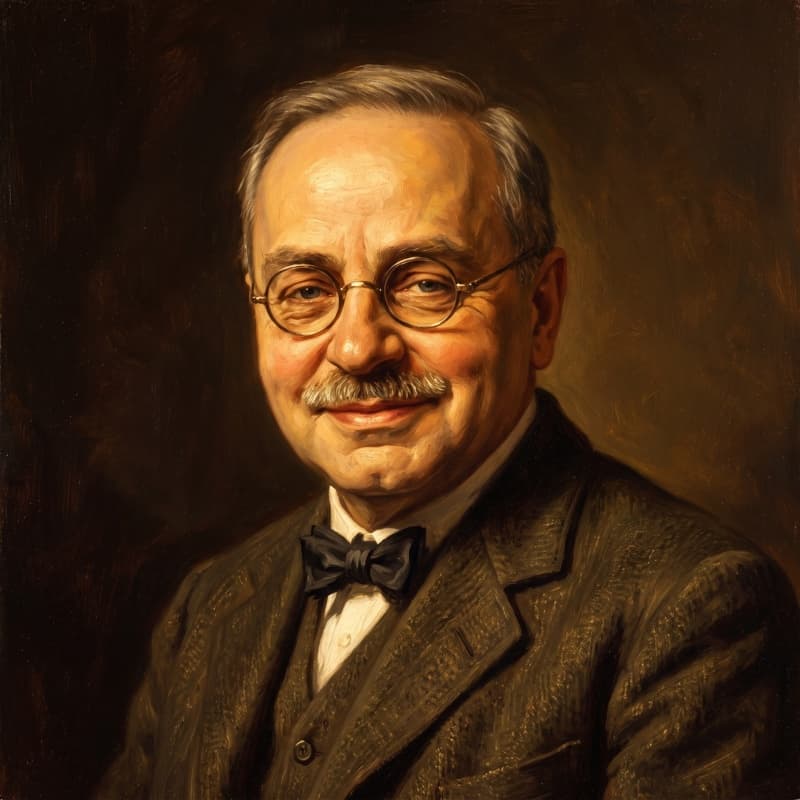
The essential Alfred Adler facts: a Viennese physician who founded Individual Psychology, distinct from Freud's psychoanalysis; broke with Freud in 1911 after presiding over the Vienna Psychoanalytic Society around 1910; founded the Society of Individual Psychology in 1912; opened Vienna's first child guidance clinic in 1921; taught at Columbia in 1927; and died of a heart attack in 1937 on a lecture tour in Aberdeen, Scotland. All verified. This page gives you the facts worth keeping — and flags the popular "facts" that don't survive checking.
The core facts, with why they matter
He was a physician before he was a theorist. Adler graduated from the University of Vienna medical school in 1895 as an ophthalmologist, then opened a Vienna general practice in 1898 serving mostly working-class patients — a clinical grounding in bodies and social conditions is where his ideas about compensation and community began.
He was never Freud's student. Adler joined Freud's Wednesday Psychological Society in 1902 as an early colleague, later serving as president of the Vienna Psychoanalytic Society around 1910, before breaking with Freud in 1911 over theoretical disagreements and founding his own school in 1912.
"Individual Psychology" doesn't mean individualism. The name treats the individual as an "in-dividual," an indivisible whole understood in relation to community — his mature work centered on social interest (Gemeinschaftsgefühl), against Freud's drive theory.
He built public, not just private, mental health care. In 1921 he opened Vienna's first child guidance clinic, using open sessions where children, parents, and teachers worked through problems together.
He died mid-career, still lecturing. After serving as an Austro-Hungarian military physician in World War I, Adler lectured internationally from 1926, taught at Columbia (1927), and relocated to the U.S. by the mid-1930s. He died of a heart attack on May 28, 1937, on a European tour that reached Aberdeen, Scotland — the first of Vienna's three major psychologists, alongside Freud and Jung, to die.
From a conversation with our Adler
An excerpt from our AI Adler persona — a stylized recreation, honestly labeled; not a historical quotation.
Caller: People call you Freud's student. Does that bother you?
Adler: It shortens a decade of real disagreement into a single word. I sat at his table, yes — but I never took his method as my own, and when I could no longer agree, I left and built something else. The interesting question was never what I studied under him. It was what I found I could not accept.
Popular "facts" that need correcting
"Birth order determines your personality, according to Adler." Overstated. Adler discussed "family constellation" — how a child interprets their position among siblings — as one lens on development, not a deterministic rule. Later pop-psychology versions go further than his own writing supports.
"Adler organized exactly 28 child guidance clinics by 1930." This figure circulates in secondary sources but couldn't be confirmed against a reachable citation. What's solid: he opened the first Vienna clinic in 1921 and built out an open-counseling model — treat any specific count as unconfirmed.
"Follow your heart but take your brain with you" — an Adler quote. This line circulates widely under his name but traces only to a community-added quotation page with no citation to any Adler book, edition, or page. Treat it as unverified.
Five things Alfred Adler did (the honest short list)
- Broke with Freud in 1911 and founded the Society of Individual Psychology in 1912.
- Opened Vienna's first child guidance clinic in 1921.
- Developed social interest (Gemeinschaftsgefühl) as his central measure of psychological health.
- Held a visiting professorship at Columbia University in 1927.
- Lectured internationally until his death in Aberdeen, Scotland, in 1937.
The fact pages can't hold him
Facts are the skeleton; the voice is the man. Our Adler — an AI recreation, built from the sourced record and labeled as what it is — can tell you about the sickly Viennese childhood that pointed him toward medicine, the argument with Freud that cost him a professional home, and why courage mattered more to him than comfort. Ask him what he actually meant by an inferiority complex.
More in this cluster: Adler hub · his death · verified quotes · biography.