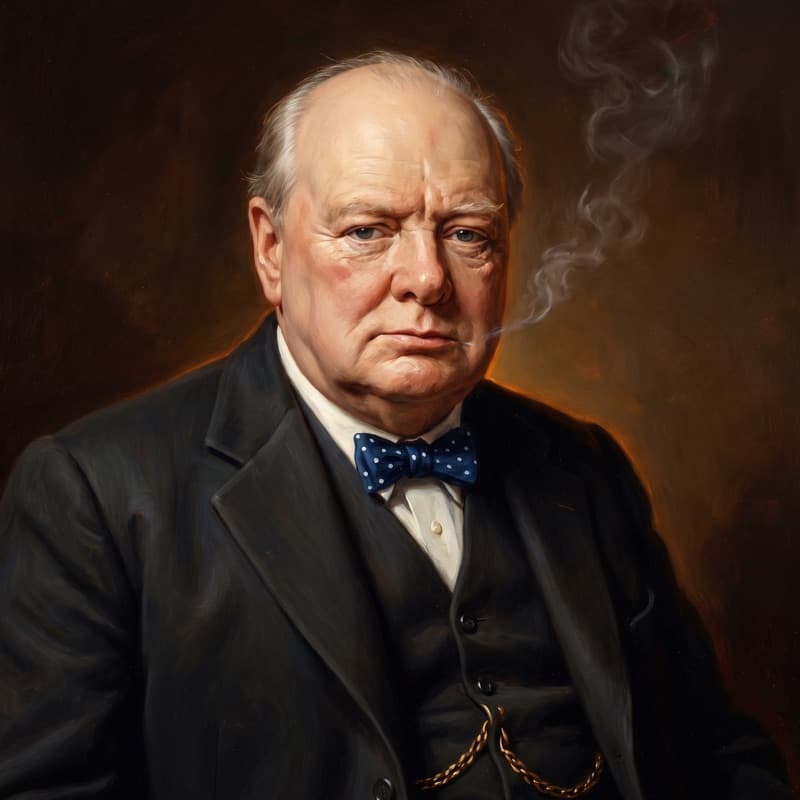
Winston Churchill died on 24 January 1965, at the age of 90. By the International Churchill Society's own account of his life, he had already retired from the premiership a full decade earlier, in 1955 — meaning the two chapters that made him famous, wartime leadership from 1940 to 1945 and a quieter second term after 1951, were both long finished business by the time he died.
That gap is the part worth sitting with. Churchill didn't die mid-career, mid-crisis, or out of office in disgrace. He died as an old man who had already been given his flowers: the 1953 Nobel Prize in Literature, awarded for his historical and biographical writing and his oratory, had arrived while he was still prime minister for the second time. The ending, when it came, wasn't a plot twist. It was an epilogue to a life that had already run its most dramatic arcs twice — first as the improbable war leader of 1940, then, after losing the 1945 election at the height of his popularity, as the man who came back in 1951 to do it all again on quieter terms.
A statesman, not a story still unfolding
It's tempting to reach for a dramatic cause of death, a specific scene, a last word. That's not what this page is for. The confirmed record is narrower than the myths that circulate: a date, an age, and the fact that his political story had already closed. Anything more specific about his final illness would need its own dedicated, checkable source, and this page isn't going to hand you an invented one just to fill space.
From a conversation with our Churchill
An excerpt from a conversation with our AI Churchill persona — a stylized recreation, honestly labeled, not a historical record. Our Churchill speaks as a man still living his own story; he doesn't know how or when it ends, because that's not the part of his life the persona is built from.
Caller: Did you ever wonder how you'd be remembered, once the wars and the elections were finally over?
Churchill: Wonder about it? My dear fellow, I spent a good part of my later years writing it down myself, so that no one else should get the chance to garble it. But remembrance was never the point while I was in the thick of it — you don't stop to ask how a speech will read in fifty years while the bombs are still falling. I lost an election at the very moment I thought the country most needed steadying, and I learned then that gratitude and votes are not the same currency. So no — I didn't wonder how I'd be remembered. I only hoped the work would still be standing when the remembering started.
Two things this page won't claim as fact
You may have come across the claim that Churchill died on the exact calendar date his father, Lord Randolph Churchill, had died seventy years before — a tidy, almost too-neat coincidence. It's repeated often enough online that it sounds settled. It isn't, at least not here: this page hasn't been able to trace it to a primary or scholarly source solid enough to print as confirmed fact, so it stays labeled as an unverified claim rather than history. The same goes for the specifics of his funeral and burial site — widely reported, but not something worth stating flatly without a dedicated source behind it. Better an honest gap than a tidy-sounding invention.
Ask him about the years that got him there
Our Churchill can't tell you about January 1965 — that part of the story is outside what the persona knows. But he can tell you plenty about the decades that led up to it: Gallipoli and the depression that followed, the 1945 defeat he didn't see coming, the Iron Curtain speech he gave as a private citizen, and what it felt like to be handed a second act most politicians never get. Start the conversation whenever you're ready.
More in this cluster: Churchill's verified quotes · his biography · fact file · back to the Churchill hub.