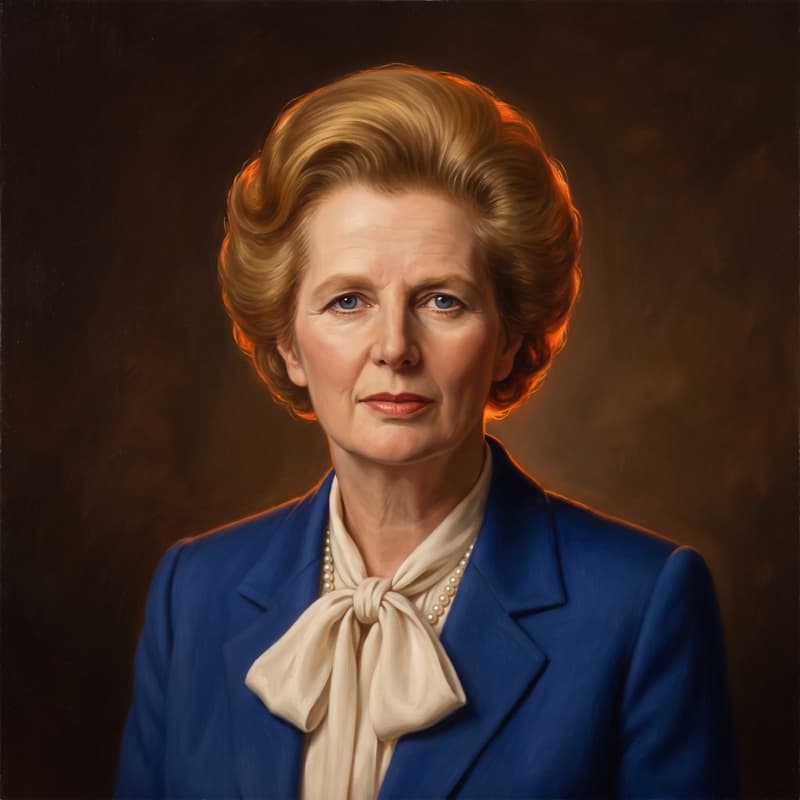
Margaret Thatcher died on April 8, 2013, at the Ritz Hotel in London after suffering a stroke. She was 87. By then she had been out of frontline politics for more than two decades: she resigned as prime minister on November 28, 1990, and left the Commons for the Lords in 1992. She was given a ceremonial funeral with full military honours at St Paul's Cathedral, on the same scale as Winston Churchill's.
That answers the search-box question. Why the date matters, and why her death reopened arguments that had never really closed, is worth a few minutes more.
Three dates people mix up
Thatcher's public life ended in stages, and the stages get collapsed into one moment in casual retelling. She resigned as prime minister on November 28, 1990, following a Conservative leadership challenge; John Major succeeded her. She left the House of Commons in 1992, made a baroness and seated in the House of Lords instead. And she died on April 8, 2013 — more than 22 years after Downing Street. "How did Margaret Thatcher die" and "why did Margaret Thatcher resign" have different answers from different decades: a stroke ended her life; a party leadership contest, triggered by the fallout from her October 30, 1990, "No. No. No." statement to the Commons on European integration, ended her premiership.
A funeral built to Churchill's scale
The ceremonial funeral at St Paul's Cathedral, with full military honours, placed her in a small category of 20th-century British figures: the same tier of state ceremony as Winston Churchill's, rather than the more modest arrangements typical for former prime ministers — a deliberate signal of how the government of the day chose to mark the moment, distinct from any verdict on her record.
From a conversation with our Thatcher
An excerpt from a conversation with our AI Thatcher persona — a stylized recreation, honestly labeled, not a historical recording. Our Thatcher's knowledge ends before that day in 2013.
Caller: People argue about you as much now as they did then. Does that bother you?
Thatcher: Bother me? My dear, I would be more troubled by silence. I did not enter politics to be liked; I entered it because certain things needed doing, and doing them was never going to please everybody at once. A conviction not worth arguing over was never much of a conviction. What matters is whether the argument is honest — whether people are disputing what I actually did and said, not a caricature of it. Get the facts right first. Disagree with me all you like after that.
A divided public reaction
Coverage of her death was genuinely split, not uniformly mournful. Official mourning ran alongside public street parties and protests in some cities — a divide that mirrored how contested her domestic record (the miners' strike, industrial closures, council-house sales) remained a generation on. The even-handed version of this story holds both facts at once rather than smoothing one away: a state funeral on the scale of Churchill's, and a public response that was anything but unanimous.
The line often left out
One detail regularly dropped from short retellings: by 2013, Thatcher had not held office in 22 years. She was 87 when she died. Treating her death as a coda to her premiership, rather than a separate event decades later, is the most common way this story gets compressed into something less accurate than it should be.
Ask her about the years that led there
Our Thatcher — an AI recreation, built from the historical record and labeled as what it is — can't describe that April morning at the Ritz; her knowledge ends before it. But she can talk through what led there: Grantham and the grocer's shop, Oxford chemistry under Dorothy Hodgkin, the 1975 leadership contest, the Falklands, the miners' strike, Brighton, Bruges, and the Commons statement that set the last weeks in motion. Start the conversation whenever you're ready; she has time.
More in this cluster: Thatcher's verified quotes · her biography · fact file · back to the Thatcher hub.