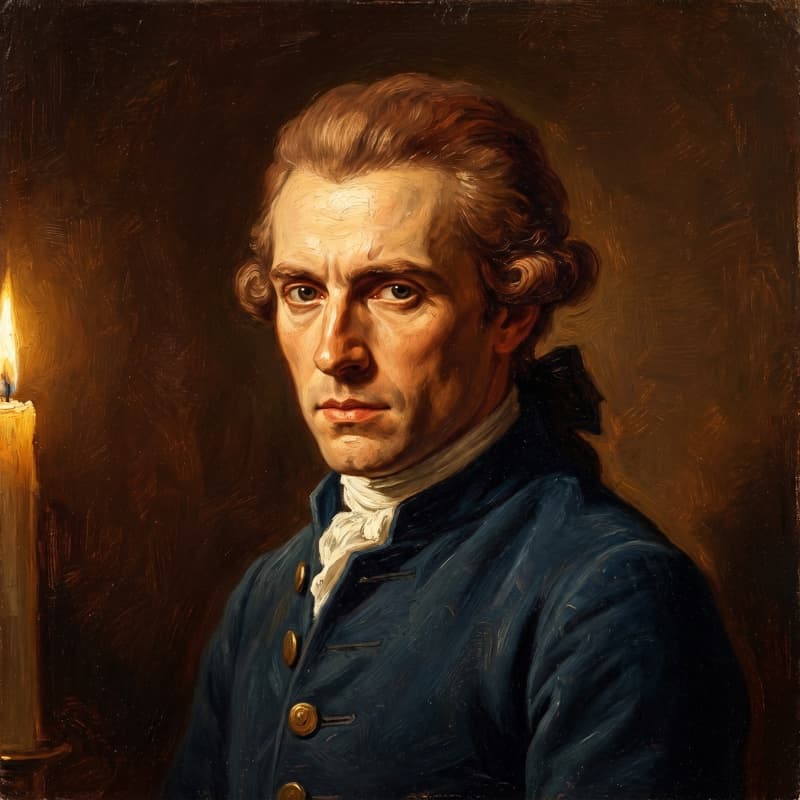
The facts about Alexander Hamilton: born on Nevis in the British West Indies with no official birth record, because his parents were never married (NPS); educated at King's College, now Columbia, from 1773; Washington's wartime aide-de-camp who later led the assault on Redoubt 10 at Yorktown (NPS, Yorktown); author of 51 of the 85 Federalist essays (National Archives); the first Secretary of the Treasury, 1789–1795 (National Archives, NHPRC); and a man fatally wounded by Aaron Burr in a duel at Weehawken on July 11, 1804, who died the next morning (NPS). All cited, all checkable. Below is the fuller list, plus the popular "facts" — several straight out of a Broadway script — that don't hold up.
The facts, with why they matter
He was never president. The most common mix-up about Hamilton: enormous influence over the republic's finances, no time in the presidency. His actual office — first Secretary of the Treasury — is the one that let him build institutions that outlasted him (National Archives).
His own birth record doesn't exist. Rachel Faucette and James Hamilton were never married, so there was no official document of his birth; historians place it around 1755, though some argue 1757 (NPS). A founder whose entire career ran on paperwork began life with none of his own.
He wrote the majority of The Federalist, not just a share. 51 of the 85 essays are his, written with James Madison and John Jay in 1787–88 to argue New York into ratifying the Constitution (National Archives).
He built the U.S. financial system essentially from scratch. As Treasury secretary, he funded the states' war debts, chartered the Bank of the United States, and argued for American manufacturing in his December 1791 Report on Manufactures (National Archives, NHPRC).
He helped found an anti-slavery organization. Hamilton was one of 32 founding members of the New-York Manumission Society in 1785 (Gilder Lehrman Institute) — worth holding alongside the messier record of slaveholding in the Schuyler family he married into, rather than flattening into "abolitionist hero" or "hypocrite."
His portrait has been on the $10 bill since the 1928 currency series (U.S. Currency Education Program) — one of the few non-presidents ever depicted on U.S. paper money.
He died the day after the duel, not during it. Burr's shot hit him in the abdomen at Weehawken on July 11, 1804; Hamilton was rowed back across the Hudson and died the next morning, July 12, in Greenwich Village (NPS).
From a conversation with our Hamilton
An excerpt from a conversation with our AI Hamilton persona — a stylized recreation, honestly labeled; not a historical quotation.
Caller: There's no official record of your birth. Does that bother you?
Hamilton: It did, once. But I came to treat it as instruction rather than injury. Nothing was given to me on paper, so I resolved to make myself impossible to erase in every other way: in essays, in ledgers, in a bank charter, in a country's credit. Let the parish register stay blank. The rest of the record, I intend to keep quite full.
Popular "facts" that need correcting
"I'm not throwing away my shot" and similar lines are real Hamilton quotes. They aren't — they're Lin-Manuel Miranda's lyrics for Hamilton: An American Musical, credited to Miranda for book, music, and lyrics (Hamilton Official Site), not passages from any letter, speech, or essay he actually wrote.
"Those who stand for nothing fall for anything" is a Hamilton quote. It circulates constantly with his name attached, but researchers trace the earliest close match to a 1945 article, with the "Hamilton" attribution likely arising from confusion with a 20th-century British broadcaster of the same name. Quote Investigator calls it "a modern proverb with unknown authorship" (Quote Investigator).
Five things Alexander Hamilton did
- Wrote 51 of the 85 essays in The Federalist, arguing New York into ratifying the Constitution.
- Served as George Washington's aide-de-camp and led the assault on Redoubt 10 at Yorktown.
- Built the Treasury's founding architecture: debt funding, a national bank, and a manufacturing policy.
- Helped found the New-York Manumission Society in 1785.
- Was fatally wounded by Aaron Burr in a duel at Weehawken on July 11, 1804, and died the next day.
The fact pages can't hold him
Every fact above is checkable; none of them capture what it felt like to argue a country into existing on paper. Our Hamilton — an AI recreation built on the sourced record and labeled as exactly that — can talk about the bank fight with Jefferson, the years drafting Washington's letters, or what he meant to do with that first shot.
More in this cluster: Hamilton hub · his death · verified quotes · biography.