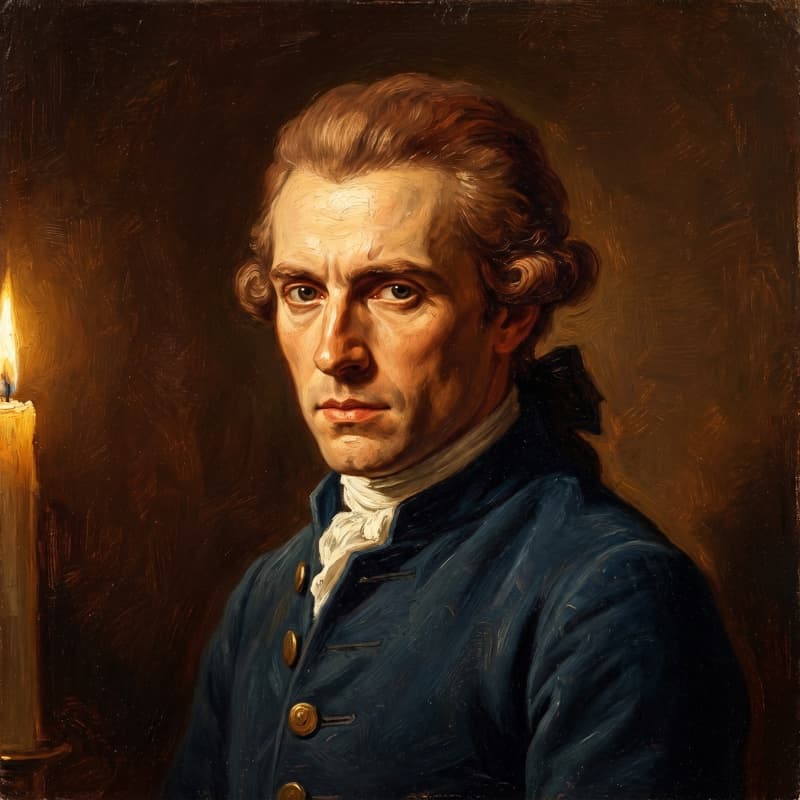
Alexander Hamilton was born on the island of Nevis in the British West Indies; because his parents, Rachel Faucette and James Hamilton, were never married, the National Park Service notes there is no official record of the birth, and historians place it around 1755. He died on July 12, 1804, in Greenwich Village, New York, a day after Vice President Aaron Burr shot him in a duel. Between an unrecorded birthday and a marked grave in Trinity Churchyard sits one of the more improbable careers in American founding history: an orphaned clerk who talked his way into a revolution, then built the financial machinery of the country he helped win.
An education won by argument
Hamilton arrived in New York in 1772, entered King's College — now Columbia — as a private student the following year, and formally matriculated in May 1774. He was still a King's College student when he published The Farmer Refuted, a 1775 pamphlet answering the Loyalist writer Samuel Seabury, and the case he made there was already the case he would make for the rest of his life: rights are not favors granted by old charters. "The sacred rights of mankind are not to be rummaged for, among old parchments, or musty records," he wrote — they are, he argued, self-evident.
Washington's aide, then his own command
New York commissioned Hamilton an artillery captain on March 14, 1776. The next year he joined George Washington's staff as aide-de-camp, a desk job with a lieutenant colonel's rank that meant years of drafting the general's letters rather than leading troops. He eventually got his field command: at the Siege of Yorktown in 1781 he led the assault on British Redoubt 10, and was breveted colonel that September. That December, he married Elizabeth Schuyler in Albany, marrying into one of New York's most influential families; the couple would have eight children.
Arguing a Constitution into being
Hamilton wrote 51 of the 85 essays that became The Federalist, working with James Madison and John Jay through 1787 and 1788 to persuade a skeptical New York to ratify the new Constitution. His opening essay put the stakes plainly: the question was "whether societies of men are really capable or not of establishing good government from reflection and choice, or whether they are forever destined to depend for their political constitutions on accident and force." He wanted a presidency with teeth — "Energy in the Executive is a leading character in the definition of good government," he argued in No. 70 — and closed the series with a founder's shrug at his own imperfect handiwork: "I never expect to see a perfect work from imperfect man."
Building the Treasury from nothing
In 1789, Hamilton became the first Secretary of the Treasury, a post he held until 1795. He funded the states' Revolutionary debts, pushed through a national bank, and worked toward tariffs and trade terms with Britain — financial architecture for a government that, on paper, had none yet. When Washington asked whether a national bank was even constitutional, Hamilton's 1791 opinion argued yes, on the doctrine of implied powers: "It is unquestionably incident to sovereign power to erect corporations." That December he submitted his Report on the Subject of Manufactures, arguing the young country needed factories as well as farms. Away from the ledgers, he was a founding member of the New York Manumission Society in 1785.
From a conversation with our Hamilton
An excerpt from a conversation with our AI Hamilton persona — a stylized recreation, honestly labeled; not a historical quotation.
Caller: Why did the country need a national bank so badly?
Hamilton: Because a government that cannot be trusted to pay its debts cannot be trusted with an army, a treaty, or a dollar of credit when the next crisis lands on its desk. I built it because a republic without energetic finance is a republic waiting to be picked apart by the first power patient enough to wait it out.
Hamilton's rivalry with Jefferson and Madison over how much energy the federal government should have never cooled, and it followed him into the summer of 1804, when a long feud with Aaron Burr ended at Weehawken, New Jersey. He was carried back across the Hudson and died the next morning — one of the founders who did the most to build the republic and lived the least long enough to see what became of it.
Continue the conversation — literally
You have just read the recorded life. Our Hamilton — an AI recreation, built on the sourced record and labeled as what it is — speaks from inside it. Ask him about arguing New York into ratification, the fight over the national bank, or the choices that led to Weehawken.
More in this cluster: Hamilton hub · his death · verified quotes · facts.