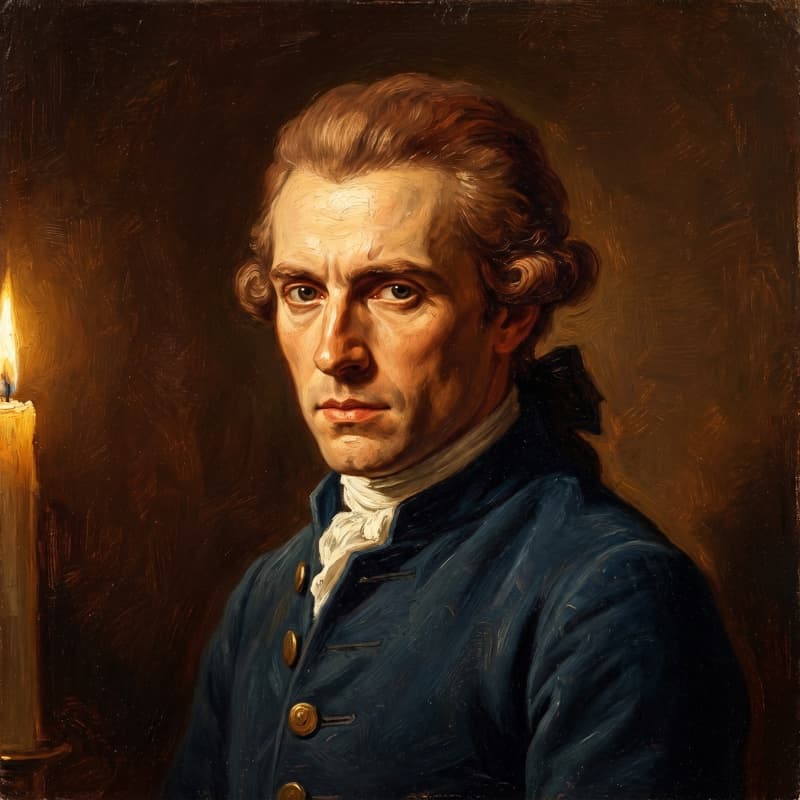
Alexander Hamilton died on the morning of July 12, 1804, a day after Vice President Aaron Burr shot him during a pistol duel at Weehawken, New Jersey. The two men had feuded for years; the immediate spark was a newspaper report of disparaging remarks Hamilton had made about Burr. At dawn on July 11 they met on the dueling ground across the Hudson from Manhattan. Burr's shot struck Hamilton in the abdomen. Hamilton was rowed back across the river to the home of William Bayard Jr., in what is now Greenwich Village, where he died the next day and was later buried in Trinity Churchyard.
That's the short version. The part worth slowing down for is what Hamilton did in the days before the duel — because he left a paper trail explaining, in his own words, that he did not go to Weehawken intending to kill Burr.
A fifteen-year rivalry, one newspaper letter
Hamilton and Burr had circled each other in New York politics for a decade and a half — rival lawyers, opposed on nearly everything. The break came when a newspaper printed a letter reporting that Hamilton had called Burr "dangerous" and voiced an even "more despicable opinion" of him at a dinner. Burr demanded a denial or an apology; Hamilton, unwilling to disown opinions he considered honestly held, refused to give either on Burr's terms. The exchange escalated into a formal challenge.
The statement he meant to be found only if he died
Sometime between June 28 and July 10, 1804, Hamilton wrote out his reasoning for accepting the duel and hid it among his papers, to be read only if he did not survive. In it, he explained his plan: "I have resolved if our interview is conducted in the usual manner, and it pleases God to give me the opportunity, to reserve and throw away my first fire, and I have thoughts even of reserving my second fire—and thus giving a double opportunity to Col. Burr to pause and to reflect." He also recorded religious and moral objections to dueling, and named his wife, children, and debts among the reasons he had nearly declined the meeting altogether. The statement surfaced after his death and ran in the New-York Evening Post on July 16, 1804.
A letter meant to be opened only if he didn't come home
A week before the duel, on July 4, 1804, Hamilton wrote a farewell letter to his wife, Elizabeth, to be delivered only if he were killed. "If it had been possible for me to have avoided the interview, my love for you and my precious children would have been alone a decisive motive," he told her — followed, in the same letter, by his explanation that honor had left him no way out.
The house across the Hudson
After Burr's shot, Hamilton was carried back across the river to the Bayard house rather than to his own home at the Grange, farther uptown; the wound was judged too severe for a longer trip. He lingered through the night and died the next morning, July 12, surrounded by Elizabeth and their children, and was buried in Trinity Churchyard in lower Manhattan, where his grave still stands. The National Park Service notes the Weehawken ground was the same site where Hamilton's eldest son, Philip, had been killed in a duel three years earlier, in 1801 — a loss Hamilton had already lived through once before he stood there himself.
From a conversation with our Hamilton
An excerpt from a conversation with our AI Hamilton persona — a stylized recreation, honestly labeled, not a historical quotation.
Caller: Why go to Weehawken at all, if you'd already decided not to shoot to kill?
Hamilton: Because refusal was its own kind of ruin, friend — a man in public life who will not stand behind his word is finished before any pistol is fired. I had already buried a son on that same ground. I did not go there hungry for Burr's blood. I went there unwilling to be the man who backed down from his own recorded opinions. There is a difference between courage and appetite for violence, though the world rarely pauses to sort them.
Did Hamilton actually try to kill Burr?
No — by his own account, he did not. His pre-duel statement says he planned to fire wide and even considered holding his second shot, "giving a double opportunity to Col. Burr to pause and to reflect." Accounts of the duel note Hamilton's shot struck a tree branch above and to the side of Burr, consistent with that plan.
Our Hamilton — an AI recreation built from his letters, essays, and Treasury papers, labeled as what it is — can't describe Weehawken itself; his knowledge doesn't reach that morning. But he can talk about everything that led there: the Federalist essays, the fights with Jefferson and Madison, the Bank of the United States, Eliza. Start the conversation whenever you're ready.
More in this cluster: Hamilton's verified quotes · his biography · fact file · back to the Hamilton hub.