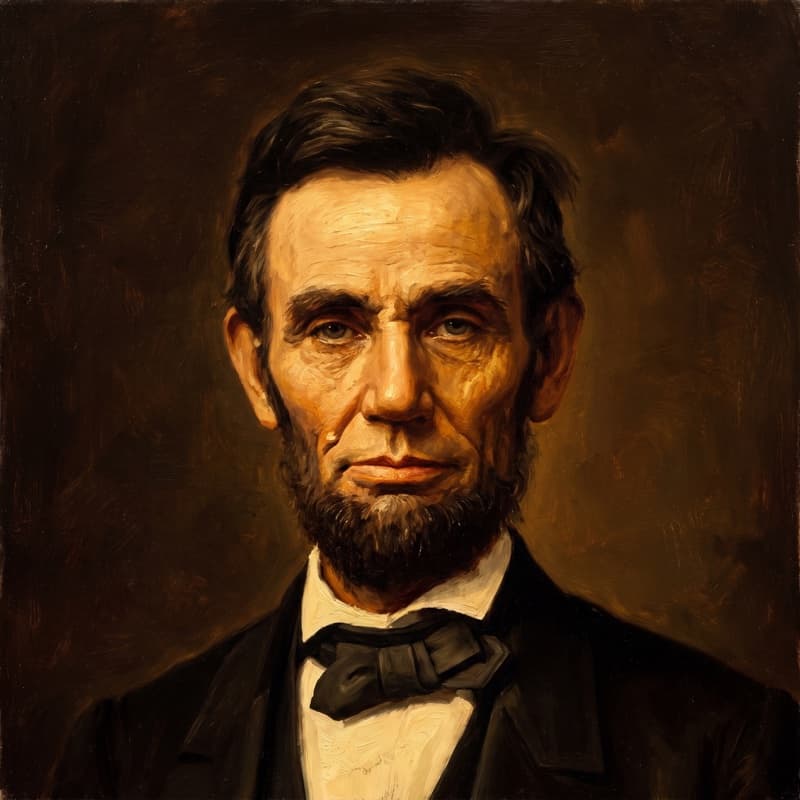
Abraham Lincoln died on the morning of April 15, 1865, after being shot the night before by John Wilkes Booth — a famous actor and Confederate sympathizer — at Ford's Theatre in Washington. Booth entered the presidential box around 10:15 p.m. and shot Lincoln with a .44 Derringer while the president watched the comedy Our American Cousin. Doctors judged him too badly wounded to be moved far, so he was carried across the street to the Petersen boarding house, where he died at 7:22 a.m.
That answers the question people search for. The fuller story is stranger and sadder, and worth five minutes.
A comedy, days after surrender news
The timing is the cruelest part. The shooting came just after Confederate defeat — days after the surrender news that meant the war Lincoln had carried for four years was finally ending. He went to the theatre that night with Mary Lincoln and guests in the presidential box, to watch a comedy. Six weeks earlier, at his second inauguration, he had told the country how he meant to finish the work: "With malice toward none; with charity for all."
Booth's shot ended that plan before it began. Whatever Reconstruction became, it became without the president who had publicly described a merciful peace.
The house across the street
The doctors' judgment that night fixed the story's geography: Lincoln was too badly wounded to be moved far, so he was carried across the street to the Petersen House, a boarding house, and laid in the room of a boarder named Willie Clark. He died there at 7:22 a.m. on April 15.
The relics of that night have their own careful record. Ford's Theatre documents a blood-stained pillow from Willie Clark's bed — placed under Lincoln's head as he lay dying, his blood still visible on it. If you have heard the more dramatic claim that "Lincoln's blood is still on the chair," this pillow is what the evidence actually supports; the rocking chair and the deathbed survive today as museum objects.
From a conversation with our Lincoln
An excerpt from a conversation with our AI Lincoln persona — a stylized recreation, honestly labeled, not a historical quotation. Our Lincoln's knowledge ends before that night.
Caller: If you could have seen the end coming, what would you have wanted finished first?
Lincoln: The mending, friend. A war is a wound the country gives itself, and I had just begun to say how the binding-up ought to go — malice toward none, charity for all. Words are easy at an inauguration. The hard part was to come: making citizens again of men who had been enemies. I reckon a task like that doesn't wait politely for the man who proposed it. It falls to whoever is standing there when the time comes. Mostly it falls to the plain people. It always does.
Why did Booth do it?
The National Park Service identifies Booth plainly: a famous actor and a Confederate sympathizer, striking in the immediate aftermath of Confederate defeat. The popular compression — that Booth acted because Lincoln "had just freed all the slaves everywhere" — garbles the chronology and the law. The Emancipation Proclamation, in effect since January 1, 1863, applied to areas in rebellion; permanent, nationwide abolition came through the Thirteenth Amendment, which Congress had passed that January and the states had not yet finished ratifying. What Booth attacked was not one document but the outcome of the war itself: a restored Union in which emancipation had become the settled direction of the country.
Was Lincoln really buried 17 times?
Sort of — and not at all. "Buried 17 times" is the shorthand that survives from a genuinely strange afterlife: repeated coffin moves while his tomb was unfinished, inspections, hidden storage after thieves attempted to steal his body in 1876, and the later reconstruction and securing of the tomb in Springfield. The attempted body theft is documented in a period account by John Carroll Power. So the count refers to movements and reburials spread across decades — not 17 public funerals. The true version is better than the myth: a president so beloved, and so mythologized, that even his coffin needed guarding.
Ask him about the part he did see
Our Lincoln — an AI recreation, built from the historical record and labeled as what it is — can't tell you about Ford's Theatre; his knowledge ends before the shot. But he can tell you about everything that led there. Ask him how he imagined Reconstruction in the weeks after the surrender news. Ask him what "malice toward none" was supposed to mean once the guns went quiet. Ask him about grief — he carried the death of his son Willie through the last years of the war, and he speaks of it as a fellow sufferer, not a monument. Start the conversation whenever you're ready; he has time.
More in this cluster: Lincoln's verified quotes · his biography · fact file · back to the Lincoln hub.