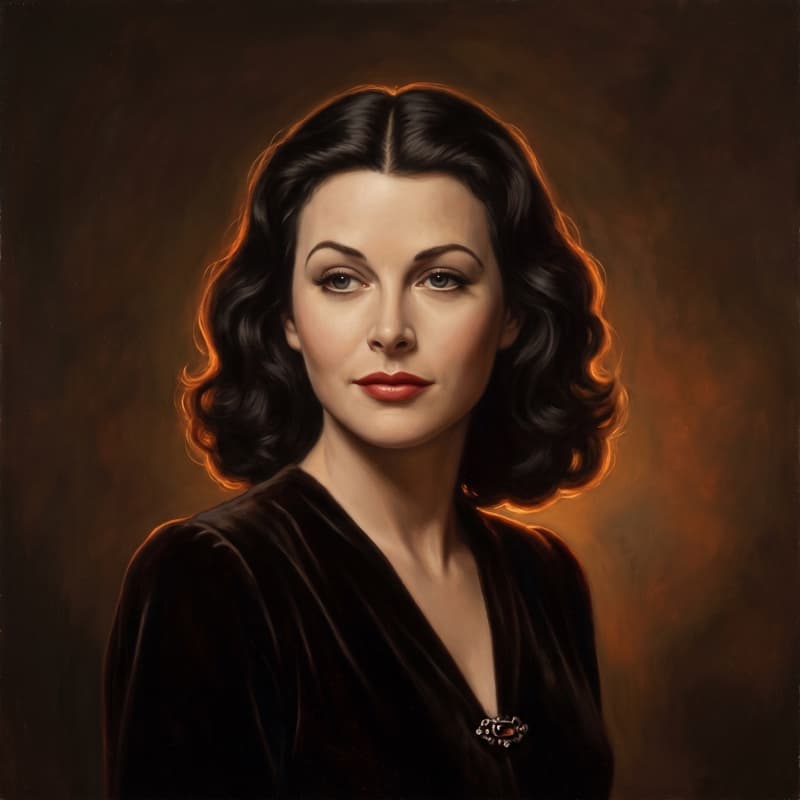
Hedy Lamarr died on January 19, 2000, of congestive heart failure in Casselberry, Florida, at the age of 85 (Biography.com). By then she had spent decades away from the screen, living quietly in Florida, mostly known to the public as a faded studio-era glamour name rather than as the co-holder of a wartime radio patent.
That is the bare fact. What makes the death page worth reading is the timing of what came just before it.
A quiet decade, then a tape resurfaces
Lamarr's later years were reclusive, but her inventor story did not stay buried. Around 1990, Forbes journalist Fleming Meeks recorded audio interviews with her — tapes that sat unheard for years before being rediscovered and used in the 2017 documentary Bombshell: The Hedy Lamarr Story (PBS American Masters). On those tapes she pushed back, plainly, on being remembered only for her face: "The brains of people are more interesting than the looks I think" (Forbes). It's a line that reads like an answer to a question nobody in Hollywood had bothered to ask her directly.
The EFF award, three years before the end
The clearest public acknowledgment of the patent came in 1997, when the Electronic Frontier Foundation gave Lamarr its Pioneer Award for the frequency-hopping work she'd co-invented with composer George Antheil (EFF). By her own site's account, when she heard about it she told her son simply: "It's about time" (HedyLamarr.com). She lived another three years after that recognition — long enough to know the invention had finally registered, not long enough to see how far its reputation would travel afterward.
From a conversation with our Lamarr
An excerpt from a conversation with our AI Hedy Lamarr persona — a stylized recreation, honestly labeled, not a historical transcript.
Caller: Did it bother you that the invention took so long to be noticed?
Lamarr: Bother isn't quite the word. I was busy being looked at, not listened to — that was the job MGM paid me for, and I did it well. The frequency work was mine at night, at a drafting table, where nobody was watching. When the award finally came, I wasn't surprised it had taken decades. I was only surprised it came at all. Most ideas like that just stay in a drawer.
Did she die forgotten as an inventor?
Not entirely, though the full story arrived in pieces. The popular version of Lamarr's death often treats her as a faded actress whose scientific legacy was discovered only after she was gone. That overstates it: the EFF Pioneer Award recognized her patent publicly in 1997, three years before her death (EFF). What's accurate is that the fuller recognition — a National Inventors Hall of Fame induction — didn't come until 2014, fourteen years posthumously (National Inventors Hall of Fame). She got a late, partial vindication in life, and a complete one only after it.
A return to Vienna
Per her wishes, her family spread her ashes in Vienna, at the foothills of the Northern Alps (Leaders.com) — a quiet close to a life that had run from a Vienna childhood through Hollywood soundstages and a Florida retirement, and back to the city she'd left as a young actress in the 1930s.
More in this cluster: Hedy Lamarr hub · verified quotes · full biography · fact file. Our AI recreation of Lamarr — honestly labeled, built on the same sourced record — takes calls if you'd rather ask her about the drafting table than read about it.